Wind Damage Roof Repair: Commercial Building Guide 2026
Expert guide to wind damage roof repair for commercial buildings. Learn assessment techniques, repair methods, and prevention strategies.
Wind damage poses one of the most significant threats to commercial roofing systems across the United States. From sudden severe storms to sustained high winds, commercial building owners face immediate repair needs and long-term structural concerns when wind compromises their roof integrity. Understanding the assessment process, repair methodologies, and prevention strategies for wind damage roof repair ensures business continuity and protects substantial infrastructure investments.
Understanding Wind-Related Roof Damage Patterns
Wind damage manifests differently depending on roofing material, building height, geographic location, and storm severity. Commercial facilities experience unique challenges compared to residential structures due to larger surface areas and specialized roofing systems.
Lifted or missing membrane sections on flat roofing systems
Displaced or torn metal panels and fasteners
Compromised flashing around penetrations and edges
Damaged roof-mounted equipment and HVAC units
Debris impact punctures and tears
Water infiltration points at seams and joints
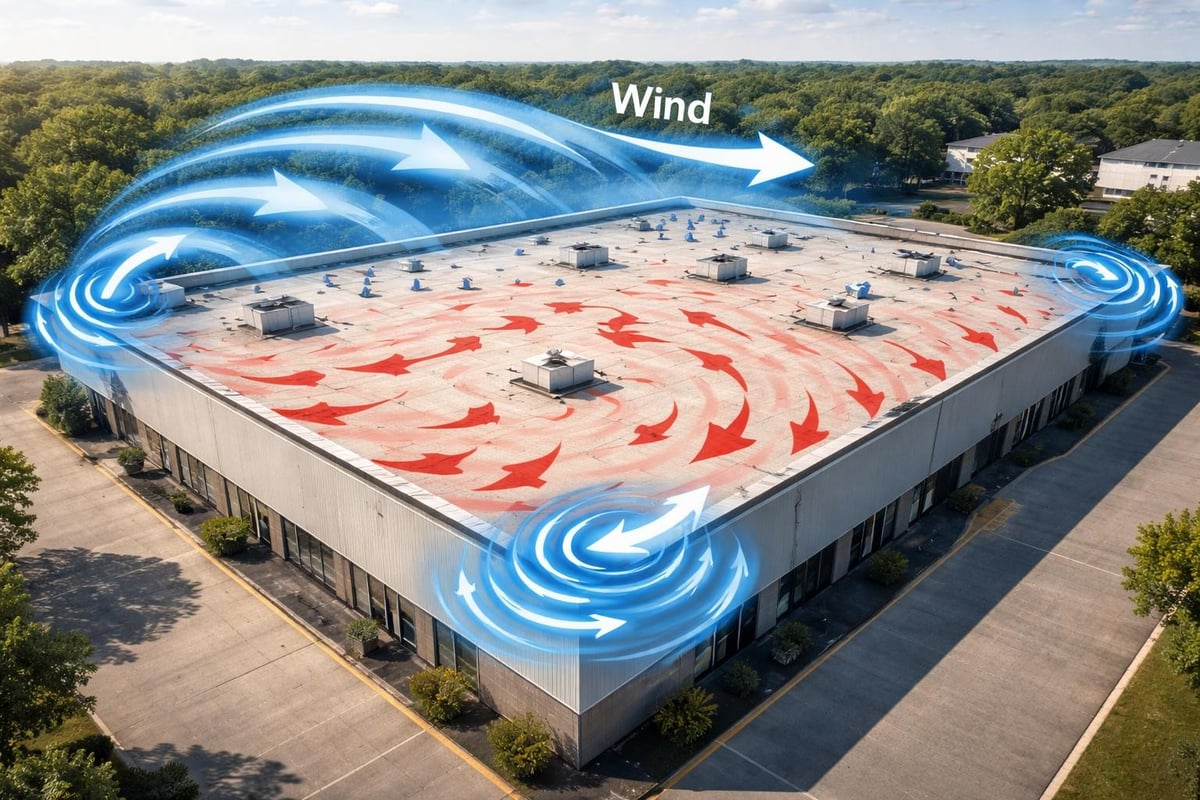
Wind forces create both positive and negative pressure zones on commercial roofs. Corners and edges experience the highest uplift forces, while central areas face different stress patterns. This explains why perimeter damage often appears more severe than interior sections.
Material-Specific Vulnerabilities
Different commercial roofing materials respond uniquely to wind events. Understanding these characteristics informs repair strategies and timeline planning.
Edge lifting, lap separation, surface granule loss
Moderate to severe
Healthcare facilities, retail centers, and government buildings each face distinct operational requirements during wind damage roof repair. Hospital roofs demand immediate attention due to critical patient care operations, while retail facilities must balance customer access with repair safety protocols.
Wind Damage Assessment Protocols
Professional assessment forms the foundation of effective commercial roof repair. Thorough evaluation prevents incomplete repairs and identifies hidden damage that could compromise future performance.
Ground-level visual inspection for obvious damage and debris
Interior ceiling inspection for water stains and moisture
Roof-level detailed examination of all components
Photographic documentation from multiple angles
Moisture meter readings to detect water infiltration
Detailed measurement of damaged areas
Evaluation of structural deck integrity
Professional assessors examine areas beyond visible damage. Wind-driven rain often penetrates seemingly intact sections, causing insulation saturation and deck deterioration. Thermal imaging cameras reveal moisture patterns invisible to visual inspection.
Documentation Requirements
Insurance claims and building code compliance demand meticulous documentation. Commercial building owners should maintain comprehensive records throughout the wind damage roof repair process.
Essential documentation includes:
Time-stamped photographs before cleanup begins
Detailed written descriptions of all damage locations
Measurement records with precise square footage calculations
Material specifications for damaged components
Professional inspection reports with engineer stamps when required
Estimates from licensed commercial roofing contractors
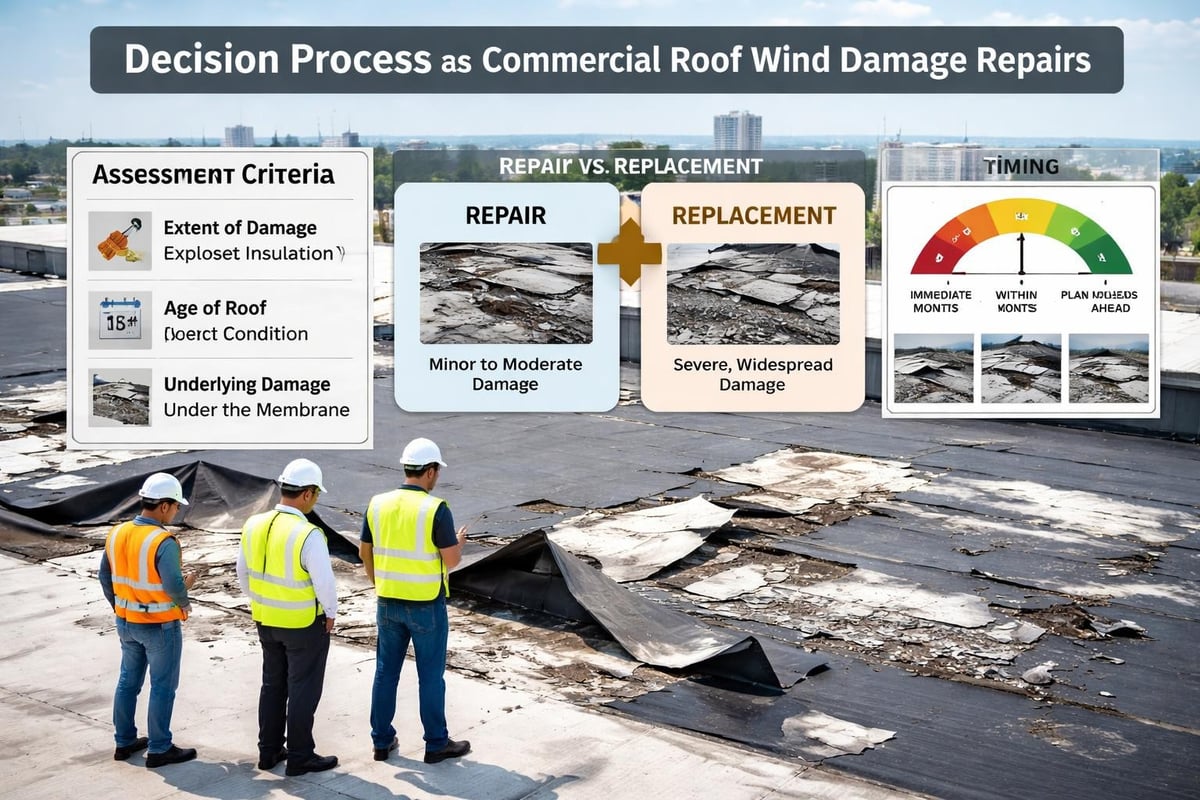
Wind damage repair strategies range from targeted patches to complete roof replacement. The appropriate approach depends on damage extent, roof age, warranty status, and operational requirements.
Temporary Protection Measures
Immediate temporary repairs prevent secondary water damage while permanent solutions are planned. Commercial facilities cannot afford extended downtime, making rapid response critical.
Quick-response measures include waterproof tarping of exposed areas, temporary flashing installation, and emergency drainage to remove standing water. These interventions protect inventory, equipment, and building interiors until comprehensive wind damage roof repair begins.
Localized Repair Techniques
Minor to moderate wind damage often permits targeted repairs that restore roof integrity without full replacement. This approach minimizes costs and disruption while addressing specific damage zones.
Localized repair applications:
Membrane patching with heat-welded seams for TPO/PVC systems
Metal panel replacement with matching profiles and coatings
Flashing reconstruction around penetrations and edges
Fastener reinforcement in uplift-prone areas
Seam re-sealing with compatible adhesives
Edge metal reinstallation with upgraded attachment
Quality repairs match original materials and installation methods. Mixing incompatible products creates failure points and may void existing warranties. Commercial roofing specifications demand precise material selection based on manufacturer guidelines.
Systematic Restoration Approaches
Extensive wind damage necessitates systematic restoration or complete roof replacement. Age, previous repairs, and overall condition influence this decision beyond immediate storm damage.
Building codes in many jurisdictions trigger full replacement requirements when repairs exceed specific percentage thresholds. Understanding these regulations prevents partial repairs that don't meet legal standards.
Insurance Claims Management
Commercial wind damage roof repair often involves complex insurance claims requiring strategic documentation and negotiation. Policy terms, deductibles, and coverage limits significantly impact financial outcomes.
Claim Preparation Strategies
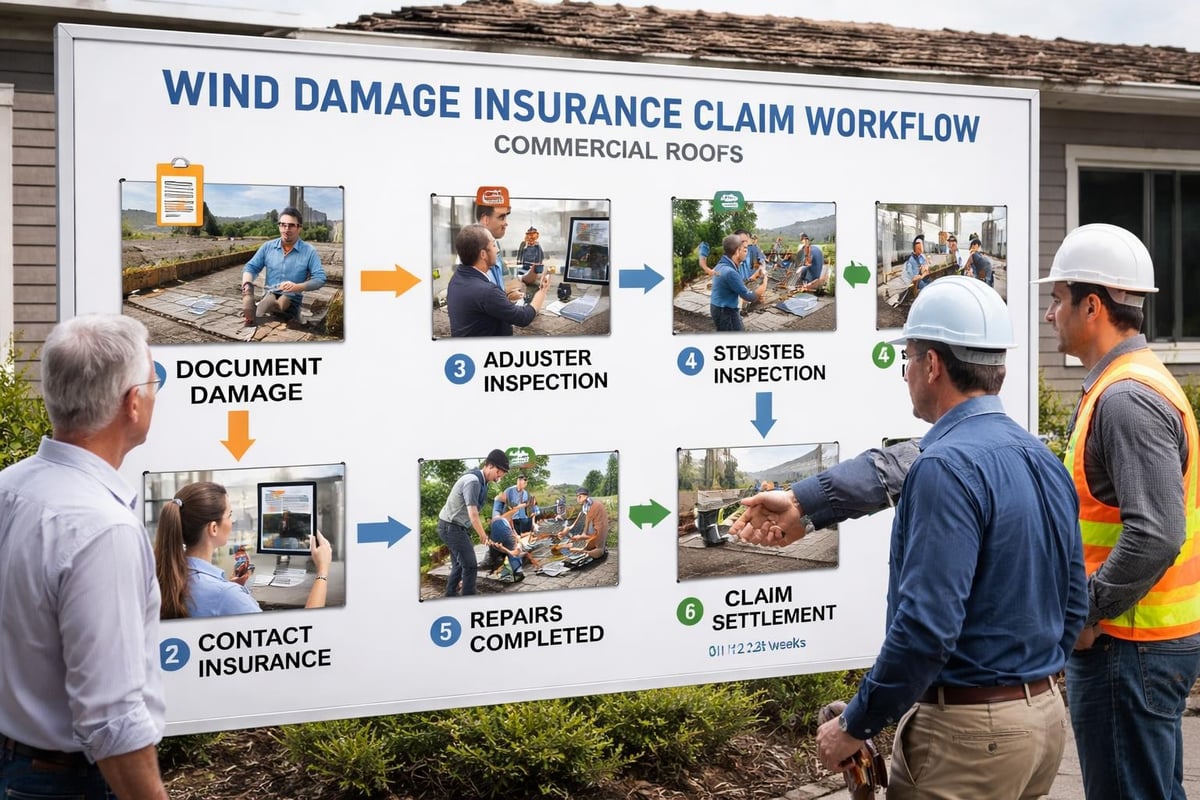
Successful claims begin with immediate notification to insurance carriers. Delays can complicate claims or reduce settlement amounts, particularly when secondary damage occurs after the initial wind event.
Professional roof inspections provide third-party validation of damage extent and repair costs. Engineers and certified roofing contractors offer credible assessments that insurers respect during claim evaluations. Legal considerations for wind damage roof insurance claims highlight the importance of preserving evidence and obtaining professional estimates.
Claim optimization steps:
Immediate carrier notification with preliminary damage description
Professional inspection before any repairs begin
Comprehensive photographic evidence collection
Detailed written estimates from licensed contractors
Material specification sheets for all proposed replacements
Historical maintenance records demonstrating proper care
Business interruption documentation for operational impacts
Commercial policies often include specific provisions for temporary repairs, emergency services, and business interruption coverage. Understanding policy language ensures maximum benefit utilization during the wind damage roof repair process.
Adjuster Interaction Protocols
Insurance adjusters evaluate damage based on carrier guidelines and industry standards. Providing organized, professional documentation streamlines the adjustment process and supports fair settlements.
Contractors should accompany adjusters during roof inspections, pointing out damage details and explaining repair requirements. This collaborative approach ensures nothing gets overlooked while building professional relationships that facilitate claim resolution.
Prevention and Mitigation Strategies
Proactive measures reduce wind damage severity and repair costs. Commercial building owners benefit from systematic maintenance programs and strategic upgrades that enhance roof resilience.
Regular Inspection Programs
Scheduled professional inspections identify vulnerabilities before storms strike. Twice-annual assessments catch minor issues like loose fasteners, deteriorating seams, and compromised flashing that become major problems during wind events.
Inspection focus areas include:
Edge metal and perimeter attachment integrity
Membrane or panel fastener patterns and spacing
Seam condition and adhesive performance
Flashing around all penetrations and equipment
Drainage system functionality and debris accumulation
Previous repair areas for failure indicators
Documentation from regular inspections provides baseline condition records valuable for insurance claims and warranty maintenance. These records demonstrate responsible ownership and proper maintenance practices.
Upgrade Opportunities
Strategic improvements strengthen commercial roofs against future wind damage. Many upgrades deliver immediate protection while extending overall roof lifespan beyond basic repair objectives.
Enhanced fastening systems exceed minimum code requirements, providing additional uplift resistance in high-wind zones. Edge reinforcement with heavy-gauge metal and supplemental attachment points addresses the most vulnerable roof areas. Impact-resistant materials protect against debris damage during severe storms.
The NRCA’s hurricane repair guidance offers insights into strengthening techniques applicable to all wind-prone commercial facilities, not just coastal properties.
Contractor Selection Criteria
Choosing qualified commercial roofing contractors determines repair quality, timeline reliability, and long-term performance. Proper vetting prevents substandard work that creates future problems.
Essential Qualifications
Commercial wind damage roof repair demands specialized expertise beyond general roofing knowledge. Contractors should demonstrate specific experience with commercial systems, storm damage restoration, and insurance claim processes.
Critical contractor credentials:
Active commercial roofing licenses for your jurisdiction
Current liability and workers' compensation insurance
Manufacturer certifications for specified roofing systems
References from similar commercial facilities
Safety program documentation and training records
Financial stability for project completion guarantees
Verify credentials independently through licensing boards and insurance carriers. Contractor-provided documentation sometimes misrepresents coverage or certification status.
Warranty Considerations
Quality commercial roof repairs include comprehensive warranty coverage protecting both materials and workmanship. Understanding warranty terms prevents surprises when future issues arise.
Manufacturer material warranties typically require authorized contractor installation to remain valid. Workmanship warranties should extend at least two years for repairs and longer for extensive restoration projects. Clarify what circumstances void warranty coverage and what documentation is required for future claims.
Timeline and Operational Planning
Commercial facilities must balance repair urgency against operational continuity. Strategic planning minimizes business disruption while ensuring thorough, quality repairs.
Phased Repair Approaches
Large commercial roofs often permit sectional repairs that keep portions of the building operational during wind damage roof repair work. This approach proves particularly valuable for retail centers, healthcare facilities, and government buildings with continuous operational requirements.
Contractors coordinate work schedules around business hours, weather windows, and material delivery timelines. Night and weekend work accommodates facilities requiring daytime accessibility, though premium labor rates apply for off-hours scheduling.
Typical commercial repair timeline:
Emergency stabilization (24-48 hours)
Complete assessment and planning (3-7 days)
Insurance approval and contracting (1-3 weeks)
Material procurement (1-4 weeks depending on systems)
Repair execution (1-12 weeks based on scope)
Final inspection and warranty documentation (1-2 weeks)
Weather delays, material shortages, and unforeseen structural issues can extend timelines. Contractors should provide realistic schedules with contingency buffers rather than optimistic projections that create false expectations.
Communication Protocols
Successful commercial projects maintain transparent communication among building owners, facility managers, contractors, and insurance representatives. Regular updates prevent misunderstandings and enable rapid decision-making when issues arise.
Weekly progress meetings during active repairs keep stakeholders informed and aligned. Written reports document completed work, upcoming activities, and any concerns requiring attention. This formal communication creates accountability and provides records valuable for project closeout and future reference.
Quality Assurance and Final Verification
Wind damage roof repair completion requires systematic verification ensuring all work meets specifications and performance standards. Thorough quality control prevents callbacks and warranty disputes.
Inspection Protocols
Final inspections should involve both contractor quality control and independent third-party verification. Multiple review layers catch issues before they impact roof performance or create liability concerns.
Quality verification checklist:
All membrane seams properly sealed or welded
Fastener patterns meet or exceed specifications
Flashing details correctly installed and sealed
Surface drainage properly restored
No exposed fasteners or vulnerable penetrations
Edge metal securely attached with appropriate spacing
Clean surface free from debris and excess materials
Photography documenting completed repairs provides baseline records for future maintenance and warranty claims. Wide-angle overviews and detailed close-ups of critical areas create comprehensive visual documentation.
Performance Testing
Certain commercial roofing systems benefit from post-repair performance testing. Flood testing verifies waterproofing integrity, while pull tests confirm fastener holding strength in critical areas.
Thermal imaging scans detect moisture remaining in roof assemblies after repairs. Residual moisture creates ongoing deterioration risks and may indicate incomplete water intrusion repairs requiring additional attention.
Effective wind damage roof repair for commercial facilities demands professional assessment, strategic planning, and quality execution that addresses immediate damage while strengthening overall roof performance. Understanding repair methodologies, insurance processes, and prevention strategies helps commercial building owners make informed decisions that protect their investments. GM Roofing Services brings specialized commercial roofing expertise to healthcare facilities, retail centers, and government buildings requiring professional wind damage assessment and repair solutions. Contact our team today for comprehensive roof inspection services and customized repair programs that restore your roof's integrity and protect your operations.
Learn why preventative electrical maintenance is critical for commercial buildings. Discover best practices, inspection schedules, and cost-saving benefits.