Discover essential emergency roof leak repair strategies for commercial properties. Learn immediate response steps, prevention tactics, and repair solutions.
When water breaches your commercial roof system, every minute counts. A single leak can escalate from a minor inconvenience to catastrophic property damage, disrupting business operations and threatening sensitive equipment. Understanding how to respond effectively to roofing emergencies separates prepared facility managers from those facing expensive downtime and extensive repairs. This comprehensive guide explores the critical steps, professional solutions, and preventive strategies that protect your commercial investment when disaster strikes.
Recognizing Commercial Roof Leak Emergencies
Not every drip constitutes an emergency, but knowing the difference can save your business thousands of dollars. Commercial roofing systems fail differently than residential structures due to their scale, complexity, and the assets they protect.
Critical Warning Signs
Immediate action becomes necessary when you observe:
Active water intrusion during or immediately after precipitation
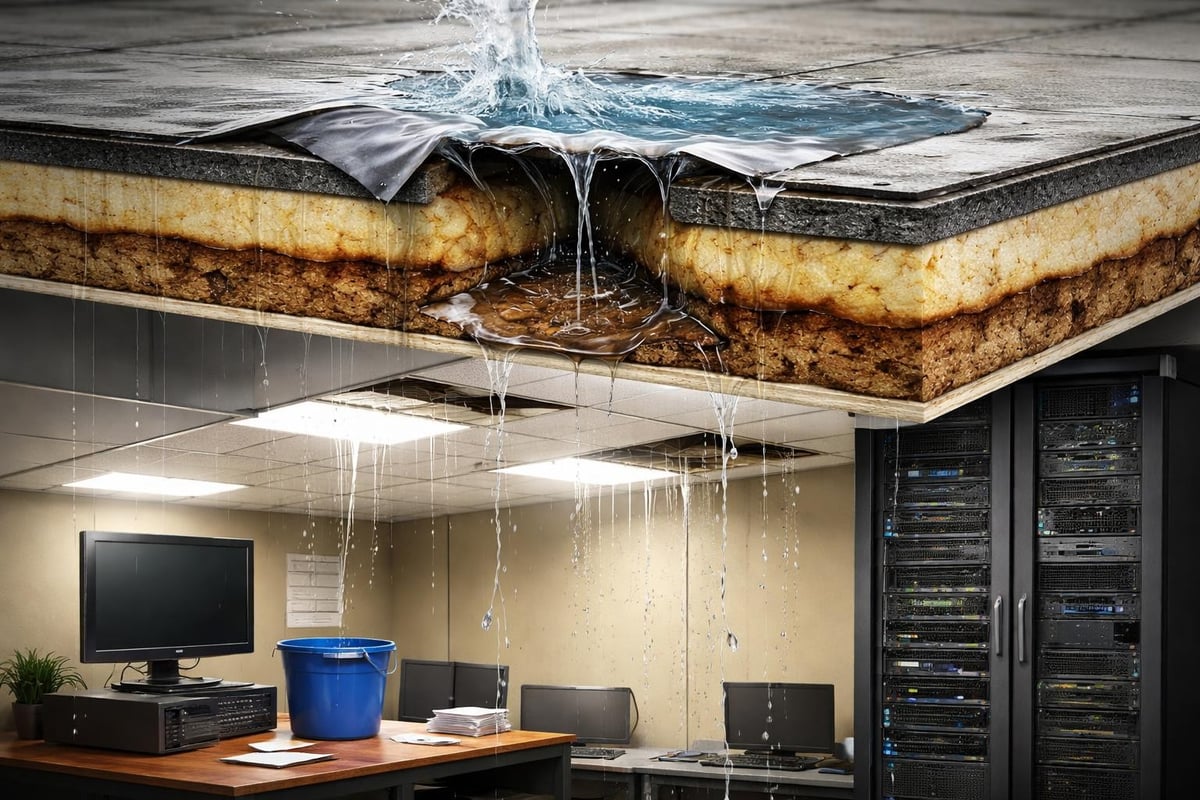
Water pooling near electrical systems or sensitive equipment
Ceiling tile discoloration spreading rapidly
Structural sagging or bulging in roof membranes
Water streaming from HVAC penetrations or roof-mounted equipment
Commercial facilities face unique vulnerabilities. Retail operations risk inventory damage, healthcare facilities must protect patient safety, and government buildings often house irreplaceable records. The comprehensive emergency roof leak repair guide from This Old House emphasizes the importance of swift assessment and temporary stabilization.
Understanding Damage Progression
Water follows the path of least resistance through your commercial roofing system. A small membrane puncture can channel moisture dozens of feet from the actual entry point, making source identification challenging. Insulation layers absorb water like sponges, adding weight stress to structural components while reducing thermal efficiency.
The clock starts ticking the moment water enters your building envelope. Within 24 hours, mold spores begin colonizing damp materials. Within 48 hours, structural wood components start degrading. By 72 hours, you're facing potential electrical hazards and contamination issues that extend far beyond simple roof repair.
Immediate Response Protocol
Emergency roof leak repair demands a systematic approach that prioritizes safety while minimizing damage. Commercial property managers must balance immediate containment with proper documentation for insurance purposes.
First Response Actions
Follow these critical steps in order:
Evacuate affected areas if water contacts electrical systems or creates slip hazards
Document everything with photographs and video before moving items
Protect assets by relocating equipment, inventory, and sensitive materials
Contain water using tarps, buckets, and temporary barriers
Contact professionals for emergency assessment and temporary repairs
Never send untrained personnel onto commercial roofs during active weather events. The emergency repair services from Flat Roof Pros demonstrate proper safety protocols with trained technicians responding to urgent situations.
Temporary Containment Solutions
Solution Type
Best For
Duration
Effectiveness
Emergency Roof Patch Powder
Active leaks, wet conditions
6-12 months
Immediate seal
Tarp Systems
Large breach areas
Days to weeks
Weather-dependent
Sealant Compounds
Small punctures, seam failures
3-6 months
Moderate
Emergency Coatings
Membrane deterioration
1-2 years
Good for planning
Specialized products like the 911 Emergency Roof Patch from DeWitt Products provide immediate solutions even during rainfall. These expanding compounds create waterproof barriers without requiring dry surfaces, making them invaluable for commercial emergency situations.
Interior containment matters equally. Position collection vessels under active drips, but elevate them on platforms to prevent overflow during extended leaks. Create moisture barriers around sensitive equipment using plastic sheeting and sandbags.
Professional Emergency Repair Services
Commercial roofing emergencies require expertise beyond basic handyman capabilities. Professional emergency roof leak repair services bring specialized equipment, trained personnel, and material resources that temporary fixes cannot match.
24/7 Emergency Response Teams
Time-sensitive situations demand immediate professional intervention. Services like Tremco Roofing’s TremSource Leak Management program maintain nationwide networks of qualified technicians available around the clock. These programs provide:
Rapid dispatch within two hours of initial contact
Temporary weatherproofing to stop active water intrusion
Comprehensive assessment identifying root causes and extent of damage
Documentation support assisting with insurance claims and compliance reporting
Specialized Commercial Repair Techniques
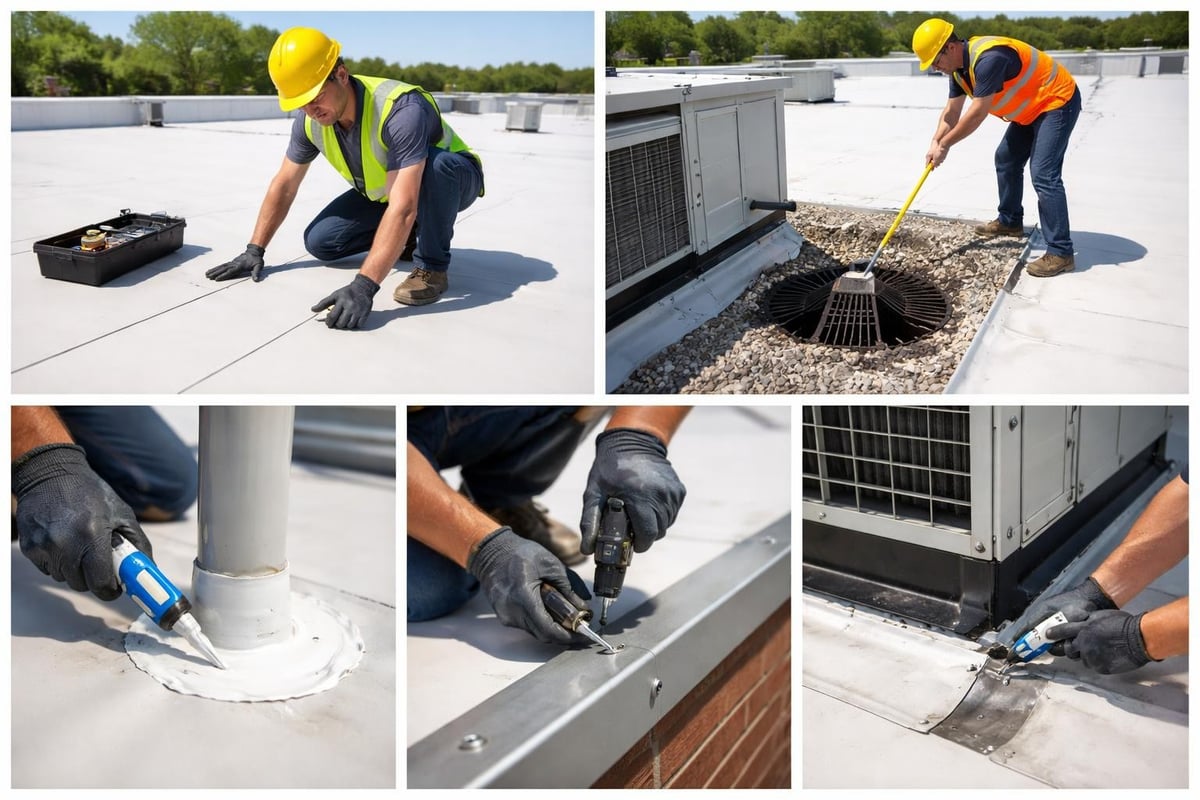
Commercial roofing systems vary significantly from flat TPO and EPDM membranes to standing seam metal and modified bitumen. Each material requires specific repair approaches:
Adhesive-bonded repairs for EPDM and rubber systems
Multi-layer reinforcement for built-up roofing
Metal Roofing Applications:
Panel replacement for severe punctures
Seam re-sealing using compatible sealants
Fastener replacement and weatherproofing
Coating Systems:
Emergency patch coatings for immediate protection
Reinforced fabric embedment for larger damaged areas
Accelerated curing formulations for fast weatherproofing
The Rapid Patch system from Tri-Chem demonstrates advanced material science designed specifically for commercial emergency scenarios. These mineral-based compounds expand upon water contact, creating instant seals that withstand foot traffic and weather exposure.
Common Commercial Roof Leak Causes
Understanding failure modes helps prevent future emergencies while informing immediate repair strategies. Commercial roofing systems face unique stressors that residential structures rarely encounter.
Equipment Penetration Failures
HVAC units, exhaust vents, plumbing stacks, and electrical conduits create dozens of roof penetrations on typical commercial buildings. Each represents a potential failure point where:
Flashing separates from membrane due to thermal cycling
Sealants deteriorate from UV exposure and temperature extremes
Mechanical vibrations loosen fasteners and compromise seals
Regular equipment maintenance schedules must include penetration integrity inspections. Many emergency roof leak repair situations originate from preventable flashing failures around mechanical equipment.
Weather Event Damage
Event Type
Primary Damage
Secondary Effects
Emergency Priority
Hail Storms
Membrane punctures
Insulation saturation
Immediate
High Winds
Edge metal lifting
Seam peeling
Critical
Heavy Snow
Structural stress
Ice dam formation
Urgent
Intense Rain
Drainage overwhelm
Ponding water
High
Commercial roofs designed for specific wind and snow loads can fail catastrophically when weather exceeds design parameters. The 2026 season has already seen unprecedented storm intensity across multiple regions, making emergency preparedness essential.
Aging System Deterioration
Time affects all roofing materials. Commercial systems typically warrant 15-30 years depending on material and maintenance quality. Warning signs of age-related failure include:
Membrane brittleness causing crack formation during thermal movement
Seam degradation where adhered or welded joints separate
Fastener backing out as substrate materials compress over time
Coating erosion exposing underlying membranes to UV damage
Proactive replacement prevents emergency situations, but budget constraints often force facility managers to maximize existing system lifespan through strategic repairs.
Emergency Repair Materials and Products
Modern commercial roofing technology provides sophisticated solutions for emergency situations. Understanding product capabilities ensures appropriate material selection during crisis response.
Expanding Patch Compounds
These innovative materials revolutionized emergency roof leak repair by eliminating the dry-surface requirement that plagued traditional patching. The Emergency Roof Patch from Share Corporation exemplifies this technology. Upon water contact, the powder binds into a rubber-like compound that:
Expands into cracks and voids for complete coverage
Creates waterproof barriers within minutes
Remains flexible through temperature extremes
Requires no special tools or mixing equipment
Application involves simply pouring powder onto wet leak areas and allowing the chemical reaction to occur. This simplicity makes these products invaluable when professional help cannot arrive immediately.
Quick-Setting Sealants and Coatings
Modern emergency sealants feature:
Moisture-cure formulations that harden in wet conditions
Rapid skin formation preventing washout during rain
Permanent adhesion to diverse substrate materials
UV stability for extended temporary service life
Emergency coatings serve dual purposes: immediate leak stopping and interim protection while permanent repairs await scheduling. Elastomeric formulations bridge membrane cracks and seal seam failures with application speeds measured in minutes rather than hours.
Heat-shrink Tarp Systems:
These specialized tarps use propane torches to shrink and seal around roof equipment and edges, creating weathertight temporary roofs lasting months if necessary.
Mechanically Attached Membranes:
Emergency crews can install temporary TPO or EPDM sections using mechanical fasteners and weighted ballast, avoiding permanent substrate modifications.
Spray-Applied Barriers:
Fast-curing polyurethane and polyurea sprays create seamless waterproof barriers over large damaged areas in single applications.
Prevention Through Proactive Maintenance
The most effective emergency roof leak repair strategy involves preventing emergencies altogether. Commercial facility managers who implement comprehensive maintenance programs experience 70% fewer urgent repair situations.
Membrane surfaces for punctures, blistering, or deterioration
Flashing integrity around all penetrations and edges
Drainage system functionality and debris accumulation
Fastener security and proper membrane attachment
Coating condition and protective layer continuity
Document every inspection with photographs and detailed notes. This historical record identifies developing problems before they become emergencies while providing valuable insurance documentation if failures occur despite maintenance efforts.
Seasonal Preparation
Commercial roofs face different challenges throughout the year. Strategic seasonal maintenance addresses these predictable stressors:
Spring Preparation:
Clear drainage systems of winter debris
Inspect for ice damage and thermal shock cracking
Verify flashing re-adhesion after freeze-thaw cycles
Inspect and repair minor issues before winter weather
Winter Safeguards:
Monitor snow accumulation against load ratings
Address ice dam formation immediately
Maintain clear emergency access paths
Professional Maintenance Programs
Partnering with commercial roofing specialists for ongoing maintenance transforms reactive emergency responses into proactive system management. Comprehensive programs typically include:
Service Component
Frequency
Primary Benefits
Detailed Inspections
Bi-annual
Early problem detection
Minor Repairs
As needed
Prevents escalation
Drainage Cleaning
Quarterly
Eliminates ponding water
Coating Renewal
3-5 years
Extends system life
Emergency Response
24/7 availability
Minimizes damage
These programs often include priority emergency response, ensuring your facility receives immediate attention during crisis situations. The investment in preventive maintenance typically returns 4-6 times its cost through avoided emergency repairs and extended roof system lifespan.
Documentation and Insurance Considerations
Emergency roof leak repair situations create complex insurance scenarios requiring meticulous documentation and strategic communication with carriers.
Critical Documentation Elements
Begin photographic documentation before any mitigation efforts commence. Capture:
Exterior conditions showing weather events, visible damage, and overall roof condition Interior damage documenting water intrusion points, affected materials, and equipment exposure Temporary repairs illustrating emergency measures taken to prevent further loss Professional assessments recording expert evaluations and recommended permanent solutions
Video documentation provides superior context, allowing insurance adjusters to understand damage severity and emergency response appropriateness. Time-stamp all media to establish damage progression timelines.
Insurance Communication Strategies
Contact your insurance carrier immediately upon discovering significant leaks. Most commercial policies require prompt notification, with some imposing 24-48 hour reporting deadlines for coverage validity.
When communicating with adjusters:
Provide factual damage descriptions without speculating about causes
Emphasize steps taken to mitigate further damage
Distinguish between emergency stabilization costs and permanent repair estimates
Request clarification on coverage for business interruption and contents damage
Many commercial policies cover emergency roof leak repair costs but require policyholder mitigation efforts. Document all temporary repair expenses with receipts and contractor invoices. These emergency costs often receive reimbursement separate from permanent repair deductibles.
Detailed written estimates separating emergency and permanent work
Proper licensing and comprehensive liability insurance
References from similar commercial projects
Willingness to communicate directly with insurance adjusters
Avoid contractors demanding full payment before insurance settlement. Reputable commercial roofers understand insurance processes and accept incremental payments aligned with claim progression.
Long-Term Solutions Following Emergency Repairs
Temporary emergency roof leak repair measures buy time but rarely constitute permanent solutions. Transitioning from crisis response to lasting system restoration requires strategic planning and realistic assessment of remaining roof life.
Repair Versus Replacement Decisions
This critical decision point balances multiple factors:
System Age and Condition:
Roofs in their final warranty years rarely justify extensive repairs. A 25-year-old system with 30-year rated materials approaches replacement regardless of immediate damage extent. Conversely, newer systems suffering isolated damage benefit from targeted repairs preserving remaining warranty coverage.
Damage Extent and Distribution:
Localized damage from equipment impact or limited storm effects suits repair approaches. Widespread deterioration, multiple leak points, or systemic failures indicate replacement timing regardless of calendar age.
Budget and Business Planning:
Emergency situations force unplanned expenditures, but rushing into premature full replacements creates unnecessary financial strain. Professional assessments from qualified commercial roofing contractors provide objective guidance balancing immediate needs with long-term value.
Membrane Restoration Coatings:
These advanced systems completely resurface existing roofs, creating new waterproof barriers that restore full warranty coverage. Silicone and acrylic formulations extend roof life 10-20 years at fractions of replacement costs.
Hybrid Repair Systems:
Combining localized membrane replacement with overall coating applications addresses both acute damage and general aging. This targeted approach maximizes value by concentrating premium materials where most needed.
Enhanced Drainage Solutions:
Many emergency leak situations trace to inadequate drainage creating ponding water that accelerates membrane deterioration. Permanent solutions incorporate tapered insulation systems eliminating standing water.
Upgrading During Restoration
Emergency situations create opportunities for system improvements. Consider integrating:
Enhanced insulation improving energy efficiency and membrane protection
Cool roof coatings reducing heat absorption and extending material life
Improved flashing systems addressing previous installation deficiencies
Technology integration adding leak detection sensors and monitoring systems
These upgrades transform emergency expenses into strategic investments that enhance property value while solving immediate problems.
Effective emergency roof leak repair combines immediate response with strategic long-term planning. When commercial roofing emergencies strike your facility, having a trusted partner makes the difference between controlled mitigation and catastrophic loss. GM Roofing Services provides comprehensive commercial roofing solutions including 24/7 emergency response, preventive maintenance programs, and complete system restoration for healthcare, retail, and government facilities throughout the region. Contact GM Roofing Services today to discuss emergency preparedness planning or schedule a comprehensive roof assessment that prevents tomorrow's crisis.
Learn why preventative electrical maintenance is critical for commercial buildings. Discover best practices, inspection schedules, and cost-saving benefits.