Roofing Wind Damage: Guide for Commercial Buildings
Learn how to identify, prevent, and repair roofing wind damage on commercial buildings. Expert insights on assessment, mitigation, and maintenance.
Commercial building owners face significant risks when severe weather strikes their facilities. Wind events cause billions of dollars in property damage annually, with roofing systems bearing the brunt of these forces. Understanding how wind affects commercial roofs, recognizing damage signs early, and implementing preventive measures can save businesses substantial repair costs while protecting their operations, employees, and assets. Whether managing a healthcare facility, retail complex, or government building, roofing wind damage represents one of the most common and costly maintenance challenges property managers encounter.
Understanding Wind Forces on Commercial Roofs
Wind behaves differently across various roof configurations, creating unique pressure patterns that can compromise even well-maintained systems. When wind flows over a building, it creates both positive pressure (pushing) and negative pressure (suction) zones that stress roofing materials and connections.
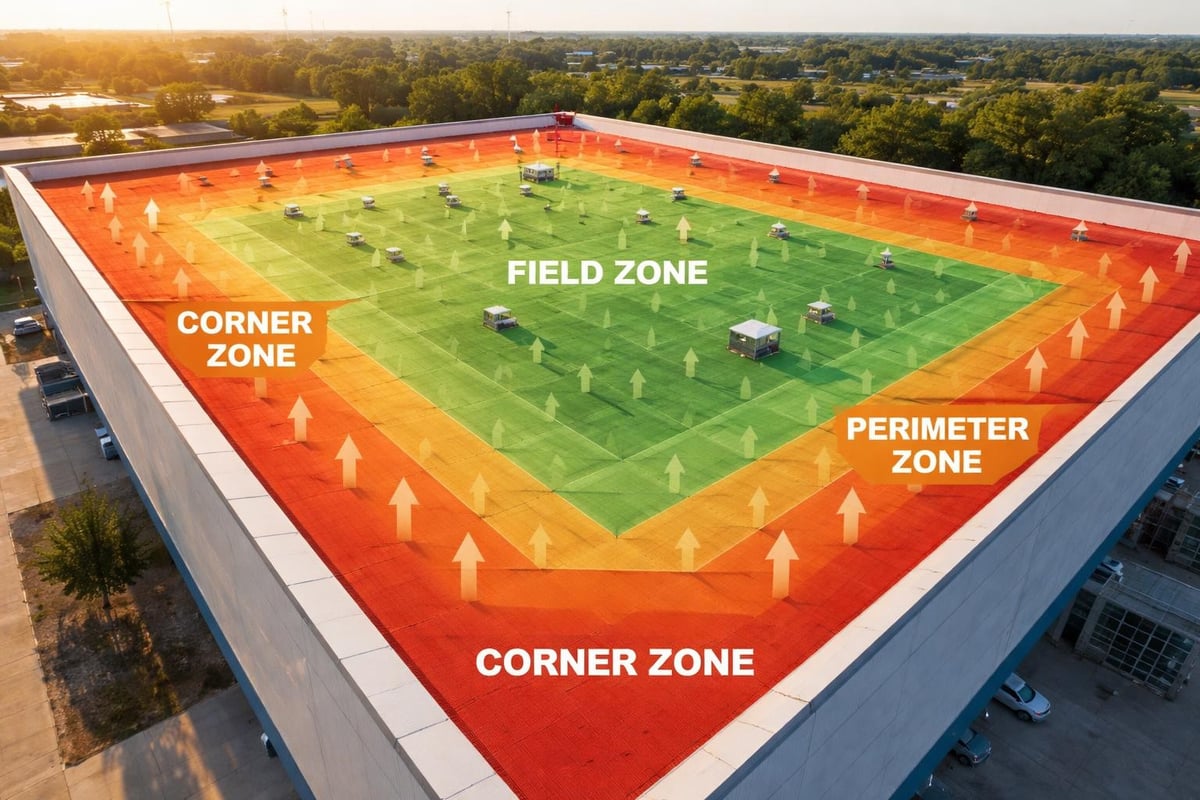
The edges and corners of commercial roofs experience the highest wind pressures, making these areas particularly vulnerable to damage. Research on wind and roof performance demonstrates that uplift forces at roof perimeters can exceed forces at the center by 200-300%. This concentration of pressure explains why roofing wind damage typically begins at edges, corners, and ridge lines before progressing to field areas.
Critical Pressure Zones
Commercial roofs contain three distinct pressure zones that respond differently to wind events:
Corner zones experience the highest uplift forces and require the strongest attachment methods
Perimeter zones face significant stress but less than corners, extending approximately 10% of building width inward
Field zones encounter lower pressures but cover the largest roof area
Building height, roof slope, and surrounding terrain all influence how wind interacts with these zones. Low-rise buildings face different challenges than high-rise structures, while buildings in open areas experience higher wind speeds than those surrounded by similar-height structures.
Common Types of Roofing Wind Damage
Commercial roofing systems fail under wind stress in predictable patterns. Recognizing these damage types helps property managers assess severity and prioritize repairs appropriately.
Membrane and Surface Damage
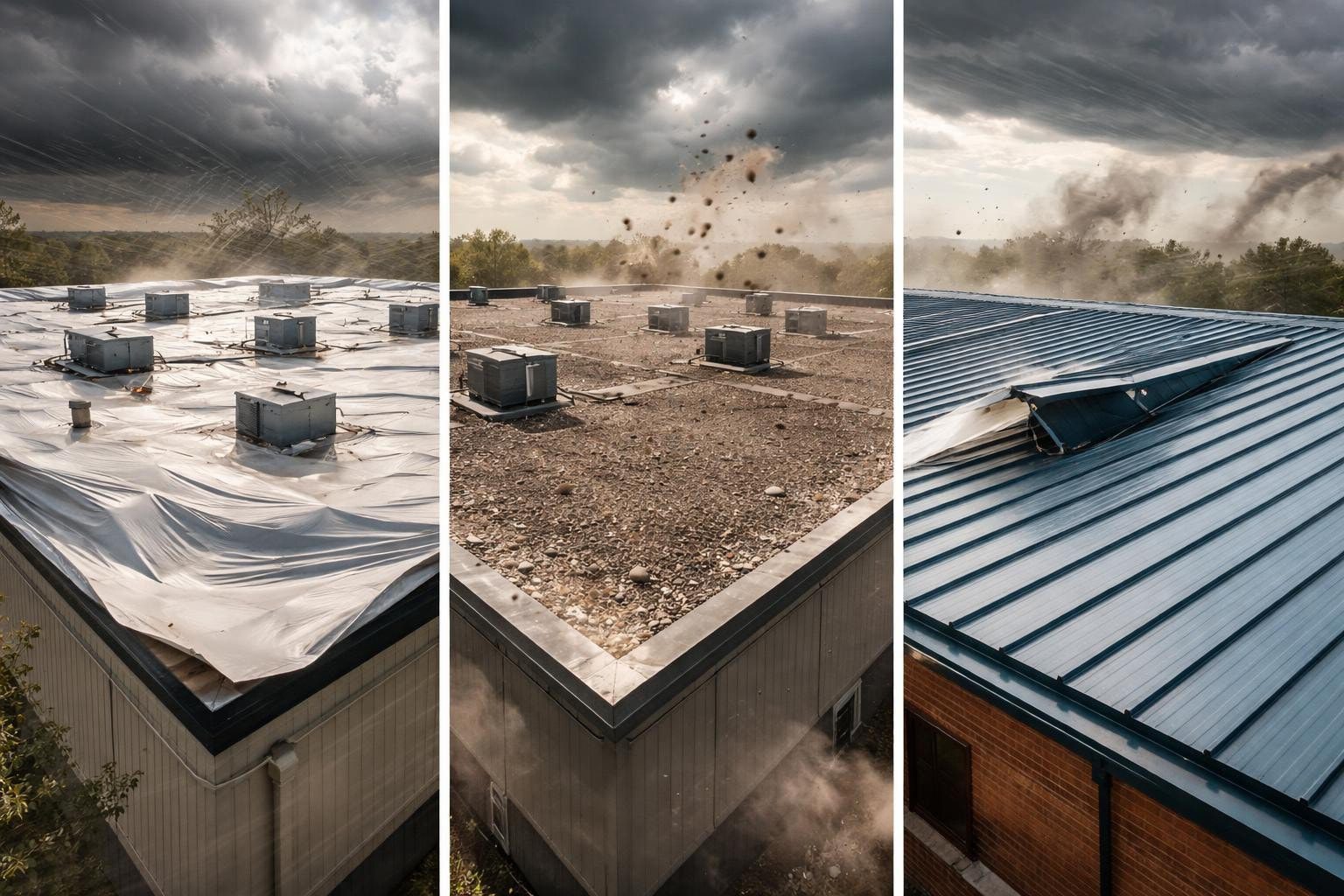
Single-ply membrane roofs commonly experience wind-related failures at seams, flashings, and penetrations. TPO and EPDM systems rely on adhered or mechanically attached seams that can separate when subjected to sustained uplift forces. Once a small section lifts, wind can enter beneath the membrane and progressively peel back larger areas.
Metal roofing systems face different challenges, including:
Panel displacement where fasteners pull through or panels separate from clips
Seam separation when standing seam profiles unzip under stress
Fastener backing out due to thermal cycling combined with wind vibration
Edge metal detachment allowing water infiltration and progressive damage
Built-up roofing (BUR) and modified bitumen systems typically show roofing wind damage through gravel displacement, surface blistering from air infiltration, and flashing failures at transitions. The National Roofing Contractors Association emphasizes professional assessment following severe weather events to identify hidden damage that might not be immediately visible.
Structural and Substrate Issues
Wind damage extends beyond surface materials to underlying components. Roof decking can separate from structural members, insulation can become dislodged or compressed, and entire sections can experience uplift that compromises attachment integrity without visible surface damage.
Damage Type
Visual Indicators
Risk Level
Surface membrane lifting
Billowing, wrinkles, exposed adhesive
High – immediate water infiltration risk
Fastener withdrawal
Raised fastener heads, loose panels
High – progressive failure potential
Flashing separation
Gaps at transitions, exposed substrate
Critical – concentrated leak points
Gravel displacement
Bare membrane patches, gravel accumulation in gutters
Moderate – UV exposure concern
Insulation compression
Soft spots, uneven surface profile
Moderate – thermal performance loss
Identifying Wind Damage After Storm Events
Prompt damage assessment following wind events prevents minor issues from escalating into major problems. Many commercial property managers lack the expertise to conduct thorough roof inspections safely, making professional evaluation essential.
Interior Warning Signs
Water stains on ceilings, walls, or along HVAC penetrations often indicate roofing wind damage even when exterior damage appears minimal. Wind-driven rain can enter through compromised flashings or lifted membrane edges, traveling significant distances before manifesting as interior leaks.
Monitor these interior indicators after windstorms:
Discolored ceiling tiles or drywall, particularly near roof edges
Increased humidity levels in upper floors or ceiling plenums
Standing water in roof access areas or mechanical rooms
Unusual sounds during wind events suggesting loose materials
Exterior Assessment Priorities
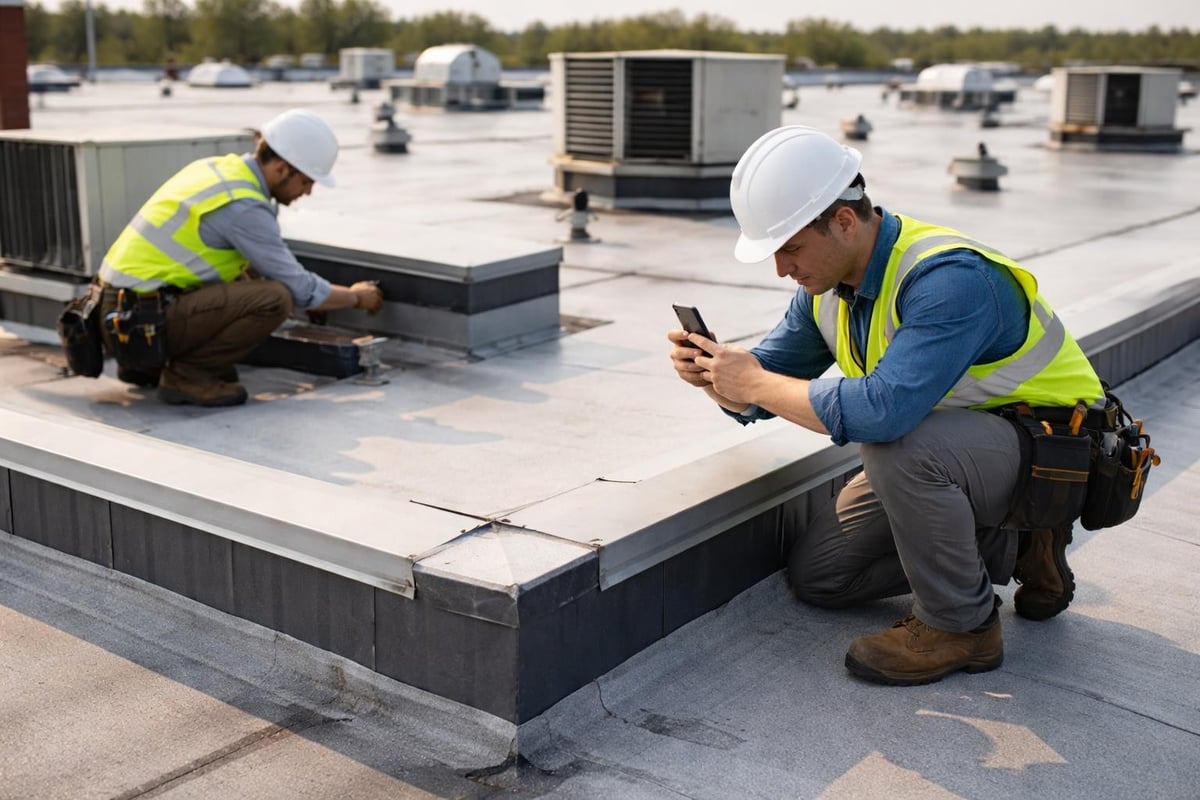
Safe exterior inspection requires proper equipment and training. Professional roof inspections should follow comprehensive storm damage assessment protocols that document existing damage, evaluate repair urgency, and provide detailed photographic evidence.
Focus exterior evaluations on high-stress areas where roofing wind damage typically initiates. Examine all roof penetrations, transitions between different roof sections, and anywhere dissimilar materials meet. Parapet walls, equipment curbs, and rooftop HVAC units create turbulence that intensifies local wind forces.
Wind Damage Prevention Strategies
Proactive measures significantly reduce roofing wind damage risk while extending overall system lifespan. Commercial building owners who invest in prevention typically spend far less than those who adopt reactive maintenance approaches.
Design and Installation Considerations
New installations and roof replacements offer opportunities to specify wind-resistant systems appropriate for local conditions. Understanding how wind interacts with roofs informs better material selection and attachment method decisions that enhance long-term performance.
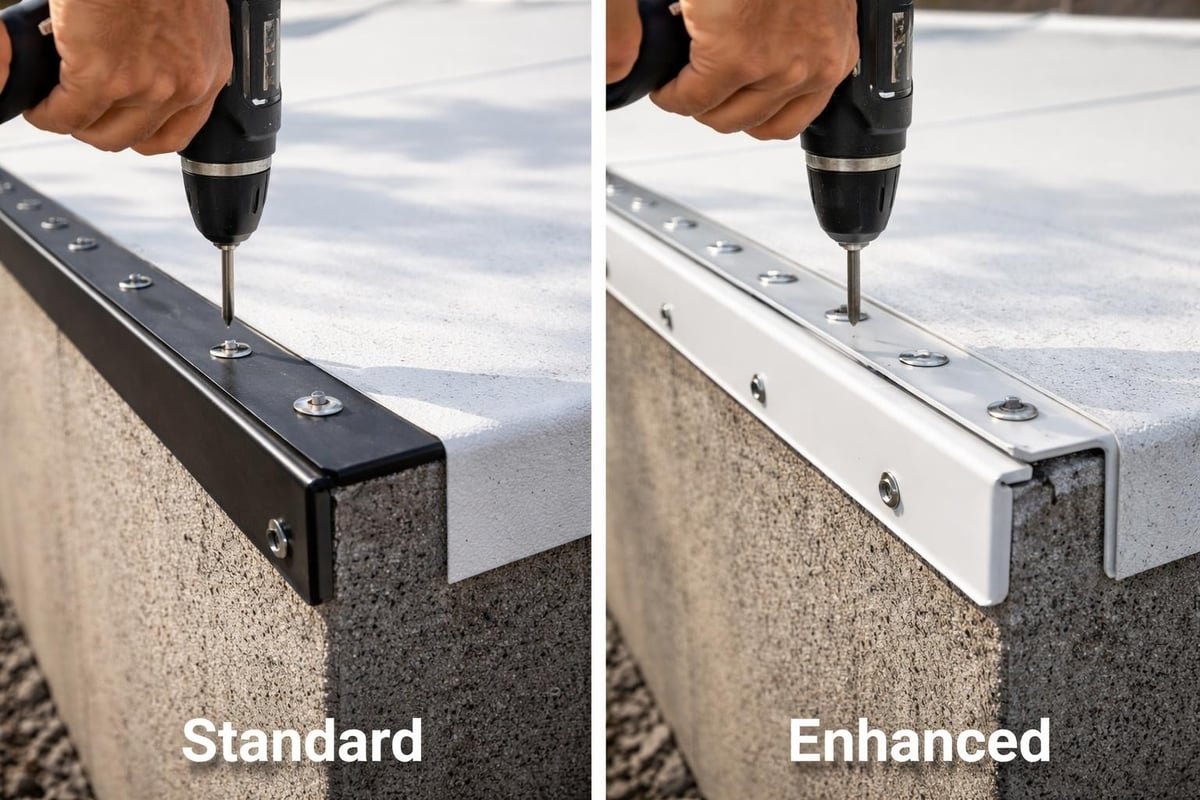
Enhanced attachment systems represent the most effective prevention strategy. Increasing fastener density in perimeter and corner zones, using adhesives in combination with mechanical attachments, and specifying higher-rated fasteners all improve wind resistance. Many building codes establish minimum requirements, but designing for conditions exceeding code minimums provides additional security.
Regular Maintenance Programs
Scheduled maintenance identifies developing problems before they become emergencies. Commercial roofs should receive professional inspections at least twice annually, with additional evaluations following significant weather events.
Effective maintenance programs include:
Quarterly visual inspections of accessible roof areas and interior spaces
Biannual professional inspections documenting conditions with detailed reports
Immediate post-storm assessments when wind speeds exceed 50 mph
Preventive repairs addressing minor issues before they progress
Documentation systems tracking inspection findings, repairs, and system age
Maintenance contracts with experienced commercial roofing contractors ensure consistent attention and establish relationships with professionals who understand specific building characteristics. These programs often identify small problems that, if left unaddressed, would lead to significant roofing wind damage during future storm events.
Repair vs. Replacement Decision Factors
Determining whether to repair or replace wind-damaged roofing requires careful evaluation of multiple factors beyond simple cost comparison. Age, extent of damage, system type, and building use all influence the most appropriate response.
When Repairs Are Appropriate
Localized roofing wind damage on relatively new systems typically warrants targeted repairs. If less than 25% of the roof area sustained damage and the underlying structure remains sound, repairs often provide cost-effective restoration of weather protection.
Repair suitability depends on:
System age (repairs make sense for roofs under 10-12 years old)
Damage concentration (isolated areas versus widespread distribution)
Availability of matching materials for seamless repairs
Remaining warranty coverage that repairs might preserve
Building occupancy requirements and operational disruption tolerance
Replacement Indicators
Extensive damage, particularly on aging systems approaching end of useful life, often makes replacement the more economical long-term choice. When repair costs exceed 30-40% of replacement costs, or when multiple previous repairs create a patchwork condition, replacement typically offers better value.
Consideration
Repair
Replacement
System age
Less than 12 years
Over 15 years
Damage extent
Less than 25% affected
More than 40% affected
Previous repairs
None or minimal
Multiple patches
Building plans
Short-term ownership
Long-term investment
Budget availability
Limited immediate funds
Capital budget allocated
Warranty status
Active coverage
Expired or void
Advanced Wind Mitigation Technologies
Modern roofing technologies offer superior wind resistance compared to systems installed even a decade ago. Commercial building owners planning replacements should consider these enhanced options that reduce future roofing wind damage risk.
High-Performance Membrane Systems
Reinforced single-ply membranes with higher tear strength and puncture resistance outperform standard products in wind events. Some manufacturers offer membranes specifically engineered for high-wind zones, featuring enhanced scrim reinforcement and superior seam strength.
Fully adhered membrane systems eliminate the billowing effect that causes progressive damage in mechanically attached or ballasted systems. While adhesion adds installation cost, it significantly improves wind performance and reduces noise during wind events.
Improved Fastening Systems
Fastener technology has advanced considerably, with manufacturers developing products specifically for high-wind applications. Helical fasteners create stronger connections than traditional screws, while specialized plates distribute loads across larger deck areas.
Modern fastening improvements include:
Corrosion-resistant coatings extending fastener life in coastal environments
Ribbed shanks preventing backing out from thermal cycling
Self-sealing gaskets preventing water infiltration at penetrations
Enhanced Edge Systems
Roof edges experience the highest wind forces, making edge detail quality critical for overall system performance. Modern edge systems incorporate continuous cleats, mechanically locked fascia, and redundant attachment points that maintain integrity during extreme events.
Perimeter securement methods have evolved from simple through-fastening to sophisticated systems that distribute uplift forces across multiple connection points. These enhanced details cost more initially but dramatically reduce roofing wind damage potential over system lifespan.
Insurance and Documentation Best Practices
Proper documentation proves essential when filing insurance claims for roofing wind damage. Commercial property policies often include specific requirements for damage notification, professional assessments, and temporary protection measures that policyholders must follow to maintain coverage.
Pre-Storm Documentation
Establishing roof condition before storm events simplifies claims processing and prevents disputes about pre-existing damage. Annual inspection reports with dated photographs create clear condition baselines that adjusters can reference when evaluating post-storm damage.
Maintain comprehensive records including:
Professional inspection reports with photographic documentation
Maintenance and repair records showing proactive care
System installation date and warranty information
Building permit records for roof replacements or major repairs
Previous weather damage claims and resolution documentation
Post-Damage Procedures
Immediately following suspected roofing wind damage, document conditions thoroughly before making any repairs beyond emergency measures. Photograph all visible damage from multiple angles, note approximate damage extent, and contact both insurance carriers and roofing professionals promptly.
Most commercial policies require damage notification within specific timeframes. Delayed reporting can jeopardize coverage, particularly if damage progression results from failure to protect property. Implement temporary measures to prevent additional damage, but avoid permanent repairs until adjusters complete evaluations unless emergencies require immediate action.
Industry-Specific Considerations
Different commercial sectors face unique challenges regarding roofing wind damage that influence prevention strategies and repair priorities. Healthcare facilities, retail complexes, and government buildings each have specific requirements affecting how they approach roof system protection.
Healthcare Facilities
Hospitals and medical centers cannot tolerate weather-related operational disruptions. Roofing wind damage that leads to water infiltration can compromise sterile environments, damage sensitive equipment, and potentially force patient relocations. These facilities benefit from redundant protection systems and aggressive preventive maintenance programs that minimize failure risk.
Redundant waterproofing at critical areas like operating rooms and imaging departments
Emergency repair protocols with pre-established contractor relationships
Backup power for roof drainage systems during outages
Retail Properties
Shopping centers and big-box retailers face different pressures, balancing cost management with customer experience protection. Visible roofing wind damage or interior leaks negatively impact sales, while repair disruptions can close affected areas during peak shopping periods.
Retail property managers should prioritize regular inspections identifying problems before they affect operations. Seasonal maintenance timing avoids disruptions during holiday shopping periods, while relationships with commercial roofing contractors ensure rapid response when damage occurs.
Government Buildings
Public facilities operate under strict budgetary constraints while maintaining responsibility for occupant safety and asset protection. Many government buildings feature aging roof systems requiring careful evaluation of repair versus replacement economics.
Government property managers benefit from multi-year capital planning that anticipates roof replacements before emergency conditions develop. Grant programs and special funding mechanisms sometimes assist with major roof projects, making thorough documentation and long-term planning particularly valuable.
The Role of Professional Roofing Contractors
Commercial roofing wind damage assessment and repair requires specialized knowledge that general contractors and building maintenance staff typically lack. Professional roofing contractors bring expertise in system-specific repair methods, material compatibility, and warranty preservation that protects building owner investments.
Selecting Qualified Contractors
Verify contractor qualifications carefully before engaging services, particularly for insurance-funded repairs. Established commercial roofing companies maintain manufacturer certifications, carry appropriate insurance coverage, and employ trained technicians who understand complex commercial systems.
Essential contractor qualifications include:
Active license and bonding appropriate for commercial work
Manufacturer certifications for systems being repaired or replaced
General liability and workers compensation insurance with adequate limits
References from similar commercial projects completed recently
Safety programs meeting OSHA requirements for commercial roofing work
Understanding Contractor Services
Full-service commercial roofing contractors offer capabilities beyond simple repairs. Comprehensive providers conduct detailed inspections, prepare documentation supporting insurance claims, coordinate with adjusters, and provide maintenance programs preventing future damage.
Emergency response capabilities prove particularly valuable when roofing wind damage creates immediate protection needs. Contractors offering 24/7 emergency services can implement temporary measures preventing interior damage progression while permanent repairs are planned and executed.
Long-Term Roof Asset Management
Treating commercial roofs as managed assets rather than neglected building components fundamentally changes outcomes. Asset management approaches apply structured evaluation, predictive maintenance, and strategic investment timing that maximizes roof system value over building lifespan.
Lifecycle Cost Analysis
Initial installation cost represents only one factor in total roof system economics. Service life, maintenance requirements, energy performance, and replacement timing all contribute to lifecycle costs that often differ substantially from first-cost comparisons.
Systems with higher initial costs but superior wind resistance and longer service lives frequently deliver better value than cheaper alternatives requiring frequent repairs. Lifecycle analysis helps building owners make informed decisions that align roof investments with overall property strategies.
Technology Integration
Modern building management systems increasingly incorporate roof monitoring technologies that detect problems early. Moisture sensors embedded in roof assemblies identify leaks immediately after they develop, while weather stations track wind speeds and precipitation helping correlate damage with specific events.
These technologies support proactive maintenance by alerting facility managers to developing problems before they cause interior damage. Integration with computerized maintenance management systems (CMMS) ensures timely inspections and creates comprehensive service histories documenting all roof-related activities.
Understanding roofing wind damage patterns, implementing preventive measures, and responding appropriately when damage occurs protects commercial building investments while maintaining operational continuity. Professional assessment following wind events identifies problems before they escalate, while regular maintenance programs extend system life and reduce long-term costs. GM Roofing Services provides comprehensive commercial roofing solutions including detailed inspections, emergency repairs, and customized maintenance programs designed for healthcare facilities, retail properties, and government buildings throughout the region. Contact our team today to schedule a professional roof assessment and develop a protection strategy tailored to your facility's specific needs.
Learn why preventative electrical maintenance is critical for commercial buildings. Discover best practices, inspection schedules, and cost-saving benefits.