Discover how commercial roof painting extends roof lifespan, reduces energy costs, and protects your building investment in 2026.
Commercial property owners face constant challenges in maintaining building infrastructure while controlling operational costs. One of the most effective yet often overlooked strategies for protecting and enhancing commercial buildings involves the roofing system. Commercial roof painting offers a comprehensive solution that addresses multiple facility management concerns simultaneously, from energy efficiency to structural protection. This proactive approach transforms aging roofing systems into high-performance assets that deliver measurable returns on investment.
Understanding Commercial Roof Painting Benefits
Commercial roof painting goes far beyond simple aesthetics. This specialized process creates a protective barrier that shields your roofing system from environmental damage while improving overall building performance.
Extended Roof Lifespan
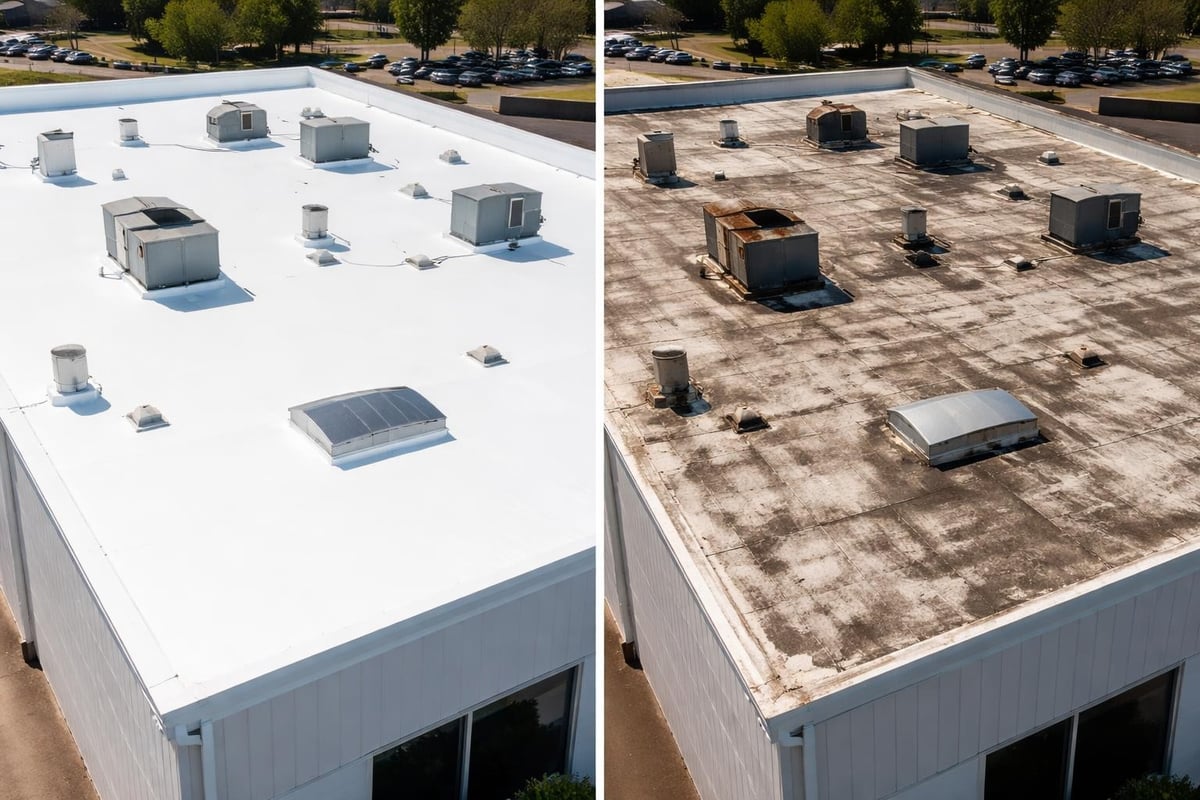
The primary advantage of commercial roof painting lies in its ability to significantly extend the service life of existing roofing systems. Rather than facing costly replacement projects, property managers can add 10-15 years to their roof's functional lifespan through professional coating applications.
Key durability improvements include:
Protection against UV radiation that breaks down roofing materials
Waterproof barriers that prevent moisture infiltration
Resistance to thermal expansion and contraction cycles
Defense against ponding water and standing moisture
The energy efficiency benefits of commercial roof coatings have been well-documented, with reflective surfaces reducing cooling demands by up to 30% in warmer climates. This translates directly to lower utility expenses throughout the year.
Energy Efficiency and Cost Reduction
Modern commercial roof painting systems incorporate reflective technology that fundamentally changes how buildings interact with solar radiation. Traditional dark roofing materials absorb heat, forcing HVAC systems to work harder and consume more energy.
Roof Type
Solar Reflectance
Energy Savings
Annual Cost Reduction
Unpainted Dark Roof
5-10%
Baseline
$0
Standard White Coating
75-85%
20-30%
$2,500-$4,000
Premium Reflective Coating
85-95%
30-40%
$4,000-$6,500
These figures demonstrate why facility managers across healthcare, retail, and government sectors prioritize coating applications. The advantages of commercial roof coatings extend well beyond initial installation, providing compounding savings over the coating's service life.
Commercial roof painting creates immediate impact on monthly operating expenses. Buildings in southern climates see the most dramatic results, though northern facilities benefit from reduced thermal cycling and improved insulation performance.
Types of Commercial Roof Painting Systems
Different roofing substrates and building requirements demand specific coating formulations. Understanding these options helps property owners make informed decisions aligned with their facility needs.
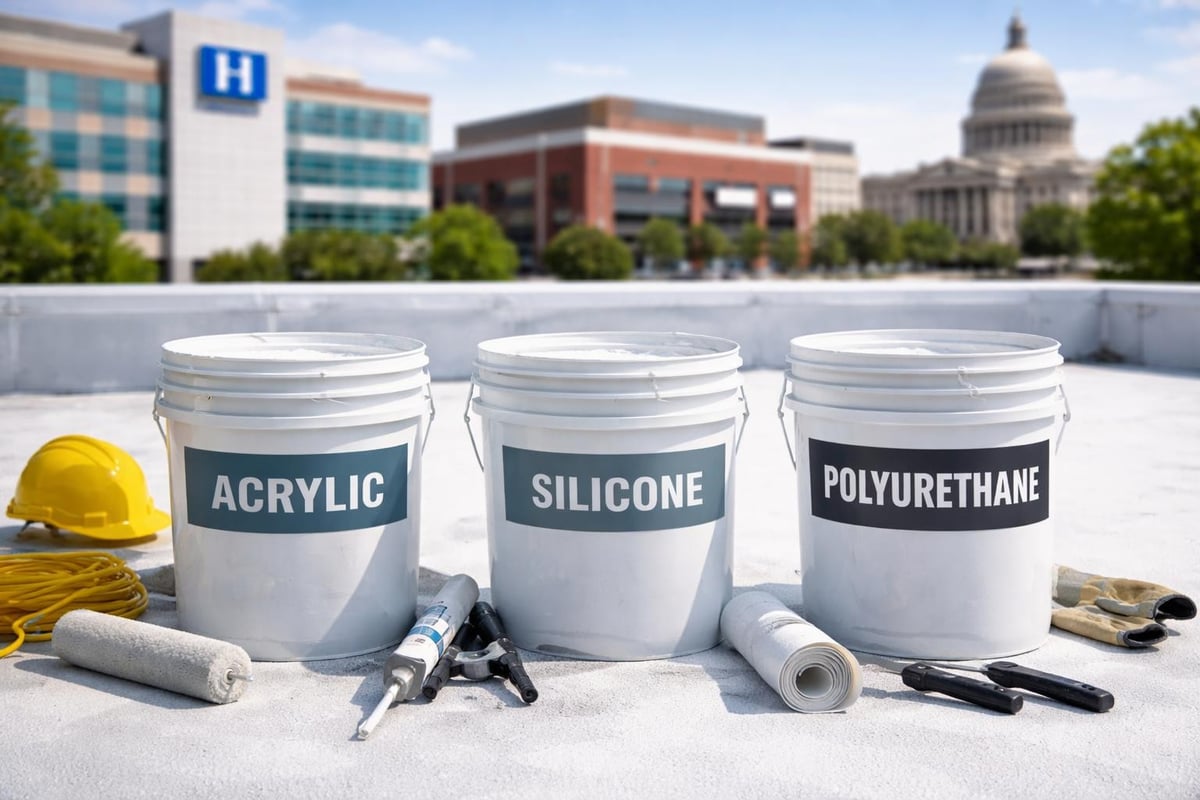
Acrylic Roof Coatings
Acrylic-based systems remain popular for commercial roof painting applications due to their versatility and cost-effectiveness. These water-based coatings offer excellent UV resistance and maintain their reflective properties throughout their service life.
Ideal applications for acrylic coatings:
Single-ply membrane roofing systems
Modified bitumen surfaces
Metal roofing with minimal rust
Facilities requiring budget-friendly solutions
Acrylic coatings cure through water evaporation, making them unsuitable for application during humid conditions or when rain threatens within 24 hours. Proper weather planning ensures optimal adhesion and performance.
Silicone Roof Coatings
Silicone formulations excel in challenging environments where moisture presents ongoing concerns. These coatings cure through atmospheric moisture contact, creating superior waterproofing capabilities that outperform other options.
For buildings with persistent ponding water issues, silicone commercial roof painting provides unmatched protection. The material's hydrophobic nature prevents water absorption, even during extended exposure periods.
The five reasons for roof coating include environmental benefits that silicone systems deliver particularly well, as they require no solvents and emit minimal volatile organic compounds during application.
Polyurethane Coatings
Heavy foot traffic areas demand more robust protection than standard coating systems provide. Polyurethane formulations offer exceptional impact resistance and abrasion tolerance, making them ideal for roofs that serve dual purposes as accessible terraces or equipment platforms.
Polyurethane advantages include:
Superior hail resistance compared to other coatings
Enhanced durability in high-traffic zones
Excellent adhesion to various substrates
Long-term flexibility that accommodates building movement
These systems typically cost more than acrylic alternatives but deliver unmatched performance in demanding applications where coating failure would create significant operational disruptions.
The Commercial Roof Painting Process
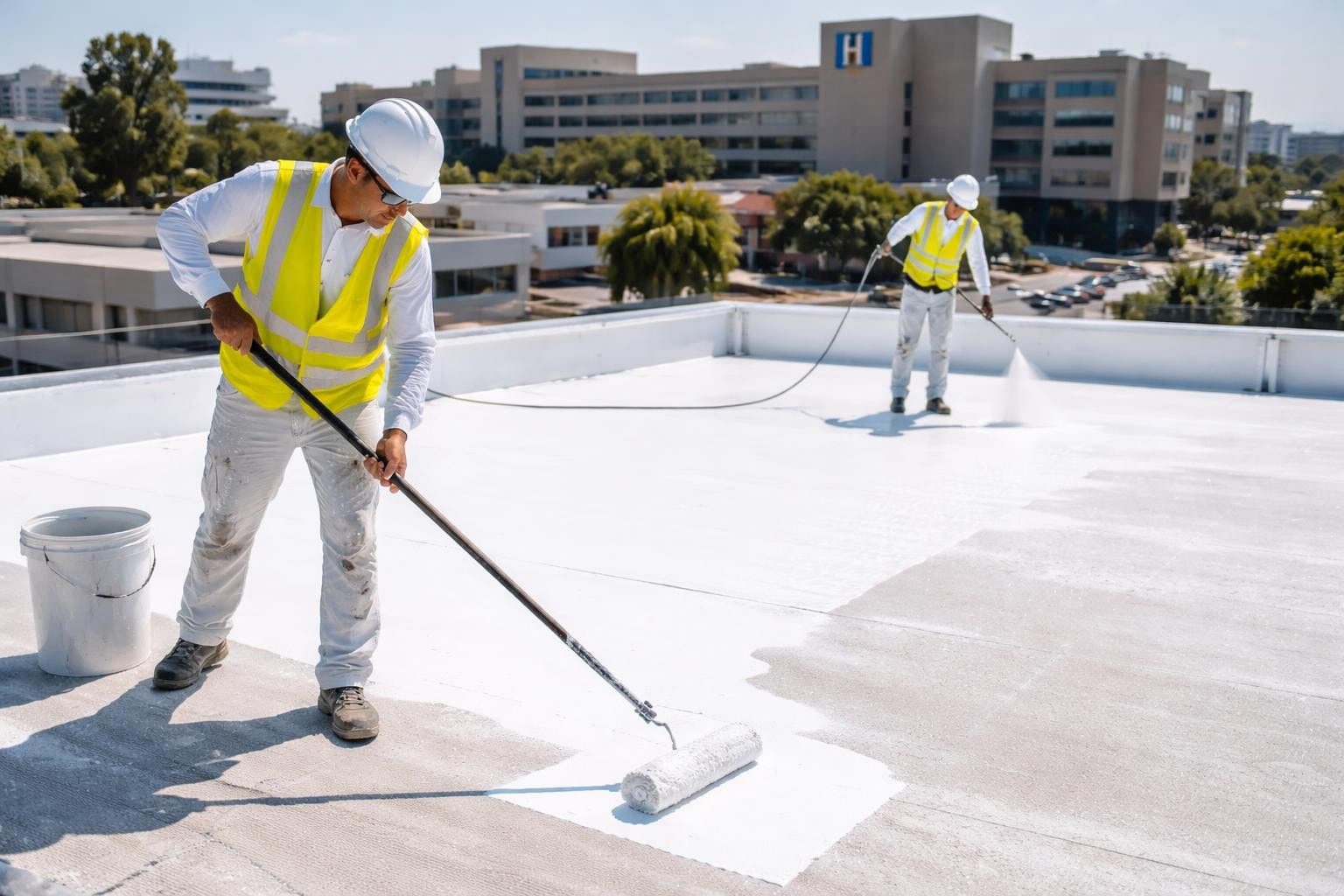
Professional application determines coating system success regardless of product quality. The multi-step process requires expertise, proper equipment, and attention to environmental conditions.
Surface Preparation
Thorough preparation creates the foundation for long-lasting commercial roof painting results. Contractors must remove all contaminants, repair damaged areas, and ensure proper surface profiles for coating adhesion.
Complete roof cleaning using pressure washing or chemical treatments
Damage assessment identifying cracks, blisters, or deteriorated sections
Structural repairs addressing compromised areas before coating
Prime coat application on porous or challenging surfaces
This preparation phase often represents 40-50% of total project time but proves critical for achieving manufacturer-specified warranty coverage. Shortcuts during preparation inevitably lead to premature coating failure.
Application Techniques
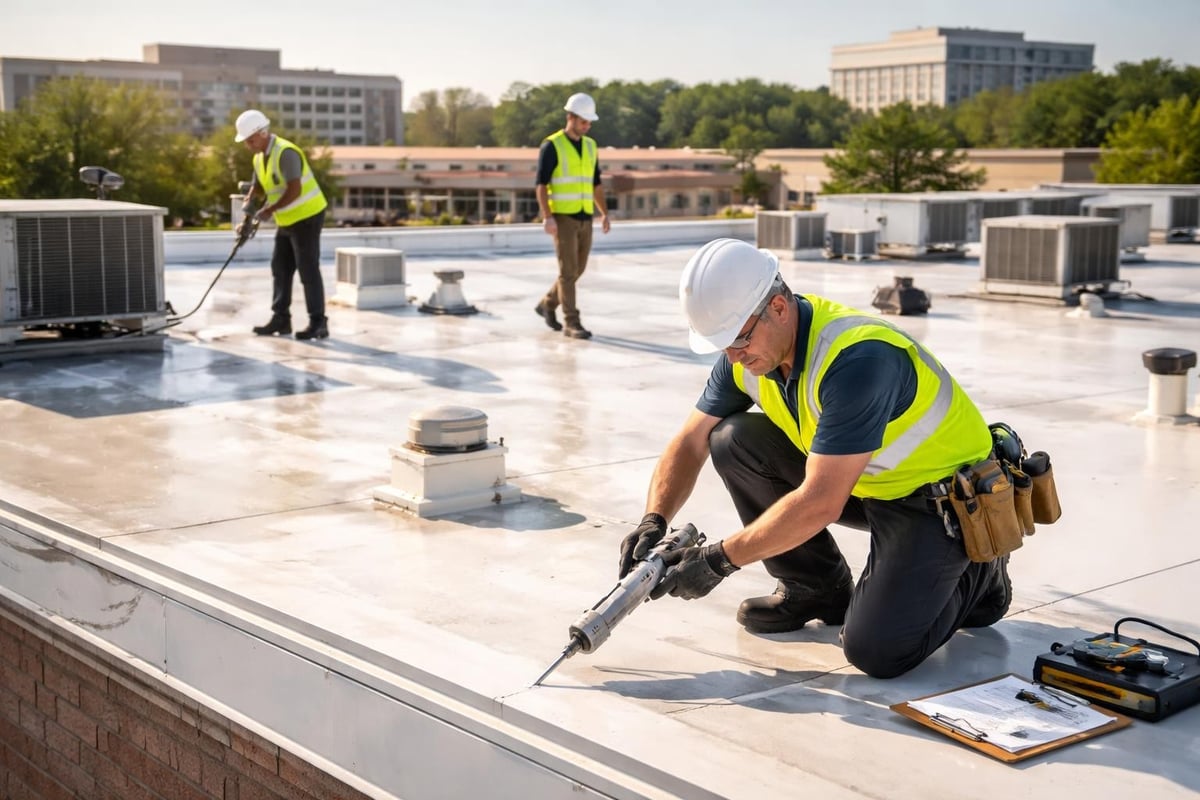
Professional crews apply commercial roof painting systems using specialized equipment calibrated for specific coating viscosities and film thickness requirements. The application method varies based on roof geometry, coating type, and weather conditions.
Application Method
Best For
Coverage Rate
Advantages
Spray Application
Large flat areas
1,200-1,500 sq ft/hr
Uniform thickness, fast coverage
Roller Application
Detail work, edges
400-600 sq ft/hr
Precise control, minimal overspray
Brush Application
Penetrations, flashings
200-300 sq ft/hr
Maximum penetration, tight spaces
Multiple coating layers build to manufacturer-specified dry film thickness, typically ranging from 20-40 mils depending on warranty requirements. Each layer requires proper cure time before subsequent applications proceed.
Quality Control and Inspection
Professional commercial roof painting contractors implement rigorous quality control measures throughout the application process. Film thickness gauges verify adequate coating depth, while visual inspections identify any missed areas or application defects.
The best practices for commercial roofs emphasize documentation and verification at each project phase. Comprehensive records support warranty claims and future maintenance planning.
Maintenance and Longevity Optimization
Even the highest-quality commercial roof painting systems require ongoing attention to maximize their service life and performance benefits. Strategic maintenance programs prevent minor issues from escalating into costly repairs.
Regular Inspection Schedules
Property managers should establish bi-annual inspection protocols that examine coating integrity and identify developing concerns. Spring and fall inspections allow crews to address issues before extreme weather seasons arrive.
Critical inspection points include:
Coating adhesion around penetrations and flashings
Surface cleanliness and debris accumulation
Drainage system functionality and ponding areas
Early signs of coating degradation or chalking
Vegetation growth or biological contamination
The commercial roof maintenance best practices outlined by industry experts emphasize preventative approaches that protect coating investments and extend overall roof performance.
Cleaning and Minor Repairs
Accumulation of dirt, organic growth, or pollutants diminishes coating reflectivity and can compromise protective properties. Annual cleaning using low-pressure washing and appropriate cleaning agents maintains optimal performance levels.
Small damaged areas respond well to localized repairs using compatible coating materials. These targeted interventions cost significantly less than full recoating projects while maintaining system integrity.
Industry-Specific Considerations
Different commercial sectors face unique roofing challenges that influence commercial roof painting specifications and maintenance approaches.
Healthcare Facilities
Hospital and medical office buildings operate under strict regulatory requirements regarding infection control and patient safety. Roof coating projects must minimize disruption while adhering to ventilation and contamination protocols.
Antimicrobial coating additives provide additional protection against biological growth, particularly important for facilities with vulnerable patient populations. These specialized formulations prevent mold and bacteria colonization on roof surfaces.
Retail Properties
Shopping centers and big-box retailers prioritize minimal business interruption during coating projects. Phased application schedules allow portions of buildings to remain operational while work progresses on other sections.
Energy savings from reflective commercial roof painting directly impact retail operating margins, making these projects particularly attractive for multi-location operators seeking portfolio-wide efficiency improvements.
Government Buildings
Public sector facilities often require specific procurement processes and contractor qualifications. Government projects typically emphasize long-term value and documented performance over initial cost considerations.
Compliance with benefits of commercial roof coating sustainability standards helps government agencies meet environmental mandates while reducing taxpayer-funded operational expenses.
Cost Analysis and Return on Investment
Understanding the financial implications of commercial roof painting helps decision-makers evaluate project viability and compare alternatives.
Initial Investment Breakdown
Project costs vary based on roof size, substrate condition, coating type, and accessibility challenges. Typical pricing ranges from $2.50 to $6.50 per square foot for complete commercial roof painting applications.
Cost components include:
Surface preparation and repairs (30-40% of total)
Coating materials (25-35% of total)
Labor and equipment (25-30% of total)
Project management and quality control (5-10% of total)
These investments deliver immediate returns through reduced energy consumption and delayed replacement expenses. Most commercial properties achieve payback within 3-5 years through cumulative operational savings.
Comparative Analysis
Solution
Upfront Cost
Lifespan Extension
Energy Savings
Total 10-Year Cost
Do Nothing
$0
0 years
$0
$65,000+
Basic Coating
$25,000
8-10 years
$3,000/year
$28,000
Premium Coating
$38,000
12-15 years
$4,500/year
$29,000
Roof Replacement
$125,000
20-25 years
$2,000/year
$145,000
This analysis demonstrates why commercial roof painting represents the most cost-effective solution for roofs with 50% or more remaining service life. The commercial roof coating benefits for businesses extend across multiple financial metrics beyond simple replacement deferral.
Environmental and Sustainability Impact
Modern commercial roof painting systems align with corporate sustainability goals and environmental responsibility initiatives that increasingly influence facility management decisions.
Heat Island Effect Reduction
Urban areas experience elevated temperatures compared to surrounding regions due to heat-absorbing surfaces like traditional roofing materials. Reflective coatings combat this phenomenon by redirecting solar radiation rather than converting it to thermal energy.
Cities with cool roof ordinances often mandate minimum solar reflectance values for commercial properties. Commercial roof painting provides cost-effective compliance while delivering tangible community benefits through reduced ambient temperatures.
Material Conservation
Roof replacement generates substantial construction waste that burdens landfills and requires significant raw material extraction. Coating existing roofs eliminates these environmental impacts while preserving embodied energy in current roofing systems.
The benefits of roof coatings include reduced carbon footprints compared to manufacturing and installing new roofing materials, supporting corporate environmental objectives.
Warranty Considerations and Contractor Selection
Project success depends heavily on contractor expertise and manufacturer support through comprehensive warranty coverage.
Understanding Warranty Terms
Commercial roof painting warranties typically cover material defects and application workmanship for periods ranging from 5 to 20 years. Extended warranties require strict adherence to manufacturer specifications for surface preparation, application rates, and film thickness.
Warranty exclusions commonly include:
Damage from ponding water exceeding 48 hours
Coating degradation from chemical exposure
Failures due to structural roof movement
Inadequate maintenance or unauthorized repairs
Reading warranty fine print before project commencement prevents misunderstandings about coverage limitations and owner responsibilities.
Contractor Qualification Criteria
Selecting experienced commercial roof painting contractors ensures proper system selection, application, and long-term performance. Qualified contractors maintain manufacturer certifications, carry appropriate insurance, and demonstrate proven track records on similar projects.
Request references from properties in your industry sector, particularly healthcare, retail, or government facilities with comparable roofing systems. Site visits to completed projects reveal actual performance and contractor attention to detail.
Successful commercial roof painting requires careful scheduling that considers weather conditions, building operations, and contractor availability.
Optimal Application Windows
Most coating systems require specific temperature and humidity ranges for proper curing. Spring and fall typically provide ideal conditions in most climate zones, though regional variations influence optimal timing.
Seasonal considerations include:
Minimum substrate temperatures (usually 50°F)
Maximum humidity levels (typically below 85%)
Rain-free periods of 24-48 hours post-application
Wind speeds that don't compromise spray application
Adequate daylight hours for inspection and quality control
Projects scheduled during shoulder seasons often command better contractor pricing due to increased availability compared to peak demand periods.
Phasing for Operational Continuity
Large commercial facilities may benefit from phased commercial roof painting that maintains building functionality throughout the project. Sequential section completion allows HVAC systems to operate normally while protecting completed areas from construction activities.
Healthcare facilities particularly benefit from phased approaches that comply with infection control protocols and maintain critical ventilation systems without interruption.
Commercial roof painting delivers measurable benefits across multiple performance and financial metrics while extending the service life of existing roofing systems. Property managers who implement strategic coating programs protect their building investments while reducing operational expenses and meeting sustainability objectives. GM Roofing Services specializes in commercial roof coating solutions tailored for healthcare, retail, and government facilities, providing expert assessments, professional application, and comprehensive maintenance programs that maximize your roofing system's performance and longevity.
Learn why preventative electrical maintenance is critical for commercial buildings. Discover best practices, inspection schedules, and cost-saving benefits.