Expert Leak Repair for Commercial Buildings in 2026
Discover proven leak repair strategies for commercial properties. Learn detection methods, repair techniques, and prevention tips.
When water starts dripping from your commercial ceiling or pooling on the floor, you're facing more than just an inconvenience. You're looking at potential property damage, business interruption, and safety hazards that demand immediate attention. Whether you manage a healthcare facility, retail center, or office building, understanding the fundamentals of leak repair can save you thousands of dollars and prevent minor problems from becoming major disasters. Let's walk through what every property manager and facility director should know about identifying, fixing, and preventing leaks in commercial structures.
Understanding Common Leak Sources in Commercial Buildings
Commercial buildings face unique challenges when it comes to water intrusion. Unlike residential properties, these structures often have complex roofing systems, extensive plumbing networks, and HVAC equipment that can all contribute to leak problems.
Roof-related leaks top the list of culprits. Flat roofs, common in commercial construction, are particularly vulnerable to ponding water and membrane deterioration. Metal roofing systems can develop leaks at seams and fasteners, while roof-mounted equipment creates potential weak points.
Interior Systems That Cause Leaks
Beyond the roof, your building's internal systems present their own risks:
Plumbing fixtures and pipes throughout multi-story buildings
HVAC condensate lines that can overflow or disconnect
Fire sprinkler systems with aging components
Water heaters and boilers in mechanical rooms
Have you noticed water stains that seem to appear randomly? That's often because commercial leaks don't follow simple patterns. A roof leak might travel along beams and appear several feet from its actual source, making detection tricky.
Professional Detection Methods That Save Time
Finding the source of a leak quickly makes all the difference between a simple repair and extensive remediation. Professional leak detection has evolved significantly, incorporating technology that pinpoints problems without destructive investigation.
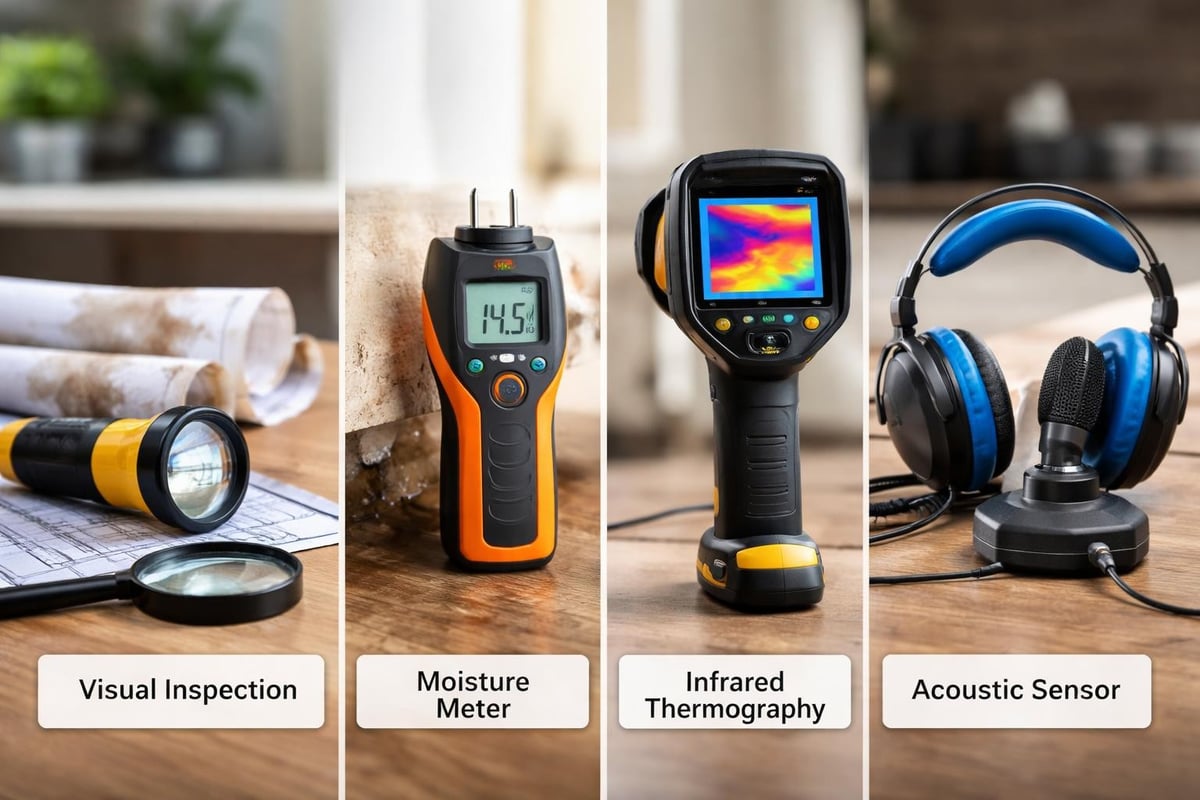
Acoustic leak detection methods use sensitive equipment to identify the sound of water escaping from pipes, even when hidden behind walls or underground. This non-invasive approach helps technicians locate problems in pressurized water lines with remarkable accuracy.
Modern Technology for Leak Location
Detection Method
Best For
Typical Accuracy
Infrared Thermography
Roof membranes, hidden moisture
Very High
Moisture Meters
Wall and ceiling leaks
High
Acoustic Sensors
Pressurized pipe systems
Very High
Visual Inspection
Surface-level issues
Moderate
For commercial roofing systems specifically, roof inspections performed by experienced professionals can identify vulnerable areas before they develop into active leaks. Regular assessments catch problems like cracked membranes, failed sealants, and damaged flashing early in their development.
Repair Techniques for Different Leak Types
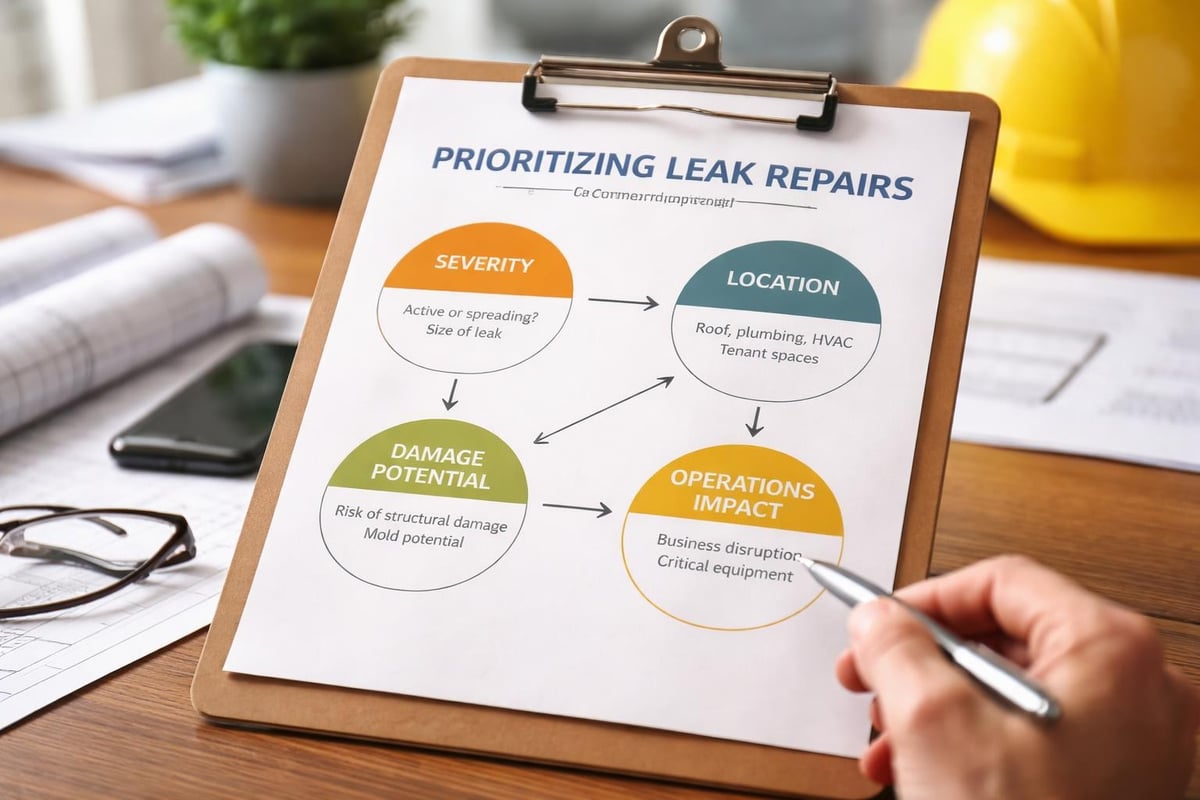
Once you've identified the leak source, choosing the right repair method matters tremendously. The approach depends on the location, severity, and underlying cause of the water intrusion.
Emergency leak repair focuses on stopping active water flow immediately. This might involve temporary patches, shutting off water supply lines, or placing containment systems to protect equipment and inventory. Speed matters here, because every minute of active leaking increases your total damage.
Permanent Solutions for Lasting Results
After stabilizing the situation, permanent repairs restore your building's integrity:
Clean and prepare the affected area thoroughly
Remove damaged materials that can't be salvaged
Apply appropriate repair materials matched to the original system
Test the repair before closing up walls or ceilings
Document the work for future reference and warranty purposes
Pipe leak repair methods range from epoxy compounds and mechanical seals to complete section replacement, depending on pipe material, location, and damage extent. Sometimes fixing a leak without full replacement makes sense for budget and timeline reasons.
For structural leaks in concrete or masonry, specialized sealing methods like polyurethane injection create watertight barriers that flex with building movement and temperature changes.
Prevention Strategies That Protect Your Investment
Smart property managers know that preventing leaks costs far less than repairing them and the resulting damage. A proactive approach combines regular maintenance, system upgrades, and staff training.
Scheduled inspections form the foundation of any prevention program. Walking your roof quarterly, checking mechanical rooms monthly, and monitoring high-risk areas weekly helps you spot warning signs before they become emergencies.
Building a Maintenance Schedule
Spring: Comprehensive roof inspection after winter weather
Summer: HVAC condensate line checks and roof drainage verification
Fall: Gutter cleaning and pre-winter weatherproofing
Winter: Snow load monitoring and ice dam prevention
Monthly: Plumbing fixture checks in restrooms and break rooms
Weekly: Quick visual scans of ceiling tiles and walls
Testing your building's systems proactively reveals weaknesses. Hydrostatic testing verifies the integrity of pressure vessels and plumbing systems by filling them with water and monitoring for pressure drops that indicate leaks.
When to Call Professional Help
While some minor leaks allow for in-house fixes, many situations demand professional expertise. Knowing when to bring in specialists protects both your building and your budget.
Call professionals immediately when you encounter active roof leaks, multiple leak points suggesting systemic failure, or water near electrical systems. These scenarios pose safety risks and require proper equipment and training to address safely.
Signs You Need Expert Assessment
Water staining that keeps returning after attempted repairs signals underlying problems that surface fixes won't solve. Similarly, leaks affecting critical operations, medical equipment, or sensitive inventory warrant professional attention to ensure proper remediation.
For commercial properties, maintaining professional roof maintenance programs provides regular expert oversight that catches developing issues. These programs typically include scheduled inspections, preventative repairs, and priority emergency response when unexpected problems arise.
Documentation and Insurance Considerations
Proper documentation throughout the leak repair process protects you financially and supports insurance claims when necessary. Start documenting the moment you discover a leak.
Photograph everything before, during, and after repairs. Capture water damage, the leak source, repair work in progress, and completed fixes. These images prove invaluable for insurance adjusters, warranty claims, and future reference.
Keep detailed records of:
Discovery date and time
Temporary mitigation steps taken
Professional assessments and estimates
Repair work performed
Materials used and warranties obtained
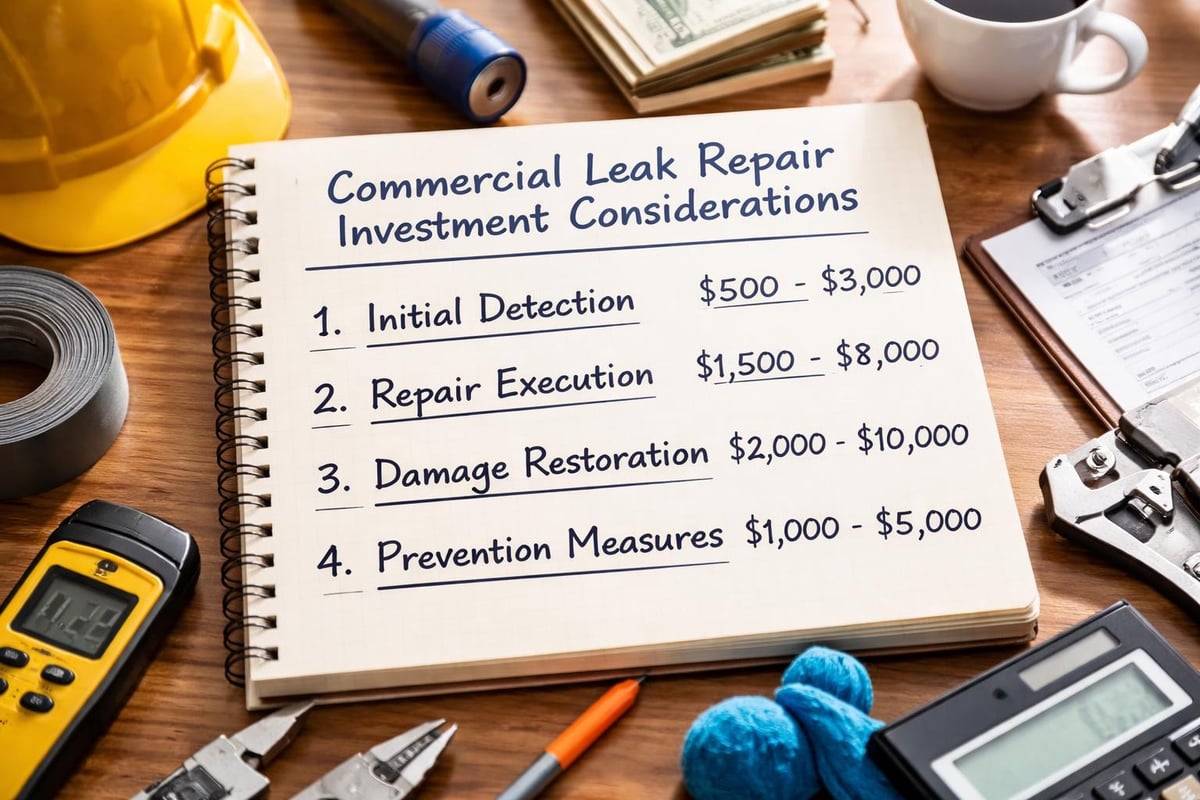
Total costs including labor and materials
Understanding your insurance coverage before leaks occur helps you make informed decisions during emergencies. Review your policy's water damage provisions, coverage limits, and claim filing procedures annually.
Material Selection for Long-Term Performance
Choosing quality materials for leak repair directly impacts how long your fix lasts. While budget constraints matter, cutting corners on materials often leads to repeated repairs that cost more overall.
Match repair materials to your existing systems whenever possible. Using incompatible products can create new failure points or void existing warranties. When upgrading during repairs, ensure new materials integrate properly with surrounding components.
For roofing leak repair specifically, membrane compatibility, sealant adhesion, and thermal expansion characteristics all affect repair longevity. Professional contractors understand these technical details and select materials that perform well in your specific climate and application.
Protecting your commercial property from water damage requires vigilance, quick response when leaks occur, and commitment to ongoing maintenance. Whether you're dealing with a roofing issue, plumbing problem, or structural water intrusion, addressing leaks promptly prevents minor concerns from escalating into expensive emergencies. With more than 25 years of experience serving commercial properties across healthcare, retail, and government sectors, GM Roofing & Electrical Services brings the expertise and integrity your building deserves. Ready to protect your investment with professional leak detection, repair, or preventative maintenance? Reach out today to schedule an assessment.
Learn why preventative electrical maintenance is critical for commercial buildings. Discover best practices, inspection schedules, and cost-saving benefits.