Emergency Lighting: Safety Standards for Commercial Spaces
Discover essential emergency lighting requirements, code compliance, and best practices for commercial buildings in 2026. Keep your facility safe.
When the power goes out in your commercial building, what happens next can mean the difference between safe, orderly egress and potential disaster. Emergency lighting isn't just a nice-to-have feature-it's a critical life safety system required by law. Whether you manage a healthcare facility, retail center, or office building, understanding the requirements and best practices around emergency lighting helps you protect occupants and stay compliant with evolving regulations.
Why Emergency Lighting Matters More Than Ever
Have you ever been in a large building when the lights suddenly went out? That momentary disorientation can quickly turn to panic in a crowd. Emergency lighting systems automatically activate during power failures, providing adequate illumination for people to safely navigate to exits.
Beyond the obvious safety benefits, properly installed emergency lighting protects you legally and financially. OSHA regulations and fire codes mandate these systems for good reason. Buildings without compliant emergency lighting face serious consequences:
Steep fines from regulatory agencies
Liability in the event of injuries during evacuations
Insurance complications and higher premiums
Potential building closure until violations are corrected
According to OSHA standards, exit facilities must have adequate and reliable illumination at all times. This isn't a gray area-it's a firm requirement backed by decades of safety data.
Understanding Current Code Requirements
The regulatory landscape for emergency lighting continues to evolve, with 2026 bringing renewed focus on reliability and performance standards. Let's break down what you actually need to know.
Illumination Levels and Duration Standards
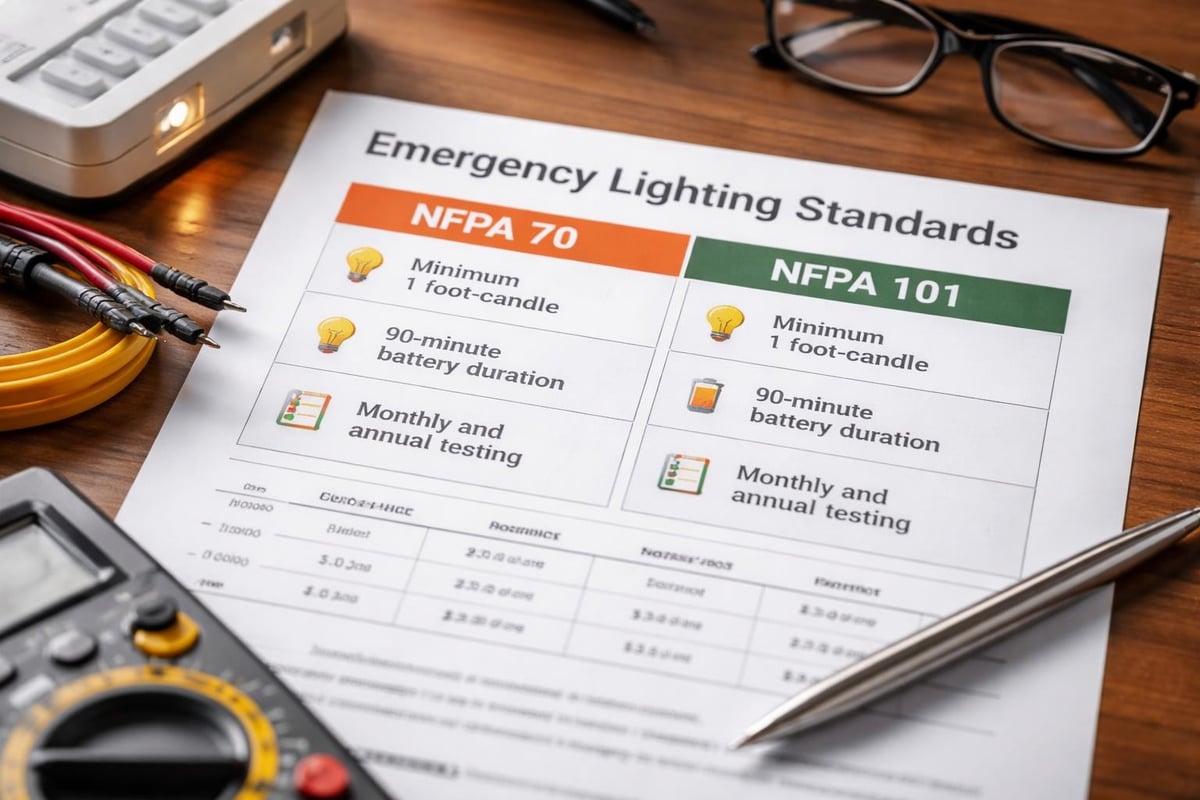
NFPA Life Safety Code requirements specify minimum illumination levels throughout egress paths. Your emergency lighting must provide an average of 1 foot-candle of illumination along the path of egress, measured at floor level.
Here's what the numbers mean in practice:
Requirement
Standard
Application
Average illumination
1.0 foot-candle
Along entire egress path
Minimum at any point
0.1 foot-candle
No dark spots allowed
Duration
90 minutes minimum
From power loss to restoration
Response time
10 seconds or less
Automatic activation required
That 90-minute duration isn't arbitrary. It's calculated based on the time needed for safe evacuation of even the largest commercial buildings, plus a safety margin. Your battery backup systems must maintain adequate illumination for the full duration.
UL 924 Compliance and Testing
Understanding UL 924 requirements helps you specify the right equipment from the start. This standard covers emergency lighting and power equipment, establishing performance benchmarks that manufacturers must meet.
When you're working with electrical contractors on new construction or renovations, especially for complex projects requiring electrical renovations and upgrades, make sure they're specifying UL 924-listed equipment. It's not just about compliance-it's about reliability when you need it most.
Strategic Placement and Coverage
Where you install emergency lighting matters just as much as what you install. You can't just scatter a few battery-backup lights around and call it compliant.
Critical Location Requirements
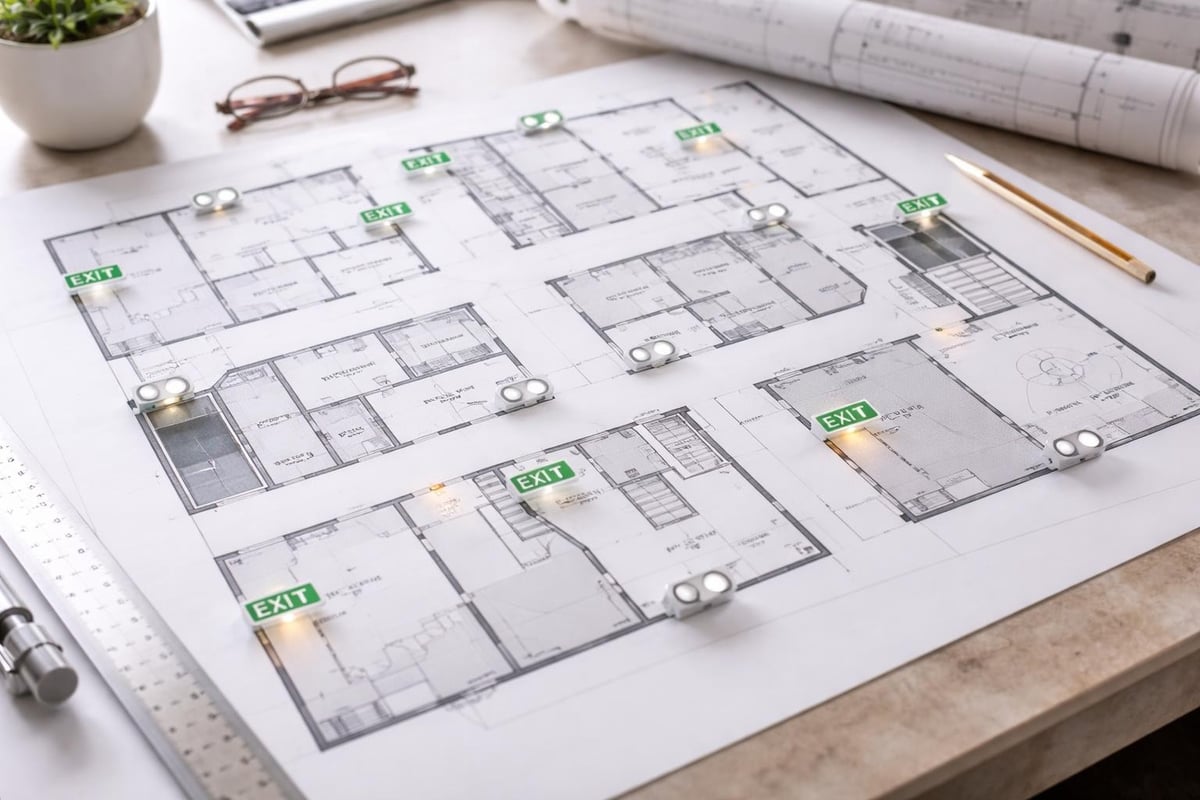
Focus your emergency lighting in these essential areas:
All exit doors and pathways leading to building exits
Stairwells and changes in elevation where falls pose serious risks
Corridors and hallways forming part of the egress route
Large open areas like lobbies where direction might be unclear
Equipment rooms and electrical rooms housing critical building systems
The emergency lighting regulations also address brightness consistency. You can't have brightly lit corridors that suddenly drop into dimness near exits. The transition must be gradual enough that eyes can adjust without compromising safety.
Special Considerations for Different Building Types
Healthcare facilities face unique challenges. Operating rooms, patient care areas, and medication rooms need emergency lighting even if they're not directly on egress paths. Retail environments with changing layouts require flexible emergency lighting solutions that adapt as floor plans evolve.
Government buildings and mission-critical facilities often exceed minimum code requirements, designing for extended duration and redundant systems. Think about your specific use case and don't just aim for minimum compliance.
Maintenance and Testing Protocols
Installing a compliant system is only half the battle. Emergency lighting requires ongoing attention to remain functional.
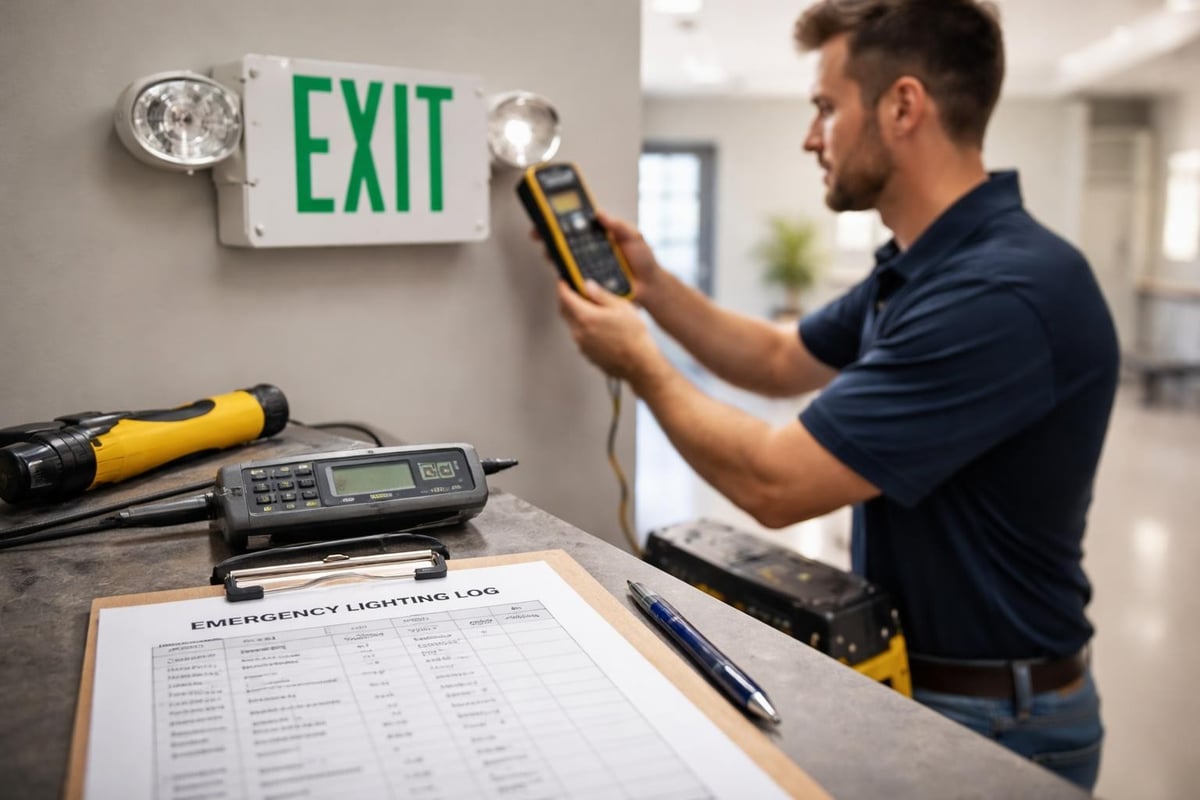
Monthly: 30-second functional test to verify operation
Annually: Full 90-minute discharge test to confirm battery capacity
Documentation: Written records of all tests and maintenance
Many building managers overlook the documentation requirement, but inspectors will ask for it. Create a simple log that tracks test dates, results, and any corrective actions taken.
Common Failure Points to Watch
What typically goes wrong with emergency lighting systems? Battery degradation tops the list. Those batteries don't last forever-most have a 7-10 year service life under ideal conditions. Temperature extremes, humidity, and infrequent testing can shorten that significantly.
Issue
Warning Sign
Action Needed
Battery failure
Lights dim quickly during test
Replace battery or entire unit
Bulb burnout
No illumination when activated
Replace lamp
Charging problems
Battery won't hold charge
Check inverter and connections
Physical damage
Cracked lenses or housings
Replace damaged components
Technology Updates and Smart Solutions
Emergency lighting technology has advanced considerably beyond the basic battery-backup fixtures of decades past. Modern systems offer features that enhance both compliance and convenience.
Self-testing emergency lights automatically perform required monthly and annual tests, logging results electronically. This technology dramatically reduces the labor involved in compliance while improving reliability. When a unit detects a problem, it alerts facility management immediately rather than waiting for the next scheduled test.
LED technology has transformed emergency lighting efficiency. Recent updates to UL 924 address LED-specific testing requirements, ensuring these energy-efficient options meet the same reliability standards as traditional lamps. LEDs last longer, use less battery power, and provide more consistent light output throughout the emergency period.
Centralized emergency lighting systems with monitoring capabilities give you real-time visibility into your entire building's emergency lighting status. You can see which units need attention, review test history, and ensure compliance across multiple properties from a single dashboard.
Balancing Normal and Emergency Operations
Smart building operators think about how emergency lighting integrates with normal operations. You don't want emergency lights that look out of place or create odd lighting patterns during regular business hours.
Emergency lighting and controls integration allows you to design cohesive systems where emergency fixtures complement your overall lighting design. Some modern emergency lights serve double duty, functioning as regular accent or task lighting that seamlessly transitions to emergency mode during power loss.
When planning renovations or new construction, coordinate your emergency lighting design with your general lighting layout from the beginning. This integrated approach typically costs less and delivers better results than treating emergency lighting as an afterthought.
Planning Your Next Steps
Where does this leave you as a building owner or facility manager? Start with an honest assessment of your current emergency lighting system. When was it last professionally inspected? Do you have documentation of all required tests? Are there areas of your building where you're not confident about coverage?
For buildings with outdated systems or spotty documentation, a comprehensive emergency lighting overview might help you understand the scope of what you're dealing with. Then bring in licensed electrical professionals who understand both the technical requirements and the practical challenges of commercial buildings.
Consider this your opportunity to move beyond basic compliance toward genuine life safety excellence. The investment in properly designed, installed, and maintained emergency lighting pays dividends in peace of mind, reduced liability, and the confidence that you're truly protecting the people who occupy your building.
Emergency lighting represents a critical intersection of safety, compliance, and practical building operations that deserves your attention and investment. If you're ready to upgrade your commercial facility's emergency lighting system or need expert guidance on compliance requirements, the experienced team at GM Roofing & Electrical Services brings more than 25 years of commercial electrical expertise to every project. We approach electrical systems with the same integrity and commitment to excellence that defines all our work, ensuring your building stays safe, compliant, and ready for whatever challenges come your way.
Learn why preventative electrical maintenance is critical for commercial buildings. Discover best practices, inspection schedules, and cost-saving benefits.