Emergency Leak Repair for Commercial Roofing Systems
Discover essential strategies for emergency leak repair in commercial roofing. Learn response protocols, prevention tactics, and cost-saving solutions.
When a roof leak strikes your commercial property unexpectedly, the consequences extend far beyond water stains on the ceiling. Damaged inventory, disrupted operations, potential safety hazards, and mounting repair costs create a cascade of problems that demand immediate attention. Understanding the fundamentals of emergency leak repair and establishing proactive response protocols can mean the difference between a minor inconvenience and a catastrophic business disruption that affects your bottom line for months to come.
Understanding Commercial Roof Leak Emergencies
Commercial roofing systems face unique challenges that residential properties rarely encounter. The sheer square footage of commercial structures, combined with complex drainage systems, HVAC equipment, and varied roof penetrations, creates multiple potential failure points that require specialized knowledge to address effectively.
Interior operations face disruption or safety risks
Inventory, equipment, or documents are at risk of water damage
Structural integrity appears compromised
Electrical systems encounter water exposure
The financial impact of delayed response escalates rapidly. Research indicates that each hour of delayed emergency leak repair can increase total remediation costs by 15-20% due to expanding water damage, secondary mold growth, and extended business interruption.
Common Causes of Emergency Roof Leaks
Commercial roofing failures rarely occur without warning signs, yet many property managers miss these indicators until an emergency situation develops. Understanding the root causes helps organizations implement better prevention strategies and respond more effectively when emergencies arise.
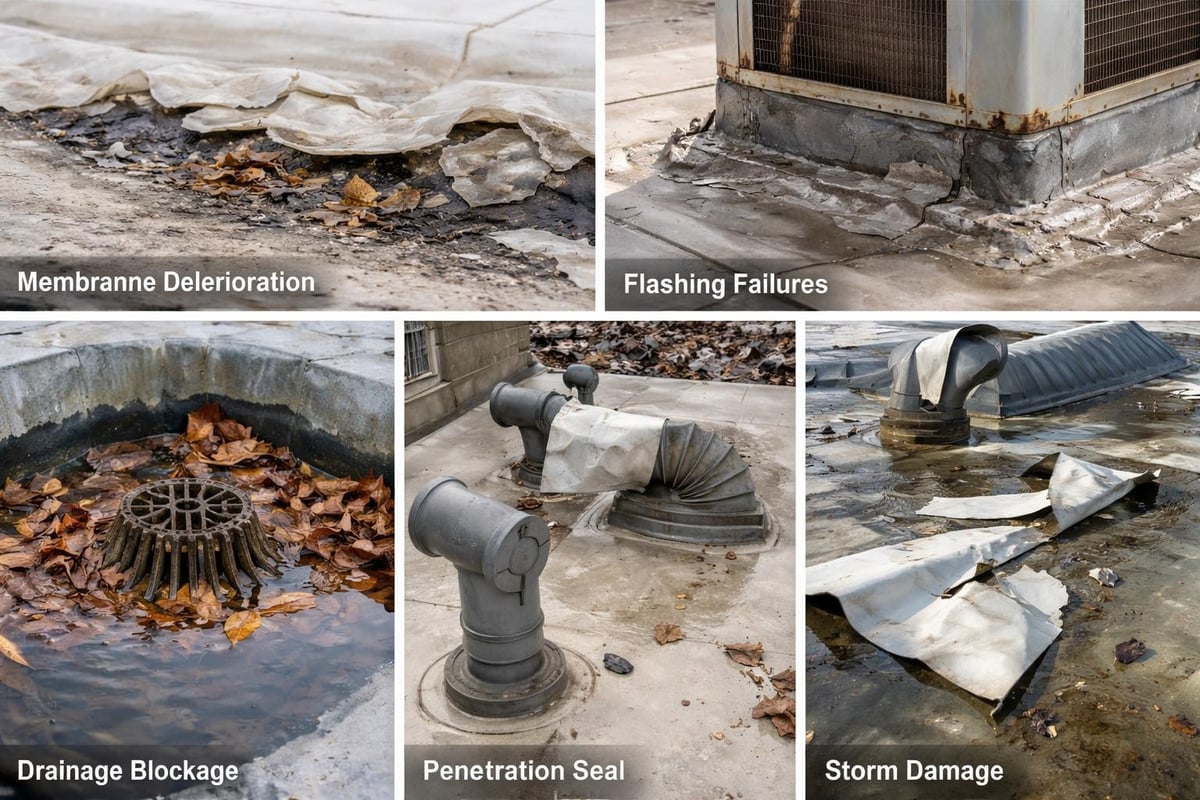
Failure Type
Common Locations
Typical Warning Signs
Risk Level
Membrane deterioration
Low-slope areas, ponding zones
Blistering, cracking, shrinkage
High
Flashing failures
Parapet walls, roof edges, penetrations
Gaps, rust, separation
Critical
Drainage blockages
Gutters, scuppers, internal drains
Standing water, overflow
Moderate
Penetration seal failure
HVAC units, vents, skylights
Staining, visible gaps
High
Storm damage
Entire roof surface
Missing materials, visible impact
Critical
Seasonal factors significantly influence emergency leak risks. Spring storms, summer thermal expansion, fall debris accumulation, and winter freeze-thaw cycles each present distinct challenges that require adapted response protocols.
Immediate Response Protocols for Leak Emergencies
The first 30 minutes following leak discovery determine whether you face a manageable repair or a major restoration project. Establishing clear protocols ensures your team responds effectively rather than reactively during high-stress emergency situations.
Step-by-Step Emergency Response
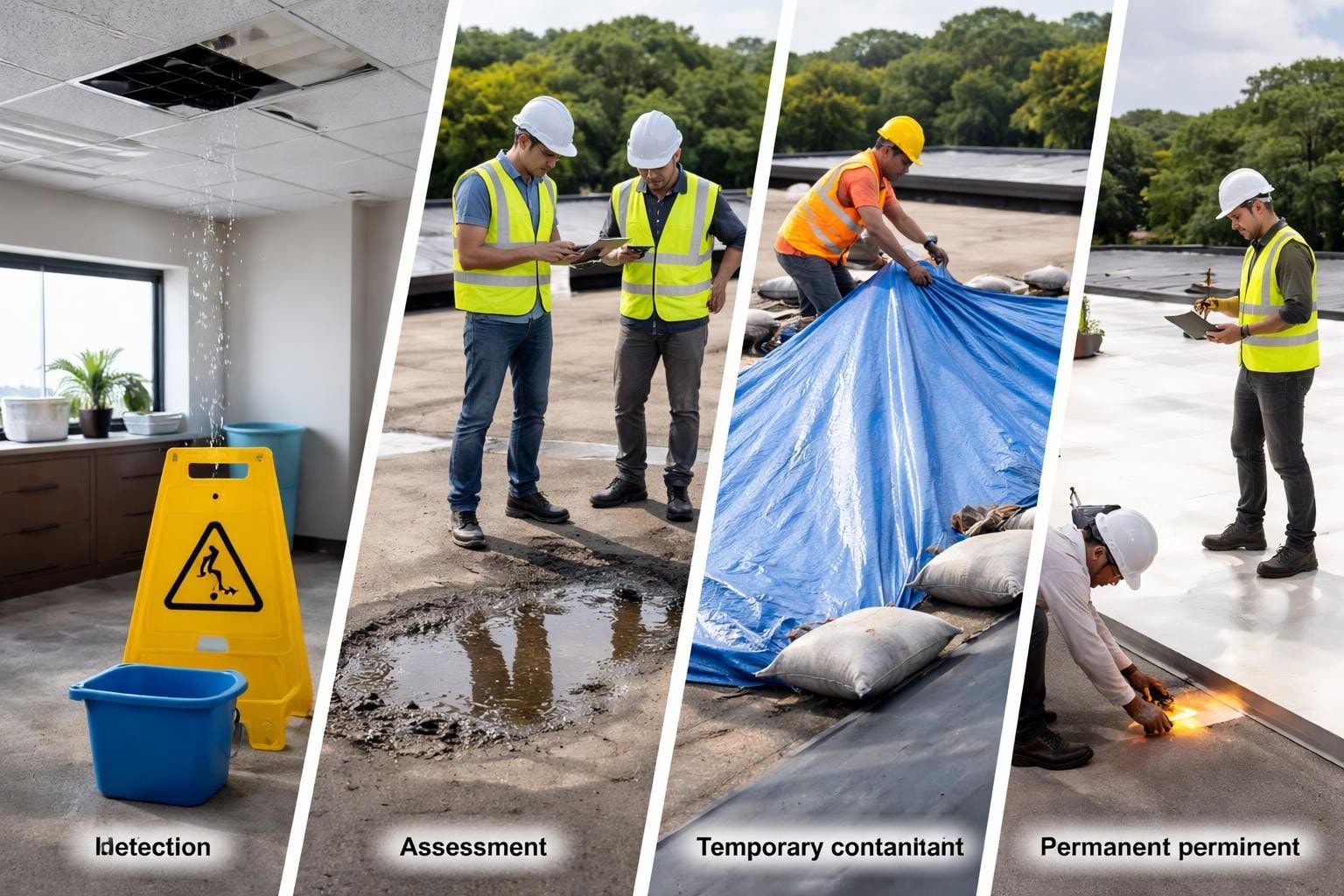
1. Contain and Document
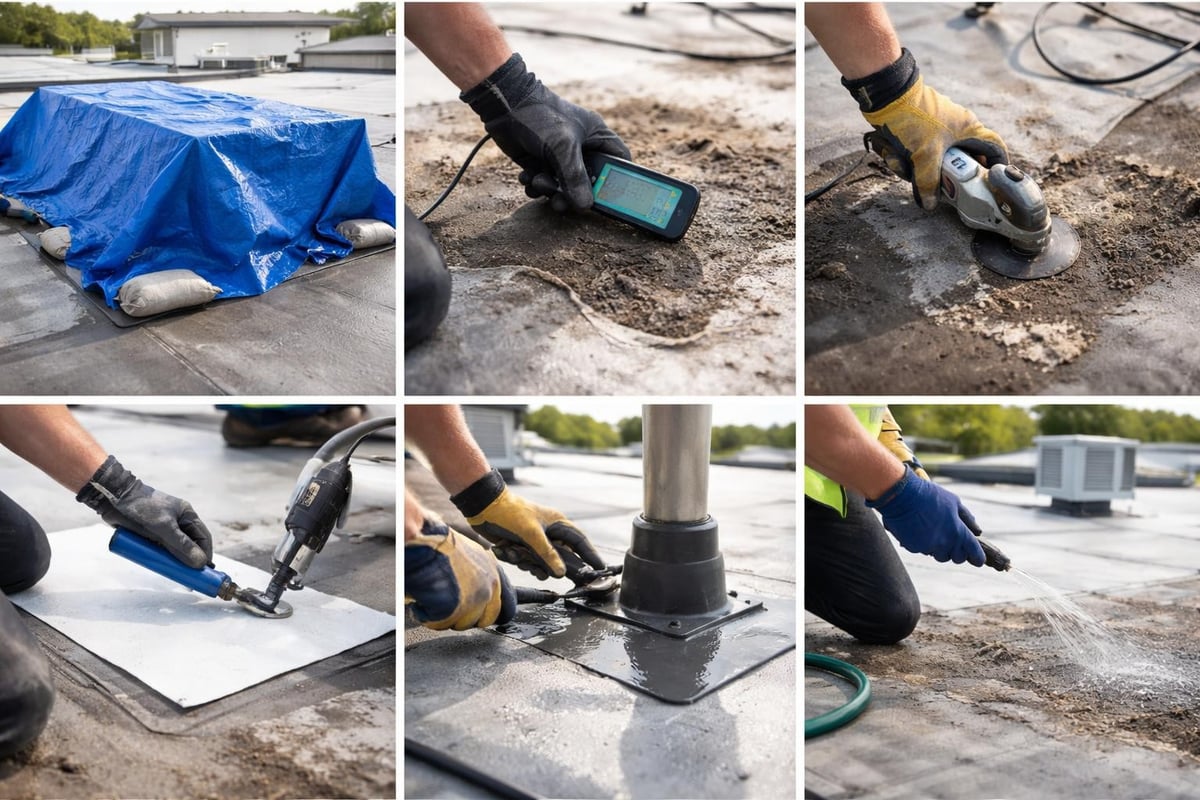
Immediately deploy water containment measures using tarps, buckets, or emergency barriers to protect critical assets. Simultaneously, photograph and video document the leak location, water intrusion points, and affected areas before any remediation begins. This documentation proves essential for insurance claims and identifying repair scope.
2. Assess Safety Risks
Evaluate electrical hazards, structural concerns, and slip risks before proceeding with any repair attempts. Disconnect power to affected areas if water approaches electrical systems. Evacuate spaces beneath significant water accumulation or visible ceiling deformation.
3. Contact Professional Services
While temporary containment helps, emergency leak detection services employ advanced technologies that locate the exact failure point, which often differs from where water becomes visible inside the building. Professional assessment prevents addressing symptoms while missing the actual problem.
4. Implement Temporary Repairs
Temporary waterproofing using specialized tapes, sealants, or tarps prevents further damage while permanent repairs are scheduled. However, temporary solutions must never substitute for comprehensive emergency leak repair performed by qualified roofing professionals.
Communication During Emergencies
Clear communication protocols minimize confusion and ensure all stakeholders receive timely updates. Designate a single point of contact who coordinates between property management, roofing contractors, insurance adjusters, and affected tenants or departments.
Essential communication elements include:
Initial incident report with time, location, and severity assessment
Hourly status updates during active emergency response
Estimated timeline for temporary stabilization and permanent repair
Impact assessment for business operations
Documentation requirements for insurance processing
Professional Emergency Leak Repair Techniques
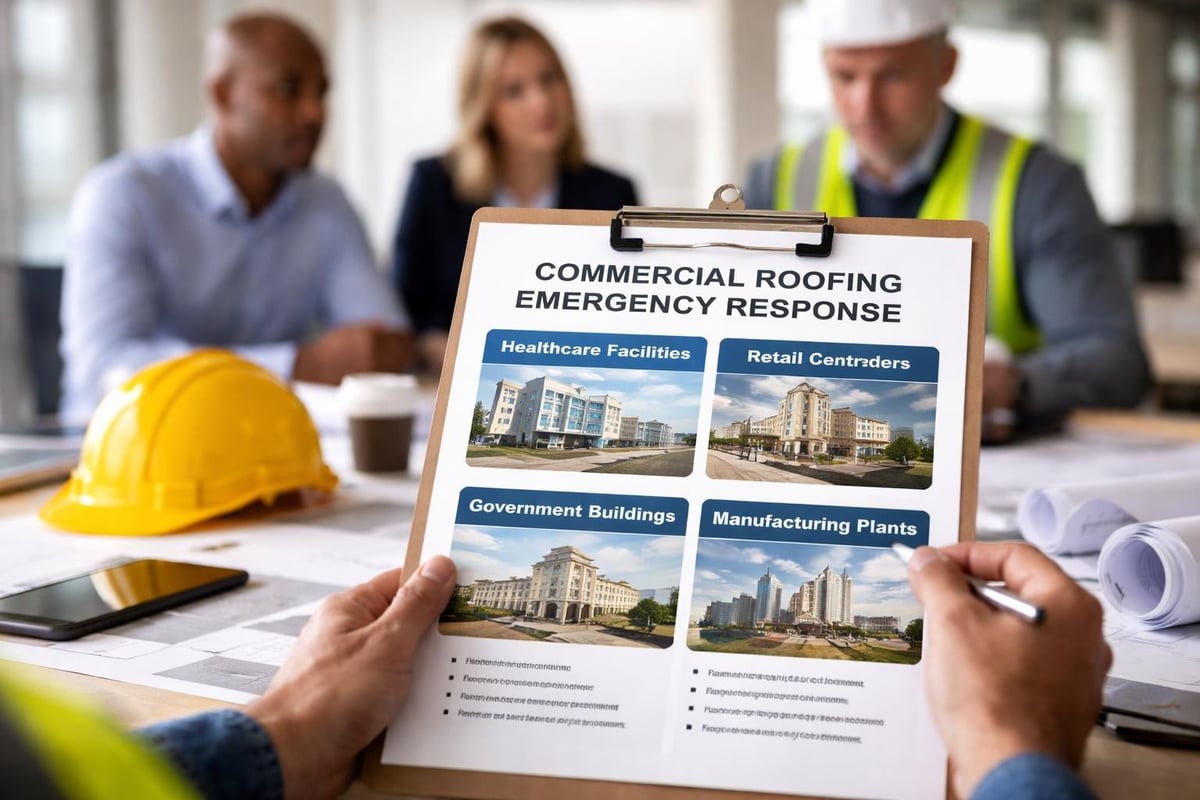
Commercial roofing systems require specialized approaches that differ significantly from residential repairs. The materials, methods, and equipment needed for emergency leak repair on a 50,000-square-foot retail center versus a healthcare facility demand expertise in multiple roofing systems and industry-specific requirements.
Flat Roofing System Repairs
Low-slope and flat roofing systems dominate commercial construction, representing approximately 80% of commercial roof installations. These systems utilize different membrane materials, each requiring specific repair protocols during emergency situations.
TPO and PVC membrane repairs involve heat-welding techniques that create watertight seams. Emergency repairs often utilize specialized adhesives for immediate waterproofing, followed by proper heat-welding once conditions permit. The EPA’s leak detection and repair best practices emphasize the importance of proper detection methods before implementing repairs.
EPDM rubber membrane systems require different adhesives and seaming techniques. Emergency patch repairs use self-adhering EPDM patches or liquid rubber compounds that cure rapidly, even in damp conditions. Permanent repairs then incorporate proper surface preparation, primer application, and mechanically-fastened or fully-adhered patches.
Modified bitumen systems respond well to heat-activated repairs using torches or hot-air welders. Emergency situations may necessitate cold-applied patches with specialized adhesives that bond effectively to bitumen surfaces without heat application.
Metal Roofing Emergency Repairs
Metal roofing systems require unique emergency leak repair approaches focused on fastener integrity, panel alignment, and sealant performance. Standing seam, corrugated, and architectural metal panels each present distinct repair challenges.
The most common metal roof emergencies stem from:
Fastener back-out due to thermal cycling
Sealant failure at panel overlaps and transitions
Impact damage from hail or debris
Flashing separation at roof penetrations
Emergency repairs prioritize immediate waterproofing using compatible sealants, temporary fastening, or overlay patches. However, metal roofing often requires panel replacement rather than patching to maintain system integrity and aesthetic consistency.
Roof Coating System Maintenance
Reflective roof coatings provide excellent protection for aging commercial roofs, but coating failures during storms or extreme weather require rapid response. Emergency leak repair for coated systems involves identifying whether the coating or underlying substrate has failed.
Surface preparation proves critical even during emergencies. Remove loose coating material, clean the repair area, and ensure adequate adhesion for emergency patches. Temporary repairs using compatible coating materials bridge the gap until comprehensive recoating can occur under ideal conditions.
Prevention Strategies and Maintenance Programs
The most effective emergency leak repair is the one you never need to perform. Proactive maintenance programs identify potential failures before they escalate into emergency situations, reducing both repair costs and business disruption.
Structured Inspection Protocols
Regular roof inspections form the foundation of leak prevention. Different roofing systems and facility types require customized inspection frequencies, but most commercial properties benefit from quarterly inspections supplemented by post-storm assessments.
Full system evaluation, core samples, moisture scanning
Detailed report with repair recommendations
Advanced inspection technologies including infrared thermography, nuclear moisture detection, and drone-based visual assessment identify problems invisible to conventional inspection methods. These tools locate moisture within roofing assemblies before interior leaks develop.
Planned Maintenance Activities
Systematic maintenance extends roof service life while preventing emergency situations. Establishing regular maintenance schedules ensures critical tasks receive consistent attention rather than reactive emergency response.
Essential maintenance activities include:
Drainage system cleaning and flow testing
Sealant inspection and reapplication at penetrations
Fastener tightening and replacement
Membrane cleaning and minor repairs
Flashing condition assessment and restoration
Vegetation and debris removal
Comprehensive leak detection solutions emphasize preventive maintenance as the most cost-effective strategy for avoiding emergency situations. The investment in regular maintenance typically costs 20-30% of emergency repair expenses while preventing the operational disruption emergencies cause.
Industry-Specific Considerations for Emergency Repairs
Different commercial sectors face unique challenges and requirements when addressing emergency leak repair situations. Regulatory compliance, operational sensitivity, and industry standards significantly influence repair approaches and timing.
Healthcare Facility Requirements
Healthcare properties demand the highest standards for emergency leak repair due to patient safety concerns, infection control protocols, and continuous operation requirements. Repairs in patient care areas require special containment, air quality monitoring, and often occur during limited time windows to minimize disruption.
Critical considerations include:
Infection control barrier installation before repair work begins
Negative air pressure maintenance in work areas
Material off-gassing restrictions for adhesives and coatings
Joint Commission compliance for construction activities
Coordination with hospital engineering and infection prevention teams
Emergency repairs may require complete area evacuation, patient relocation, and specialized contractor credentialing that extends response timelines compared to other property types.
Retail and Hospitality Properties
Retail centers and hotels prioritize minimizing customer impact and maintaining aesthetic standards during emergency repairs. Visible ceiling damage or water intrusion in customer-facing areas demands immediate attention to preserve brand image and prevent negative reviews.
After-hours repair scheduling, expedited material sourcing, and ceiling restoration often accompany roofing repairs in these sectors. The cost of lost sales or room revenue during repair work frequently exceeds the actual repair expense, justifying premium pricing for rapid response.
Government and Educational Facilities
Public sector properties navigate additional procurement requirements, prevailing wage compliance, and public safety regulations during emergency situations. Understanding these requirements accelerates response while ensuring regulatory compliance.
Budget approval processes for emergency repairs often follow different protocols than planned maintenance, but documentation requirements typically exceed private sector standards. Detailed incident reports, cost justifications, and competitive bidding exemption documentation support emergency procurement authorizations.
Cost Management for Emergency Roof Repairs
Emergency leak repair expenses extend beyond the immediate repair invoice. Comprehensive cost analysis includes direct repair costs, consequential damage remediation, business interruption impacts, and long-term implications for roof service life and warranty coverage.
Direct and Indirect Cost Factors
Understanding the complete financial picture helps property managers make informed decisions about repair scope, timing, and methodology. Short-term cost minimization sometimes creates larger long-term expenses through inadequate repairs or deferred maintenance.
Direct costs typically include:
Emergency service call fees and overtime labor
Materials and specialized equipment rental
Engineering assessment and specifications
Permits and inspection fees
Project management and supervision
Indirect costs often exceed direct repair expenses:
Most commercial property insurance policies cover sudden and accidental roof leaks, but coverage terms vary significantly. Understanding your policy before emergencies occur prevents disputes and delays during claim processing.
Coverage Aspect
Typical Policy Terms
Documentation Requirements
Emergency repairs
Covered with deductible
Photos, contractor invoices, incident report
Preventable maintenance
Generally excluded
Inspection records prove non-maintenance
Business interruption
Requires specific coverage
Revenue documentation, operational impact proof
Temporary repairs
Often covered
Receipts, necessity justification
Betterment upgrades
Depreciated or excluded
Age and condition documentation
Proactive documentation through regular inspections and maintenance records demonstrates proper property stewardship, supporting coverage for legitimate emergency situations while defending against maintenance-related exclusions.
Technology and Innovation in Emergency Response
Modern emergency leak repair leverages advanced technologies that improve detection accuracy, reduce response time, and enhance repair durability compared to traditional methods. These innovations particularly benefit commercial properties where large roof areas and complex systems challenge conventional approaches.
Advanced Detection Methods
Locating the exact source of commercial roof leaks often proves more challenging than performing the actual repair. Water travels along roof deck seams, through insulation layers, and across structural members before becoming visible inside the building, sometimes appearing hundreds of feet from the actual failure point.
Electronic leak detection technologies include:
Infrared thermography identifying temperature differentials caused by moisture
Capacitance scanning detecting dielectric changes in wet insulation
Electrical impedance testing mapping moisture distribution across large areas
These technologies transform emergency leak repair from educated guesswork into precision diagnostics, ensuring repairs address actual failures rather than symptoms.
Rapid-Cure Repair Materials
Material science advances deliver emergency repair products that cure in minutes rather than hours or days, enabling rapid waterproofing even during active storms or in adverse conditions. These innovations prove particularly valuable for facilities requiring continuous operation.
Moisture-cure polyurethane sealants, rapid-set epoxy compounds, and UV-cure coatings provide immediate waterproofing while developing full strength quickly enough to withstand additional weather exposure during staged repairs.
Building a Reliable Emergency Response Plan
Preparation distinguishes organizations that handle roof emergencies smoothly from those that scramble reactively when leaks occur. Comprehensive emergency response plans document procedures, contact information, and decision criteria that guide effective action during high-stress situations.
Essential Plan Components
Pre-qualified contractor relationships eliminate the time spent researching, vetting, and negotiating with roofing contractors during emergencies. Establishing agreements with qualified commercial roofing specialists before emergencies occur ensures rapid response when minutes matter.
Equipment and material staging for common emergency scenarios accelerates response. Maintaining supplies like tarps, emergency sealants, safety equipment, and water extraction tools enables immediate containment while professional repairs are mobilized.
Staff training and role assignments clarify responsibilities during emergencies. Designating specific individuals for initial assessment, contractor coordination, documentation, and stakeholder communication prevents confusion and ensures nothing falls through the cracks.
Decision trees and authorization protocols enable rapid approval for emergency expenditures without bureaucratic delays. Pre-established spending authorities and approval thresholds for various emergency scenarios balance fiscal responsibility with responsive action.
Testing and Updating Your Plan
Emergency response plans require regular testing through tabletop exercises or simulated scenarios. Annual plan reviews incorporate lessons learned from actual incidents, technology changes, personnel updates, and evolving facility requirements.
Documentation of plan testing, actual emergency responses, and continuous improvement initiatives demonstrates organizational preparedness and supports favorable insurance terms. This proactive approach to emergency leak repair planning transforms potential crises into manageable situations with predictable outcomes and controlled costs.
Effective emergency leak repair requires preparation, expertise, and rapid response capabilities that protect your commercial property investment while minimizing operational disruption. By implementing comprehensive maintenance programs, establishing clear response protocols, and leveraging modern detection technologies, property managers can significantly reduce both the frequency and impact of roofing emergencies. GM Roofing Services specializes in emergency response for commercial properties across healthcare, retail, government, and industrial sectors, providing 24/7 availability backed by decades of experience in flat roofing, metal roofing, and roof coating systems. Contact our team today to establish a proactive maintenance program that keeps minor issues from becoming major emergencies.
Learn why preventative electrical maintenance is critical for commercial buildings. Discover best practices, inspection schedules, and cost-saving benefits.