


Standing seam metal roofing has become the preferred choice for commercial property owners seeking durability, longevity, and energy efficiency. This roofing system features vertical panels with raised seams that interlock without exposing fasteners to weather elements. The concealed fastener design provides superior water resistance while allowing natural thermal movement, making it ideal for large commercial structures across healthcare, retail, government, and industrial facilities. Understanding the technical specifications, installation requirements, and performance characteristics helps building owners make informed decisions about this long-term roofing investment.
What Defines Standing Seam Metal Roofing Systems
Standing seam metal roofing consists of continuous metal panels running vertically from ridge to eave, connected by raised seams that stand above the roof surface. These seams typically rise between one and three inches, creating distinctive vertical lines across the roof plane.
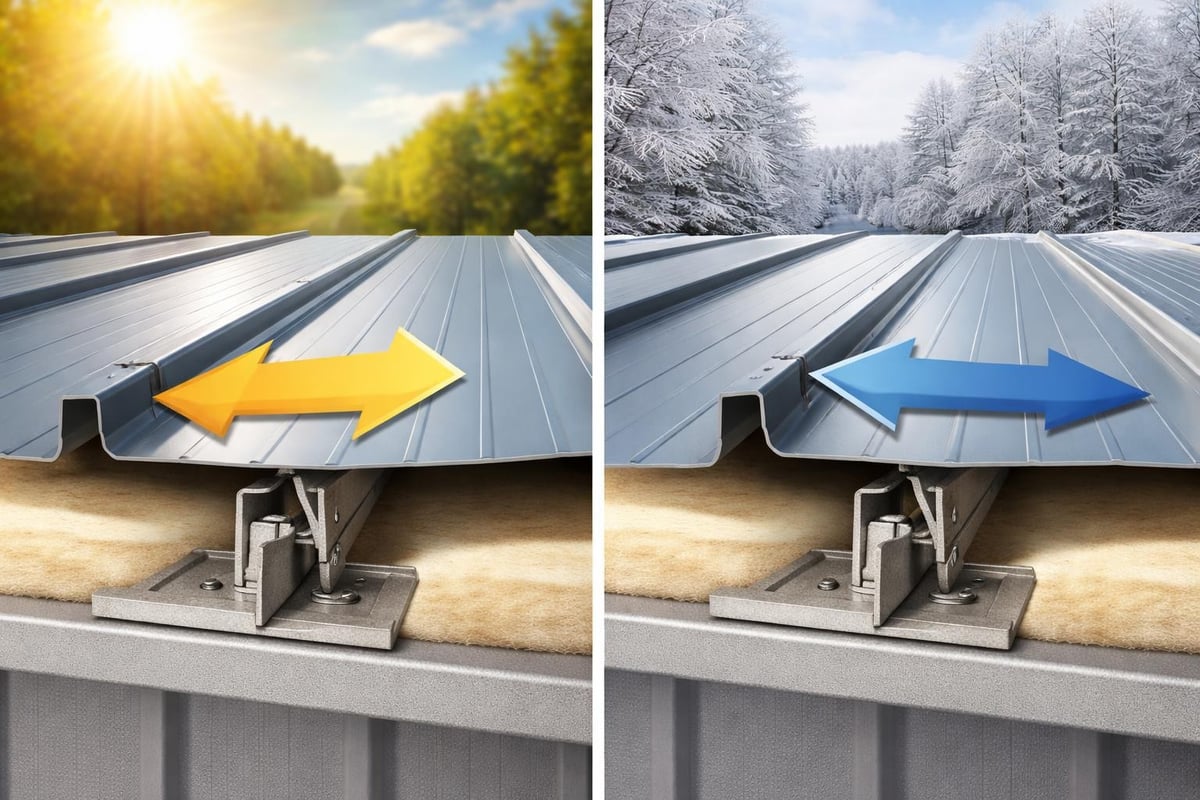
The defining characteristic separating this system from other metal roofing options is the concealed fastener mechanism. Clips attach to the building structure beneath the panels, allowing the metal to expand and contract with temperature changes without stressing fastener points. This floating system prevents the thermal stress that causes failures in exposed fastener systems.
Panel Profile Configurations
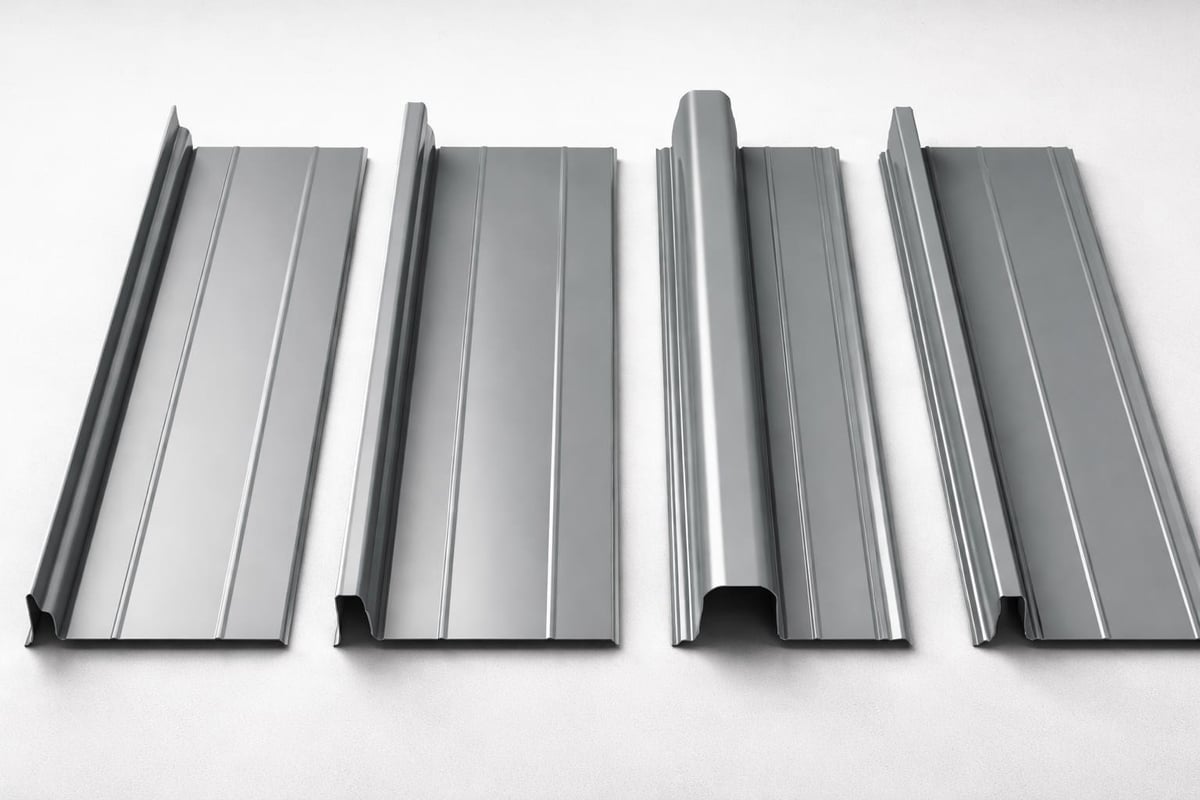
Commercial applications utilize several standard profiles:
- Snap-lock panels: Mechanically seamed edges that snap together without specialized tools
- Mechanical lock panels: Factory or field-seamed connections requiring seaming equipment
- Batten seam systems: Vertical battens cover the seams for enhanced architectural appearance
- Nail strip panels: Concealed fastening strips along panel edges
Each profile serves specific performance requirements and aesthetic preferences. Mechanical lock systems provide the highest weather resistance for low-slope applications, while snap-lock panels offer faster installation on steeper pitches.
Material Selection and Performance Specifications
Metal substrate choice significantly impacts system longevity, cost, and maintenance requirements. Commercial standing seam metal roofing typically utilizes these materials:
| Material | Expected Lifespan | Key Benefits | Typical Applications |
|---|---|---|---|
| Galvalume Steel | 40-60 years | Cost-effective, excellent corrosion resistance | Warehouses, retail centers |
| Aluminum | 50-70 years | Lightweight, natural corrosion resistance | Coastal environments, healthcare |
| Copper | 100+ years | Premium aesthetics, patina development | Historic buildings, high-end commercial |
| Zinc | 80-100 years | Self-healing patina, sustainability | Government facilities, institutional |
| Stainless Steel | 60-80 years | Superior strength, minimal maintenance | Industrial, high-corrosion environments |
Galvalume-coated steel dominates commercial installations due to its optimal balance of performance and cost. The aluminum-zinc alloy coating provides three to six times the corrosion resistance of galvanized steel. Paint systems applied over Galvalume extend service life and offer extensive color options.
Coating Systems and Warranties
Modern paint technologies protect metal substrates while providing aesthetic value. Polyvinylidene fluoride (PVDF) coatings, commonly marketed as Kynar 500 or Hylar 5000, deliver superior fade resistance and chalk resistance compared to polyester coatings.
Manufacturers typically offer tiered warranty structures:
- Paint finish warranties: 25-40 years against excessive fading and chalking
- Substrate warranties: 20-30 years against perforation from corrosion
- Weathertightness warranties: 20 years when installed per manufacturer specifications
According to research from the Insurance Institute for Business & Home Safety, properly installed standing seam systems demonstrate exceptional wind resistance, often exceeding design requirements for hurricane-prone regions.
Installation Requirements and Best Practices
Successful standing seam metal roofing installation demands attention to structural requirements, underlayment selection, and thermal movement accommodation. These systems require solid substrate support, typically structural metal decking or properly spaced purlins.
Substrate and Underlayment Preparation
The roof deck must provide adequate support for anticipated loads, including wind uplift, snow accumulation, and maintenance traffic. Structural engineers calculate required deck gauge and fastener spacing based on building code requirements and local climate conditions.
High-temperature ice and water shield or mechanically attached roofing membranes create the secondary weather barrier. This underlayment layer provides critical protection during panel installation and serves as backup weatherproofing throughout the roof's service life.
Proper ventilation prevents condensation issues that plague improperly designed metal roof assemblies. Ventilation strategies must account for the vapor-impermeable nature of metal roofing, often requiring increased insulation thickness and ventilation pathways compared to traditional roofing materials.
Clip Spacing and Thermal Movement
Standing seam systems accommodate thermal expansion through sliding clips that allow panels to move freely. The Metal Construction Association provides detailed guidance on proper clip selection and spacing to prevent oil-canning and ensure adequate wind uplift resistance.
Clip spacing typically ranges from 12 to 24 inches on center, depending on:
- Panel width and gauge
- Expected wind loads and building exposure
- Roof slope and thermal movement calculations
- Manufacturer specifications and warranty requirements
- Local building code requirements
Dark-colored panels experience greater thermal expansion than light colors, sometimes requiring closer clip spacing or specific clip designs that accommodate increased movement ranges.
Performance Advantages for Commercial Applications
Standing seam metal roofing delivers measurable benefits that justify its premium installation cost compared to traditional commercial roofing systems. These advantages compound over decades of service life.
Energy Efficiency and Sustainability
Metal roofing's reflective properties reduce cooling loads by reflecting solar radiation rather than absorbing heat. Cool metal roofing systems with specialized pigments achieve solar reflectance values exceeding 0.65 and thermal emittance above 0.85, qualifying for Energy Star certification and contributing to LEED points.
The thermal performance translates directly to operational cost savings. Studies document cooling energy reductions of 20-30% compared to dark-colored conventional roofing in commercial buildings across southern climates.
Sustainability extends beyond operational energy efficiency:
- Metal roofing contains 25-95% recycled content depending on substrate
- Complete recyclability at end of service life prevents landfill waste
- Lightweight panels reduce structural load requirements
- Longevity eliminates repeated roof replacements and associated material consumption
Weather Resistance and Durability
The concealed fastener design eliminates the primary failure point plaguing exposed fastener systems. Neoprene washers in exposed fastener roofs deteriorate from UV exposure and thermal cycling, creating leak paths within 10-15 years. Standing seam metal roofing avoids this vulnerability entirely.
Wind resistance represents another critical performance advantage. Testing documented by wind engineering research shows properly installed mechanical lock systems resist wind speeds exceeding 150 mph when adequate clip spacing and proper seam engagement are maintained throughout installation.
Fire resistance ratings reach Class A, the highest classification, when installed over approved deck and underlayment assemblies. This fire performance proves particularly valuable for facilities storing flammable materials or located in wildfire-prone regions.
Low-Slope Applications and Design Considerations
While standing seam metal roofing performs optimally on slopes above 3:12, specialized mechanical lock systems accommodate low-slope applications down to 0.5:12 pitch. These installations require enhanced waterproofing measures and specific panel profiles.
The International Institute of Building Enclosure Consultants provides technical analysis of low-slope standing seam performance, identifying critical installation details that ensure weathertightness on minimal pitch applications.
Critical Low-Slope Installation Details
Low-slope installations demand:
- Double-lock mechanical seams: Factory or field-seamed connections creating two 180-degree folds
- Continuous sealant: Applied within seams for additional weather protection
- Panel end laps: Minimum 12-inch overlaps with sealant at all horizontal joints
- Enhanced underlayment: Fully adhered membranes providing complete waterproofing backup
Roof slope directly impacts water shedding velocity and the potential for wind-driven rain infiltration. Even minor slope increases improve performance, making 1:12 or 2:12 pitches significantly more reliable than the minimum 0.5:12 specification.
Mounting Equipment Without Roof Penetrations
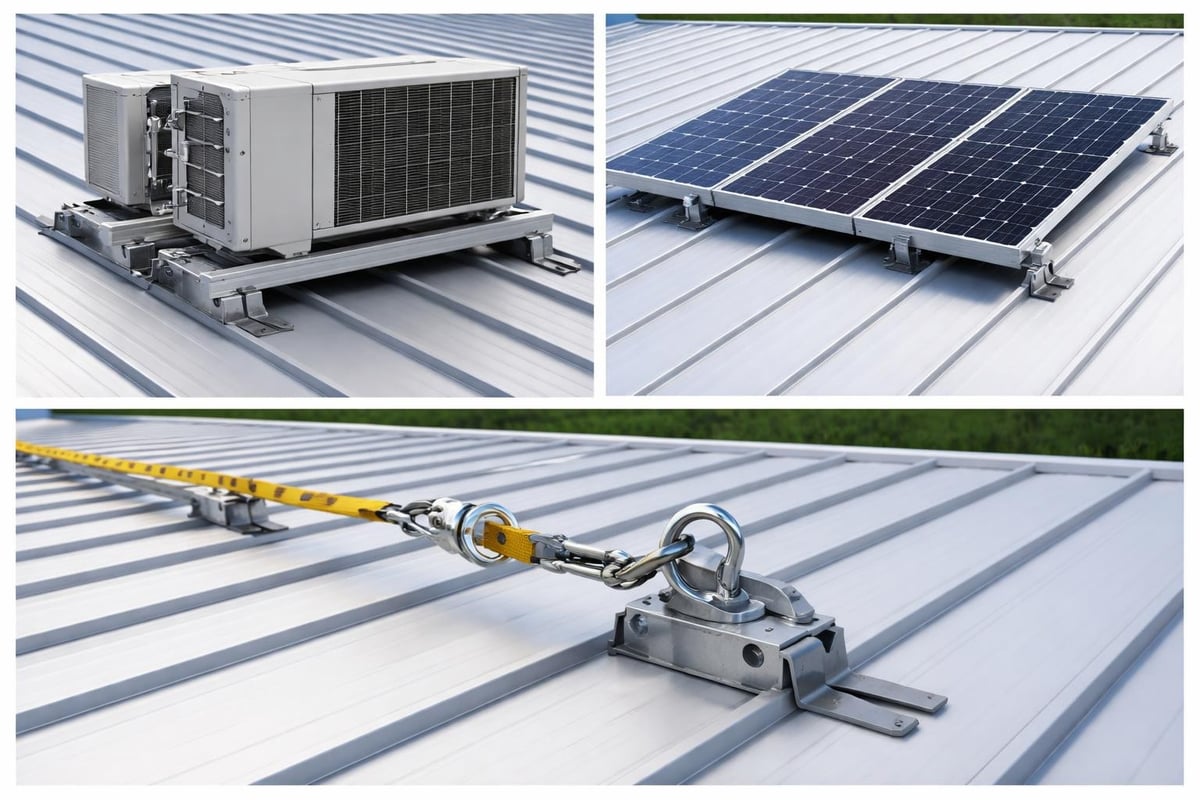
Commercial facilities require rooftop equipment installations for HVAC systems, solar arrays, satellite dishes, and fall protection anchors. Traditional mounting methods penetrate the roof membrane, creating potential leak points that compromise the standing seam system's inherent weathertightness.
Non-penetrating attachment methods preserve roof integrity while providing secure equipment mounting. Specialized mounting systems clamp directly to standing seam ribs without fasteners, distributing loads across multiple seams.
Equipment Mounting Best Practices
- Utilize seam clamp systems specifically engineered for panel profiles
- Distribute loads across minimum four seams for point loads
- Verify structural capacity of roof framing for concentrated loads
- Maintain warranty compliance by using manufacturer-approved attachments
- Document all installations for future maintenance reference
Solar panel installations represent the most common rooftop equipment addition. Racking systems designed for standing seam attachment eliminate roof penetrations entirely while providing adjustment capabilities for optimal panel orientation. These systems typically include integrated grounding connections that bond to the metal roof, satisfying electrical code requirements without additional penetrations.
Maintenance Requirements and Life-Cycle Costs
Standing seam metal roofing requires minimal maintenance compared to conventional commercial roofing systems, but routine inspections and preventive care maximize system longevity and performance.
Annual inspection protocols should document:
- Seam integrity: Verify complete seam engagement along all panel connections
- Fastener tightness: Check exposed fasteners at trim and flashing locations
- Sealant condition: Inspect caulked joints for cracking or adhesion loss
- Panel condition: Document coating condition, scratches, or corrosion signs
- Drainage function: Ensure gutters, scuppers, and drains operate properly
Long-Term Cost Comparison
| System Type | Initial Cost | 50-Year Lifecycle Cost | Replacement Frequency |
|---|---|---|---|
| Standing Seam Metal | $$$ (High) | $ (Low) | 0-1 times |
| Modified Bitumen | $ (Low) | $$$ (High) | 2-3 times |
| TPO Single-Ply | $$ (Medium) | $$ (Medium) | 2 times |
| Built-Up Roofing | $ (Low) | $$$ (High) | 3-4 times |
The lifecycle cost advantage stems from longevity and minimal maintenance requirements. While installation costs run 30-50% higher than conventional commercial roofing, eliminating two or three roof replacements over five decades provides substantial savings when accounting for inflation, disposal costs, and business disruption.
Industry Standards and Installation Guidelines
Multiple industry organizations establish standards governing standing seam metal roofing design, materials, and installation. The Metal Roofing Alliance maintains comprehensive technical resources covering specifications and performance criteria.
The Sheet Metal and Air Conditioning Contractors' National Association (SMACNA) publishes the Architectural Sheet Metal Manual, considered the industry standard for metal roofing details and installation practices. This resource provides tested details for transitions, penetrations, and edge conditions specific to commercial applications.
Government Installation Specifications
The General Services Administration maintains detailed installation guidelines for federal buildings, establishing rigorous quality standards applicable to all commercial projects. These specifications address material requirements, substrate preparation, installation procedures, and quality assurance testing.
Factory Mutual (FM) and Underwriters Laboratories (UL) provide independent testing and classification for wind uplift resistance and fire performance. Commercial building owners should verify that specified systems carry appropriate FM or UL classifications matching building exposure and code requirements.
Color Selection and Architectural Considerations
Color choice impacts both aesthetic appeal and thermal performance. Light colors reflect more solar radiation, reducing cooling loads but potentially increasing heating requirements in northern climates. Dark colors absorb heat, benefiting buildings in heating-dominated climates while increasing summer cooling loads.
Advanced pigment technologies now offer dark colors with reflective properties approaching traditional light colors. These "cool dark colors" utilize infrared-reflective pigments that appear dark in visible spectrum while reflecting invisible infrared radiation that carries most solar heat.
Panel width selection influences building aesthetics and installation efficiency. Wider panels cover more area per seam, reducing installation labor and creating a more contemporary appearance with fewer vertical lines. Narrower panels provide a traditional aesthetic more appropriate for historic or residential-style commercial buildings.
Architectural considerations extend to trim details and transitional elements. Expert designers coordinate metal roof color with wall cladding, window frames, and architectural accents to create cohesive building appearance. Standing seam profiles offer sufficient flexibility to accommodate complex roof geometries, curved eaves, and distinctive architectural features that distinguish commercial properties.
Quality Assurance and Contractor Selection
Standing seam metal roofing installation requires specialized equipment, technical knowledge, and field experience. The mechanical seaming machines, thermal movement calculations, and weathertight detail execution demand contractor expertise beyond general roofing capabilities.
Contractor qualification criteria should include:
- Manufacturer certification for specified panel systems
- Documented project portfolio with similar building types and scales
- Equipment ownership including panel roll-forming and seaming machinery
- Insurance coverage meeting commercial project requirements
- Safety certifications for working at heights and equipment operation
Quality control during installation verifies seam engagement, clip spacing, and detail execution. Third-party inspections provide independent verification that installation meets specifications and manufacturer requirements necessary for warranty activation.
Post-installation testing may include:
- Flood testing at critical penetrations and transitions
- Infrared scanning to identify thermal bridging or insulation gaps
- Seam engagement verification using go/no-go gauges
- Fastener pull testing at representative locations
These quality measures ensure system performance meets design expectations and provide documentation supporting warranty claims should issues develop during the coverage period.
Standing seam metal roofing represents a proven investment for commercial property owners prioritizing longevity, performance, and lifecycle value. The concealed fastener design, material durability, and minimal maintenance requirements deliver decades of reliable weather protection across diverse building types and climate zones. Whether you're planning new construction, roof replacement, or evaluating options for your commercial facility, GM Roofing Services provides expert guidance on metal roofing systems tailored to your specific requirements. Our experienced team handles everything from initial assessment through installation and ongoing maintenance programs, ensuring your roofing investment performs as intended for decades to come.


