Generator Installation: Your Commercial Building Guide
Learn essential generator installation steps, safety codes, and placement strategies for commercial buildings. Expert tips for reliable backup power.
Power outages don't wait for convenient moments. When the lights go out in your commercial facility, you're not just dealing with inconvenience. You're facing potential revenue loss, safety concerns, and possibly regulatory compliance issues. That's where a properly executed generator installation becomes a critical investment. Whether you're managing a healthcare facility that requires uninterrupted power or a retail complex that can't afford downtime, understanding the generator installation process helps you make informed decisions that protect your business and your people.
Understanding Your Generator Installation Needs
Before you even think about breaking ground, you need to assess what you're actually protecting. Are you looking to power essential systems only, or do you need whole-building backup? This question drives everything else.
Commercial properties have vastly different power requirements than residential homes. A small retail shop might need 30-50 kilowatts, while a healthcare facility could require several hundred kilowatts or even megawatt-scale systems. Your electrical load calculation determines the generator size, which in turn affects placement options, fuel requirements, and installation costs.
Here's what factors into your sizing decision:
Critical loads: HVAC systems, security equipment, emergency lighting, data centers
Regulatory requirements: Healthcare and government buildings often have specific backup power mandates
Future expansion: Planning ahead saves you from premature upgrades
Placement and Code Compliance
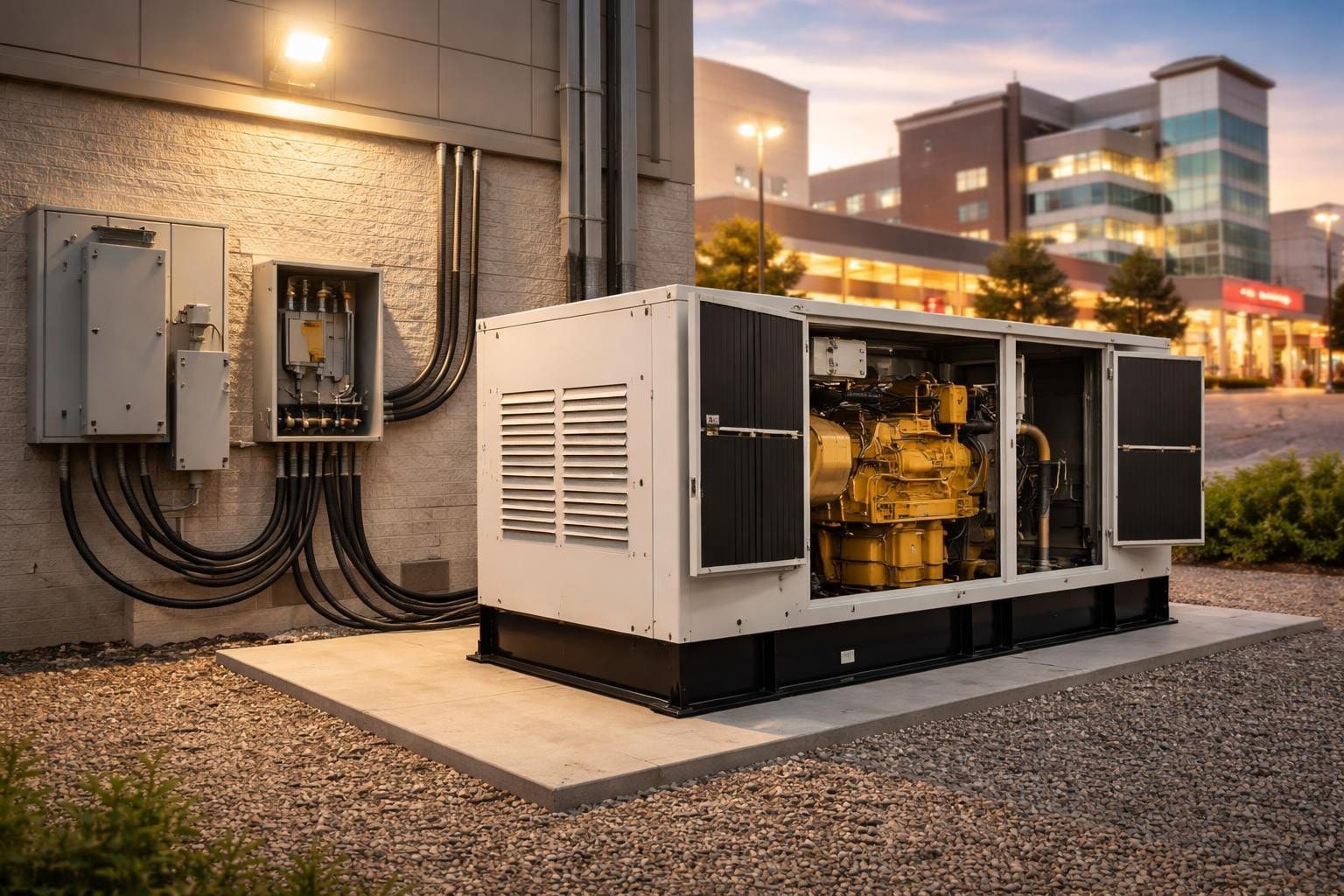
You can't just drop a generator wherever there's space. Proper generator location requires careful attention to clearance requirements, ventilation needs, and local building codes.
Clearance Requirements That Matter
The National Fire Protection Association (NFPA) and local building codes specify minimum distances from structures, property lines, and openings. Safety regulations typically require generators to sit at least 5 feet from combustible materials and building openings like windows and doors.
Why does this matter so much? Generator exhaust contains carbon monoxide and other combustion byproducts. Without proper clearance, these gases can infiltrate your building, creating life-threatening conditions. The Electrical Safety Foundation International emphasizes that proper placement is your first line of defense against carbon monoxide poisoning.
Clearance Type
Minimum Distance
Reason
Building openings
5 feet
Prevent exhaust infiltration
Property lines
Per local code (typically 5-10 feet)
Noise and safety compliance
Vegetation
3-5 feet
Airflow and fire prevention
Non-combustible surface
Required underneath
Fire prevention
Environmental Considerations
Noise ordinances affect commercial generator installations more than most people realize. Modern commercial generators can produce 65-75 decibels at full load. That's roughly equivalent to a vacuum cleaner running constantly. If your facility borders residential areas or operates in a noise-sensitive district, you'll need sound attenuation enclosures or strategic placement to stay compliant.
The Installation Process Itself
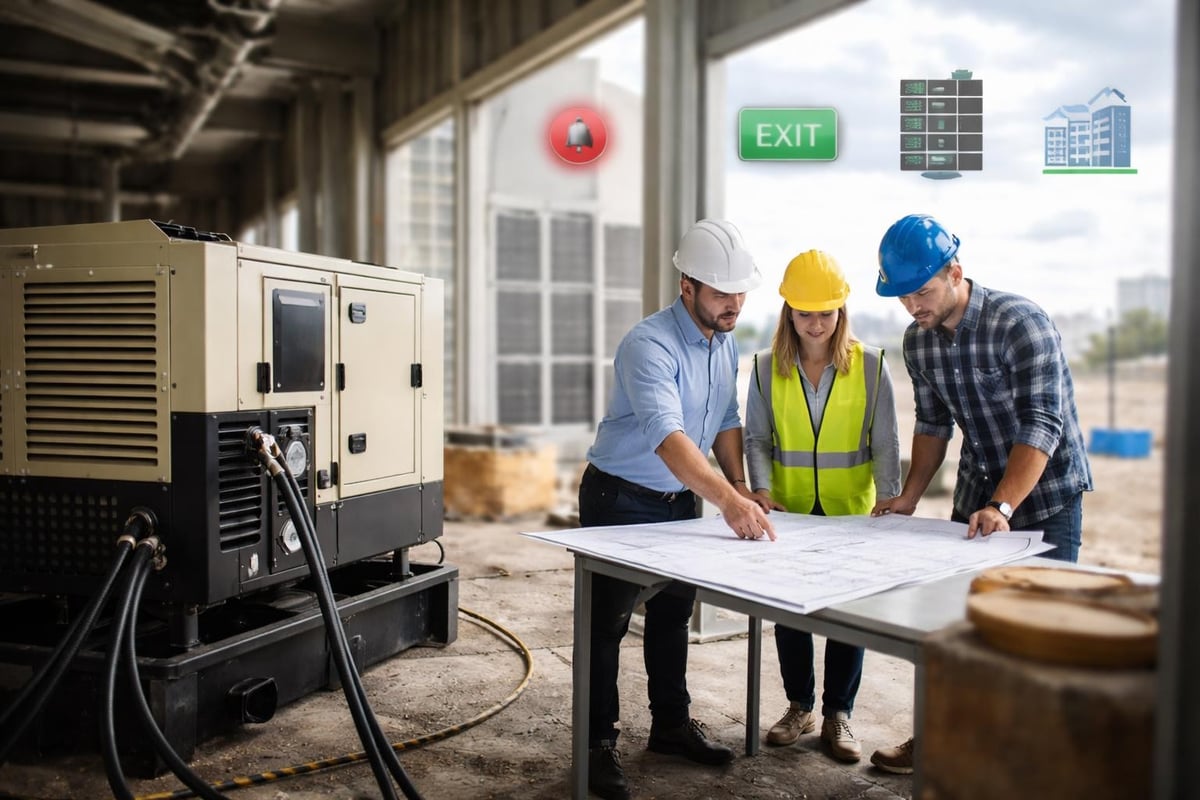
Generator installation isn't a weekend DIY project. It requires licensed electricians who understand both the electrical systems and the building codes specific to commercial properties.
The typical installation timeline runs 2-5 days for most commercial applications, though complex installations can extend longer. Here's how it breaks down:
Site preparation: Pouring a concrete pad, ensuring proper drainage, and establishing utility access
Generator placement: Positioning the unit with appropriate lifting equipment
Electrical connections: Installing transfer switches, running conduit, and connecting to your building's electrical panel
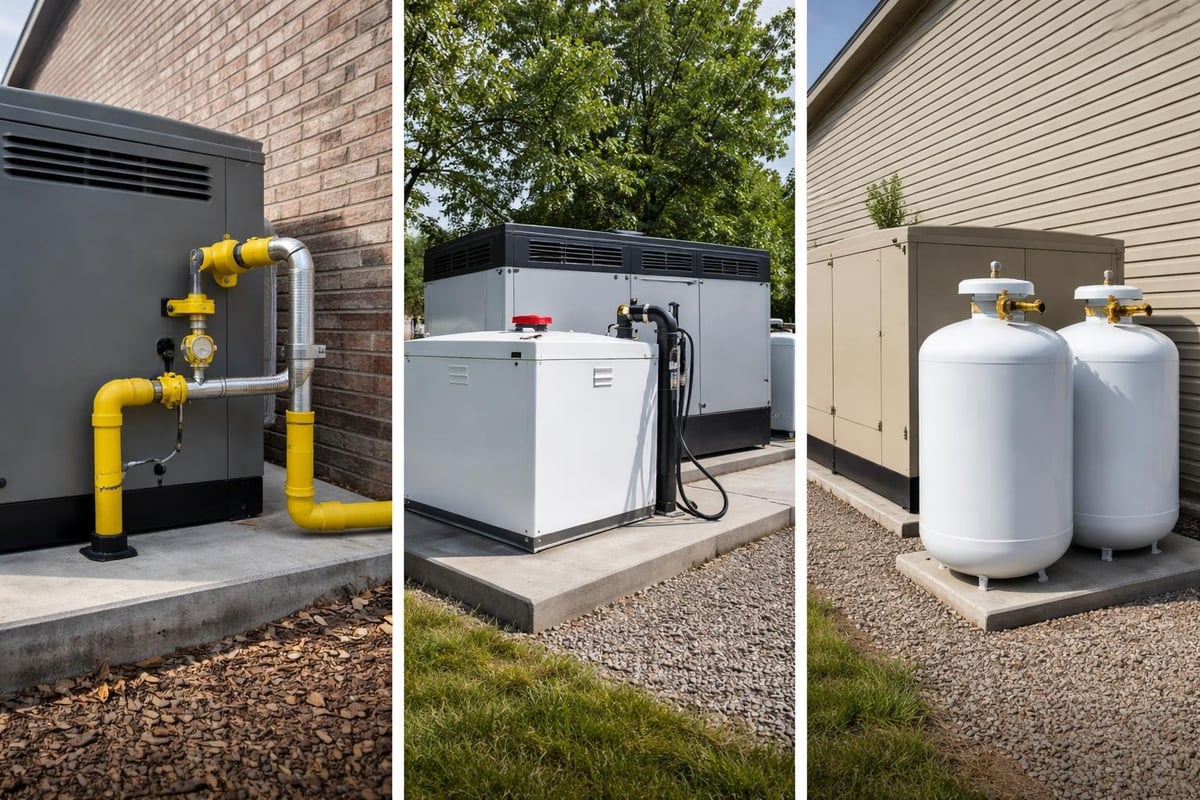
Fuel system setup: Connecting natural gas lines or installing diesel fuel tanks with proper containment
Testing and commissioning: Running load tests and programming automatic transfer sequences
For commercial properties requiring professional electrical work, experienced contractors who specialize in electrical construction services bring the expertise needed to navigate complex building systems and ensure code-compliant installations that protect your investment.
Transfer Switch Selection and Integration
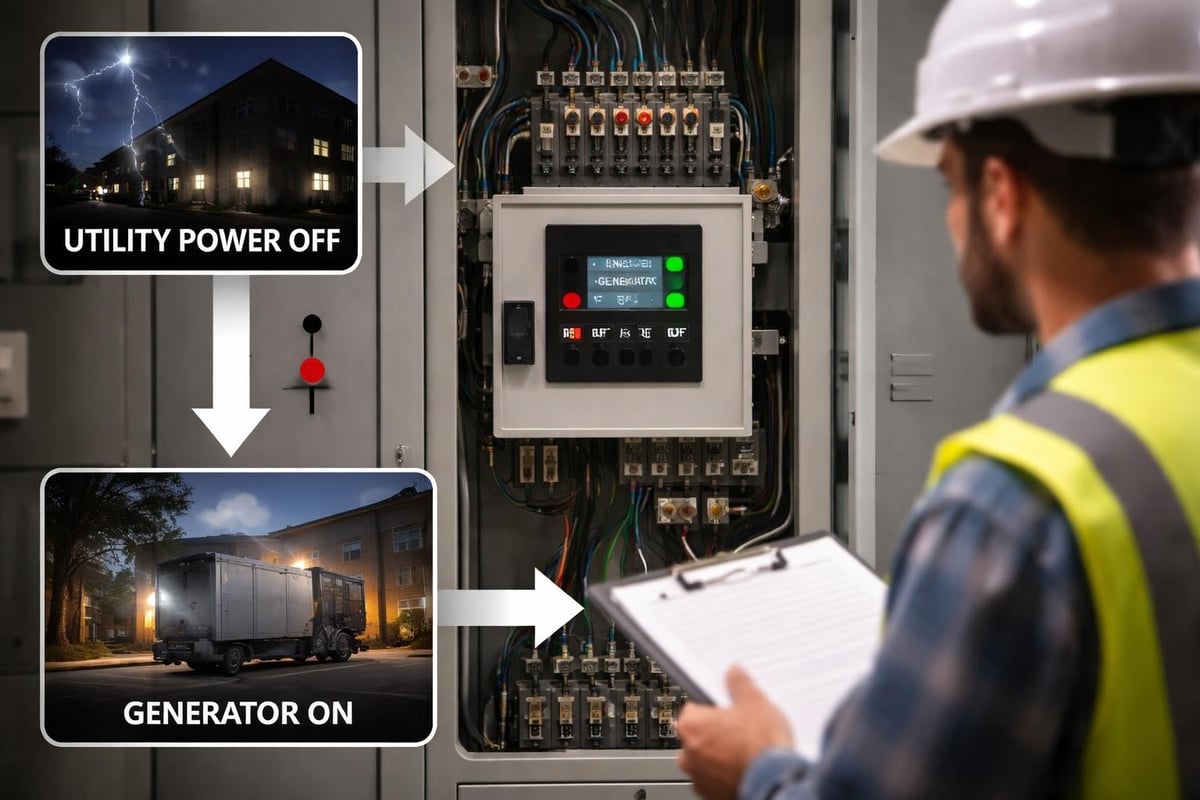
The transfer switch is the brain of your backup power system. It monitors utility power, detects outages, starts your generator, and manages the transition between power sources.
You have two main options:
Automatic transfer switches (ATS) handle everything without human intervention. When utility power fails, the ATS signals the generator to start, waits for stable power output, then switches your building's load. When utility power returns, it reverses the process. For commercial facilities, automatic systems are practically essential. You can't rely on someone being available 24/7 to manually start backup power.
Manual transfer switches cost less but require someone to physically flip switches during an outage. For most commercial applications, this creates unacceptable risk. Healthcare facilities, data centers, and buildings with refrigerated inventory simply can't afford the delay.
Fuel Type Decision Points
Your generator installation includes a critical fuel choice that affects operating costs, maintenance requirements, and installation complexity.
Requires gas line access, vulnerable to infrastructure damage
Diesel
Higher energy density, fuel storage on-site, reliable
Requires fuel tank installation, periodic fuel maintenance, stricter emissions standards
Propane
Clean burning, long shelf life, flexible tank sizing
Lower energy density than diesel, requires larger tank for equivalent runtime
Natural gas offers convenience if your building already has service. Safe generator connections require professional installation regardless of fuel type, but gas lines demand particular attention to leak prevention and code compliance.
Maintenance Planning From Day One
Here's something most people don't think about during generator installation: your maintenance commitment starts the moment the unit goes live. Commercial generators require regular exercise runs, oil changes, filter replacements, and load testing to ensure they'll perform when you need them.
Budget for these ongoing costs:
Monthly exercise runs: 30 minutes under load to prevent wet stacking and keep components lubricated
Quarterly inspections: Checking fuel systems, battery health, coolant levels, and belt tension
Annual load bank testing: Full-capacity testing to verify performance
Fuel system maintenance: Treating diesel fuel to prevent algae growth, testing fuel quality
Generator safety protocols extend beyond installation into ongoing operation. Carbon monoxide detectors near generator locations, proper ventilation monitoring, and regular safety inspections protect your building occupants and comply with insurance requirements.
Generator installation represents a significant investment in your commercial property's resilience and operational continuity. By carefully planning your system size, ensuring code-compliant placement, selecting appropriate fuel sources, and committing to ongoing maintenance, you create reliable backup power that protects your business when it matters most. Whether you're planning new construction or upgrading existing facilities, GM Roofing & Electrical Services brings more than 25 years of commercial electrical experience to help you design and implement backup power solutions built on integrity, clear communication, and a genuine commitment to serving your needs with excellence.
Learn why preventative electrical maintenance is critical for commercial buildings. Discover best practices, inspection schedules, and cost-saving benefits.