Corrugated Iron Roofs: Commercial Roofing Guide 2026
Discover how corrugated iron roofs deliver durability and cost-efficiency for commercial buildings. Expert insights on installation and maintenance.
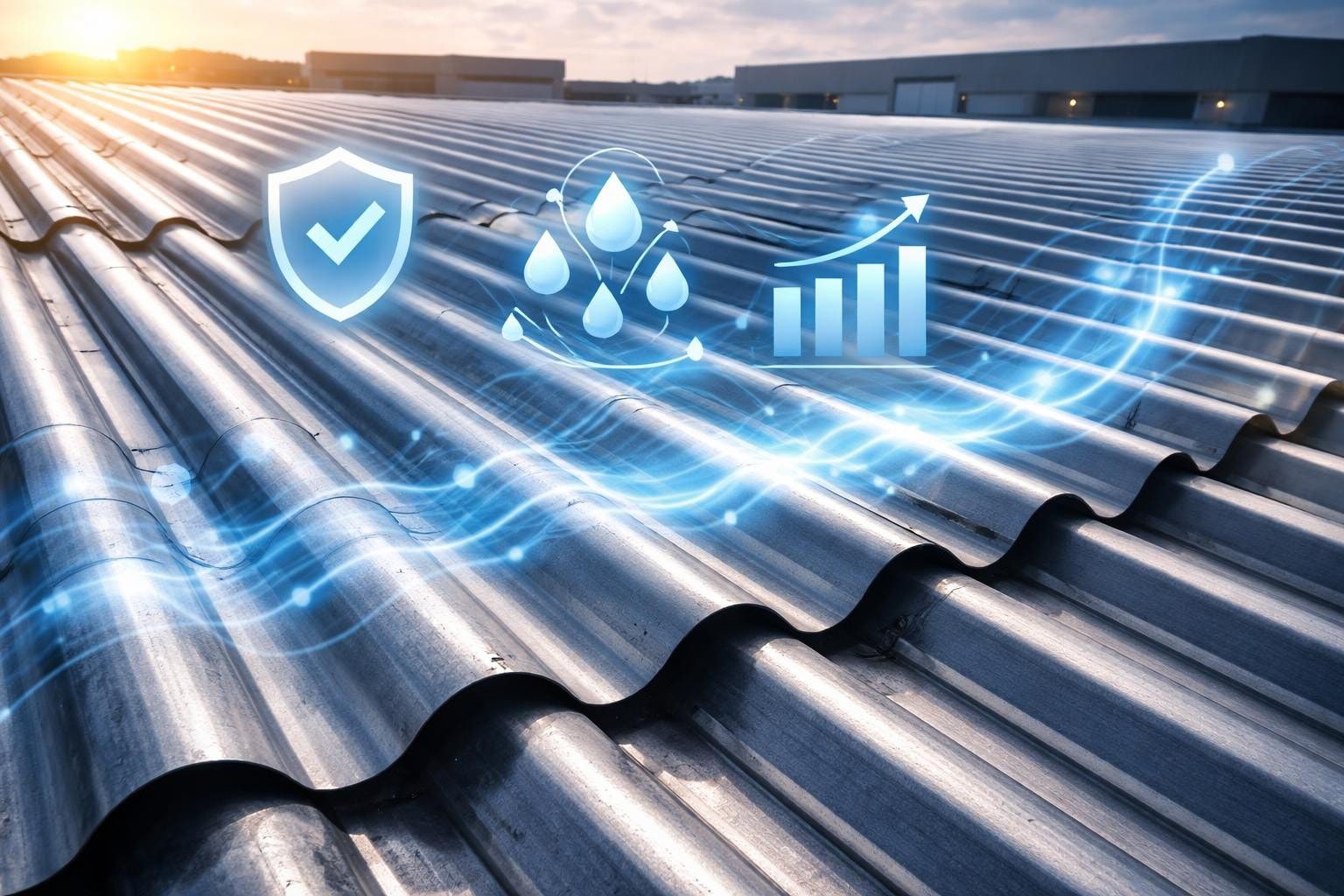
Corrugated iron roofs have served commercial buildings for over 175 years, proving their worth through generations of changing construction standards and building codes. These distinctive wavy metal panels continue to protect warehouses, retail centers, manufacturing facilities, and agricultural structures across the United States. Their longevity stems from a simple yet effective design that combines strength, affordability, and weather resistance in a single roofing solution. For commercial property managers and building owners evaluating roofing options in 2026, understanding the capabilities and maintenance requirements of corrugated iron roofs remains essential for making informed investment decisions.
Understanding the Structure and Composition of Corrugated Iron Roofs
The characteristic wave pattern of corrugated iron roofs serves a critical structural purpose beyond aesthetics. The alternating ridges and grooves create a series of structural ribs that distribute loads efficiently across the panel width. This corrugation process increases the material's moment of inertia, allowing thin sheets to span considerable distances without sagging or buckling under snow loads, wind pressure, or foot traffic during maintenance operations.
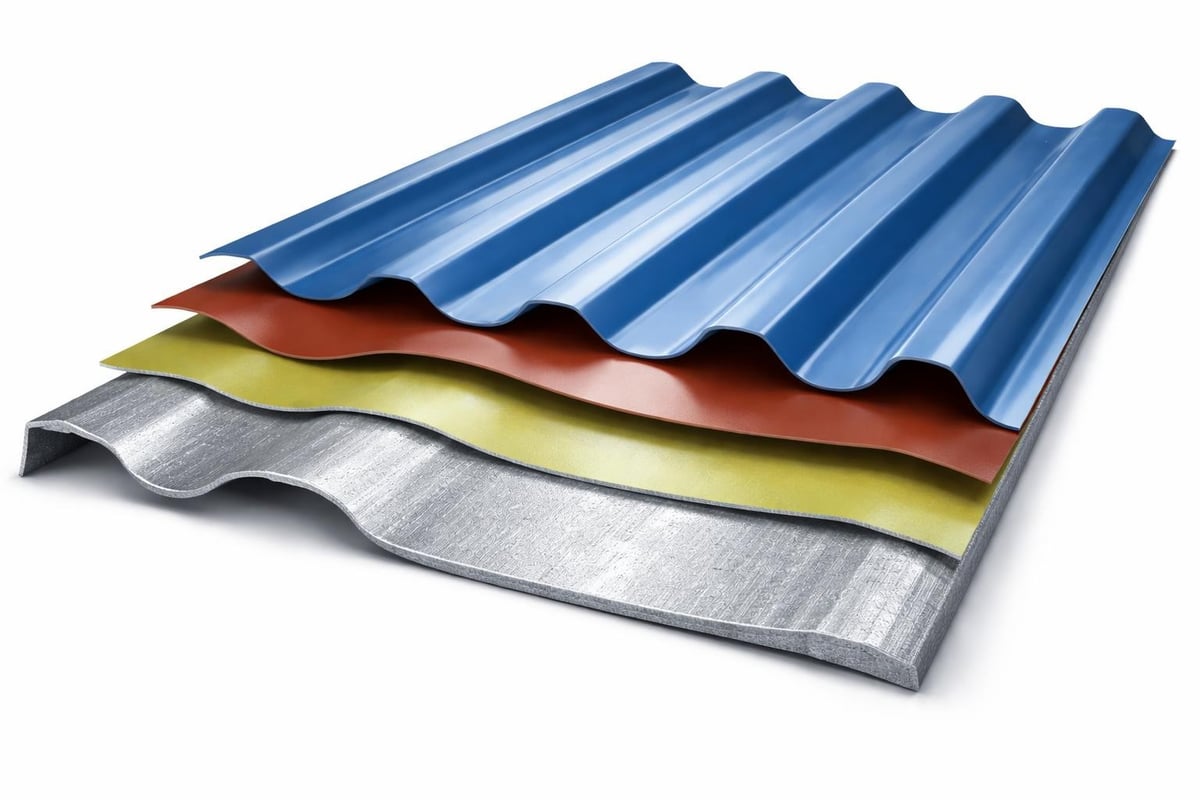
Traditional corrugated iron roofs consist of steel sheets coated with zinc through galvanization, though modern variations incorporate multiple protective layers. The galvanization process deposits a sacrificial zinc layer that corrodes preferentially to protect the underlying steel from moisture exposure. According to Scotland’s Building Conservation Centre, proper galvanization can extend roof lifespan significantly when combined with regular maintenance practices.
Material Composition and Coating Systems
Modern corrugated metal roofing extends beyond simple galvanized iron to include various coating systems:
G90 galvanized steel with 0.90 ounces of zinc per square foot
Galvalume coating combining zinc and aluminum for enhanced corrosion resistance
Painted finishes with PVDF or polyester topcoats in various colors
Weathering steel formulations that develop protective rust patinas
The base metal thickness typically ranges from 26-gauge to 22-gauge for commercial applications, with heavier gauges specified for high-wind zones or facilities requiring increased structural capacity. Each coating system offers distinct advantages regarding corrosion resistance, color retention, and lifecycle cost considerations that property managers must evaluate against specific building requirements.
Performance Characteristics for Commercial Applications
Commercial buildings demand roofing systems that deliver consistent performance across diverse weather conditions and operational requirements. Corrugated iron roofs meet these demands through several inherent characteristics that align with commercial property management priorities.
Structural efficiency ranks among the most valuable attributes. The corrugation pattern provides exceptional strength-to-weight ratios, reducing structural framing requirements and lowering overall construction costs. A typical corrugated panel weighing 1.5 to 2.5 pounds per square foot can span 5 feet or more between purlins while maintaining adequate deflection limits under design loads.
Wind and Weather Resistance
Wind performance represents a critical consideration for commercial facilities, particularly in coastal regions and tornado-prone areas. Research published in scientific journals analyzing metal roof cladding performance demonstrates that properly installed corrugated systems withstand extreme wind events through:
Mechanical fastening at each corrugation crest
Sidelap connections between adjacent panels
Continuous structural support from roof purlins
End-lap sealing at longitudinal joints
The wave pattern itself creates aerodynamic characteristics that reduce uplift forces compared to flat metal surfaces. However, installation quality determines actual wind resistance, making proper fastener spacing and panel overlap dimensions critical specification points.
Performance Factor
Corrugated Iron Capability
Commercial Benefit
Wind Resistance
Up to 150 mph when properly fastened
Hurricane zone compliance
Snow Load Capacity
40+ psf typical
Multi-climate suitability
Thermal Movement
0.0000065 in/in/°F expansion
Minimal fastener stress
Fire Rating
Class A available
Insurance premium reduction
Installation Considerations for Commercial Projects
Commercial corrugated iron roof installation differs significantly from residential applications in scope, complexity, and quality control requirements. Large-format buildings demand coordinated installation sequencing, specialized equipment, and experienced crews familiar with commercial building codes.
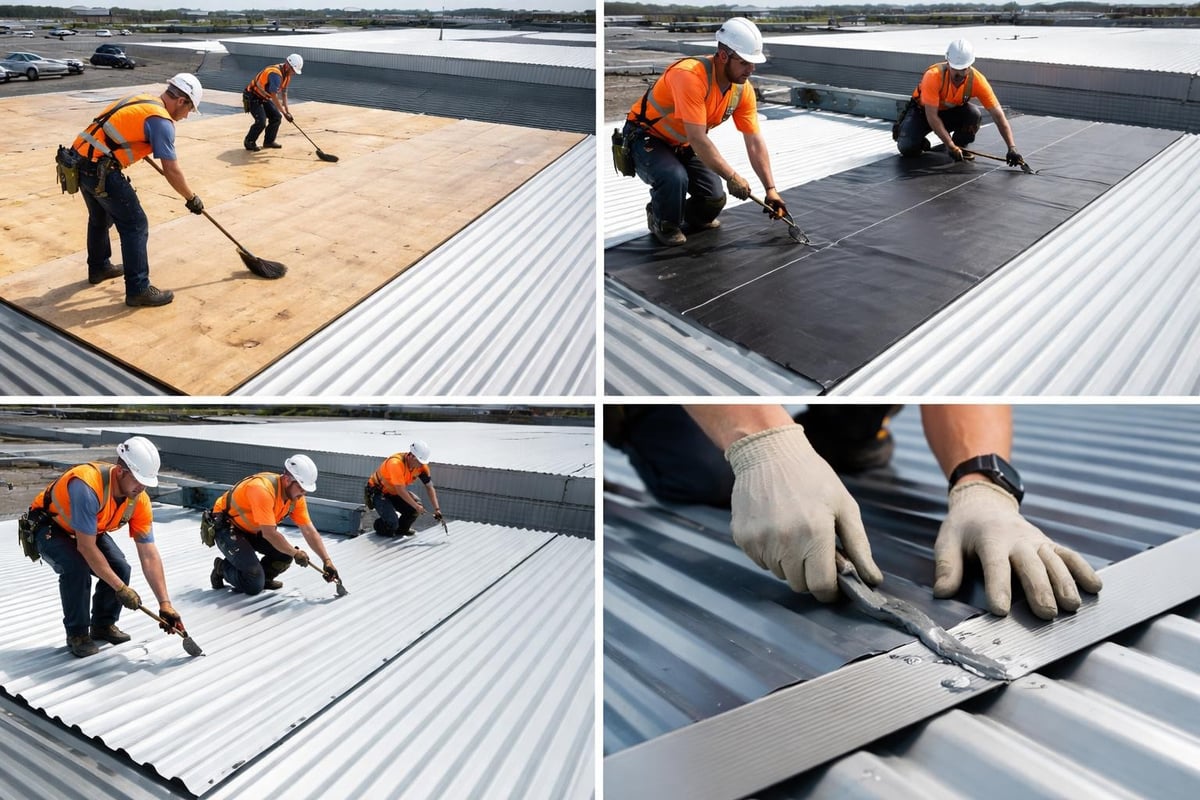
Substrate preparation establishes the foundation for long-term performance. Commercial installations typically specify solid decking or closely-spaced purlins to provide continuous support and reduce oil-canning (visible waviness between fasteners). Many specifications require synthetic underlayment or self-adhered membranes beneath the metal panels to provide secondary water protection and condensation management.
Fastening and Sealing Systems
Proper fastening methodology directly impacts both immediate weather-tightness and long-term durability. Commercial installations utilize exposed fastener systems with self-drilling, self-tapping screws featuring EPDM or neoprene washers. Fastener placement follows engineered patterns that account for:
Wind uplift zones per ASCE 7 calculations
Thermal expansion and contraction allowances
Panel overlap requirements at end laps
Penetration seal integrity at fastener points
The National Park Service documentation on metal roofing emphasizes that fastener selection must account for galvanic compatibility between the fastener material and the roofing panels to prevent accelerated corrosion at connection points. Stainless steel or coated carbon steel fasteners prevent galvanic corrosion issues that compromise roof integrity.
Maintenance Requirements and Lifecycle Management
Commercial property managers must implement proactive maintenance programs to maximize corrugated iron roof longevity and protect their roofing investment. Unlike some roofing systems that fail suddenly, corrugated metal roofs typically show gradual deterioration that responds well to timely intervention.
Inspection Protocols
Regular inspections identify developing issues before they escalate into costly repairs or interior damage. Comprehensive inspection programs for corrugated iron roofs should occur at these intervals:
Biannual visual surveys examining panel condition and fastener integrity
Post-storm assessments following high-wind events or hail
Annual detailed inspections documenting specific deficiencies
Five-year comprehensive evaluations with coating condition analysis
According to Cadw’s roofing maintenance guidance, moisture-induced corrosion represents the primary threat to galvanized corrugated iron roofs, making drainage system maintenance equally important as panel inspection. Blocked gutters and downspouts create standing water conditions that accelerate panel deterioration and fastener corrosion.
Common Deterioration Patterns
Understanding typical failure modes helps maintenance teams prioritize repairs and allocate resources effectively:
Deterioration Type
Location
Maintenance Response
Red rust formation
Cut edges, fastener holes
Spot treatment, coating repair
Fastener backing out
Ridge areas, end zones
Re-torque, seal reinforcement
Panel separation
Side laps, end laps
Sealant replacement, fastener addition
Perforation
Valley areas, debris accumulation
Panel replacement, drainage improvement
Coating maintenance extends roof service life significantly beyond the base galvanization period. Commercial facilities often implement scheduled coating renewal programs that apply acrylic or elastomeric roof coatings every 10-15 years. These restoration coatings seal minor corrosion points, reflect solar heat, and postpone complete roof replacement by decades.
Cost Analysis and Economic Considerations
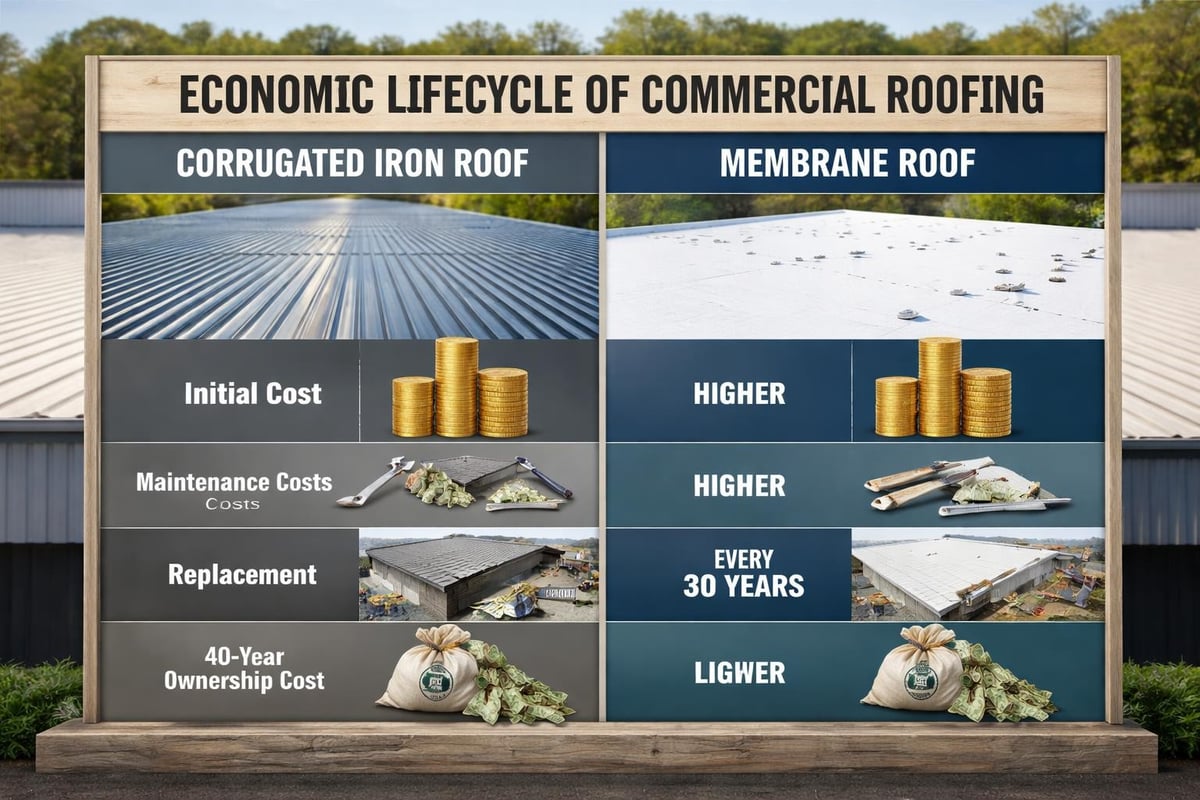
Commercial building owners evaluate roofing systems primarily through lifecycle cost analysis rather than initial installation expense alone. Corrugated iron roofs deliver favorable economics when analyzed across 30-50 year planning horizons typical for commercial property investments.
Initial installation costs for corrugated metal roofing typically range from $4.50 to $8.50 per square foot installed, depending on panel gauge, coating system, and project complexity. This positions corrugated systems competitively against other commercial roofing options, though comparison requires examining the full cost spectrum.
Lifecycle Cost Components
Comprehensive economic analysis accounts for multiple cost factors beyond material and labor:
Material costs (panels, fasteners, trim, underlayment)
Installation labor and equipment expenses
Annual inspection and maintenance requirements
Periodic coating renewal or repair interventions
Energy costs influenced by roof reflectivity and thermal performance
Insurance premium adjustments based on fire rating and wind resistance
Expected service life and replacement timing
When compared to single-ply membrane systems detailed in resources discussing TPO vs PVC vs EPDM roofing membranes, corrugated metal roofs often demonstrate superior longevity but may require more frequent minor maintenance interventions. The optimal choice depends on building usage, location, and ownership investment strategies.
Aesthetic Considerations in Modern Architecture
The architectural character of corrugated iron roofs has evolved from purely utilitarian applications to intentional design statements in contemporary commercial architecture. According to analysis from ArchDaily examining corrugated iron’s architectural role, these distinctive roofs communicate industrial authenticity that aligns with modern design trends emphasizing material honesty and functional expression.
Color availability has expanded dramatically beyond natural galvanized silver. Commercial facilities now specify corrugated panels in earth tones, bold accent colors, or custom-matched corporate palettes. PVDF resin-based paint systems maintain color integrity for 30+ years without significant fading, supporting brand consistency across multi-location retail or corporate campuses.
Design Integration Strategies
Architects and building owners incorporate corrugated metal roofing into commercial projects through various approaches:
Industrial aesthetic for breweries, maker spaces, and creative offices
Agricultural references in farm-to-table restaurants and organic retail
Coastal vernacular for beach resort commercial developments
Historical continuity in warehouse district adaptive reuse projects
The material's flexibility accommodates both traditional low-slope commercial applications and steeper pitches that enhance architectural prominence. Panel orientation choices (vertical versus horizontal corrugations) create distinct visual effects that influence building character and weather performance characteristics.
Repair and Restoration Strategies
Commercial corrugated iron roofs requiring repair present property managers with decision points regarding intervention scope and methodology. The InterNACHI inspection guide for metal roofs outlines systematic approaches to damage assessment that inform repair versus replacement decisions.
Localized repairs address specific deficiencies without complete roof replacement. Common repair scenarios include fastener replacement, panel patching, and sealant renewal at laps and penetrations. These interventions extend service life cost-effectively when overall roof condition remains sound despite isolated problems.
Coating Restoration Systems
Many commercial corrugated roofs reaching 20-30 years of service benefit from complete coating restoration rather than tear-off replacement. This approach involves:
Pressure washing to remove loose rust and surface contamination
Rust conversion treatment on areas showing corrosion
Fastener torque verification and seal reinforcement
Lap seam sealing with compatible sealants
Application of elastomeric or acrylic roof coating systems
Coating restoration typically costs 30-50% of complete replacement while adding 10-15 years of service life. This strategy aligns well with commercial property management goals of maximizing asset value while controlling capital expenditure timing.
Environmental and Sustainability Factors
Commercial building owners increasingly evaluate roofing decisions through sustainability and environmental impact frameworks. Corrugated iron roofs offer several attributes that support green building initiatives and corporate environmental commitments.
Material recyclability stands as a primary advantage. Steel roofing panels contain 25-95% recycled content initially and achieve near-100% recyclability at end of service life. Unlike membrane roofing systems that typically enter landfills, corrugated metal panels return to the steel manufacturing stream, reducing embodied carbon in future construction materials.
Energy Performance Characteristics
Thermal performance impacts operating costs throughout roof service life. Uncoated corrugated metal roofs exhibit low solar reflectance (typically 0.20-0.35) and emit absorbed heat readily, creating cooling loads in warm climates. However, modern coating systems transform this performance profile:
Coating Type
Solar Reflectance
Thermal Emittance
Cool Roof Rating
Bare galvanized
0.25
0.65
No
Light gray paint
0.45
0.85
Maybe
White PVDF
0.75+
0.85
Yes
Specialty cool coating
0.85+
0.90
Yes
Cool roof coatings reduce air conditioning demands substantially in retail, warehouse, and light manufacturing facilities. Energy modeling demonstrates cooling cost reductions of 15-30% compared to low-reflectance roofing in southern climates, improving building operating economics while reducing carbon emissions.
Specification Development for Commercial Projects
Developing comprehensive specifications for corrugated iron roofs requires attention to numerous technical details that influence installed performance and long-term durability. Commercial project specifications should address materials, installation methodology, and quality assurance protocols with precision appropriate to project scale and complexity.
Panel profile selection establishes basic performance parameters. Standard corrugation patterns include 2.67-inch spacing with varying depths, though custom profiles accommodate specific structural or aesthetic requirements. The Wikipedia reference on corrugated galvanized iron documents historical profile variations and modern standardization efforts that inform specification decisions.
Critical Specification Elements
Comprehensive commercial specifications must address these fundamental aspects:
Base metal type, thickness, and mechanical properties
Coating system including galvanization weight and paint specifications
Panel profile dimensions and manufacturer standards
Fastener type, material, spacing, and installation torque requirements
Underlayment materials and application methods
Flashing and trim details at roof perimeters and penetrations
Quality control testing and inspection protocols
Warranty coverage from manufacturer and installer
Performance-based specifications allow contractor flexibility while ensuring results meet project requirements. This approach specifies required wind resistance ratings, water-tightness standards, and durability expectations rather than prescribing exact installation methods, promoting innovation while maintaining accountability.
Industry Applications and Building Types
Corrugated iron roofs serve diverse commercial building types, each presenting unique performance requirements and operational considerations. Understanding application-specific demands helps property managers optimize roof selection and maintenance strategies for their facility portfolios.
Industrial and manufacturing facilities represent traditional corrugated metal roof applications. These buildings prioritize durability, low maintenance, and cost-effectiveness over aesthetic refinement. Heavy-gauge panels with robust coating systems withstand chemical exposure, elevated temperatures from manufacturing processes, and physical impacts from overhead cranes or material handling equipment.
Sector-Specific Considerations
Different commercial sectors emphasize distinct roof performance attributes:
Retail centers: Aesthetic appearance, energy efficiency, noise reduction
Warehousing and distribution: Span capability, installation speed, lifecycle cost
Government facilities: Specification compliance, domestic content, fire ratings
Healthcare support buildings: Infection control, noise mitigation, redundant weather protection
Each application category benefits from tailored specification approaches that prioritize relevant performance characteristics while managing costs appropriately. Retail facilities justify premium coating systems for aesthetic longevity, while warehouse operations may prioritize structural efficiency and rapid installation to minimize business disruption.
Code Compliance and Regulatory Considerations
Commercial corrugated iron roof installations must satisfy multiple regulatory frameworks governing building safety, energy efficiency, and environmental protection. Navigating these requirements demands familiarity with applicable codes and coordination with authority having jurisdiction representatives.
International Building Code provisions establish minimum standards for structural adequacy, fire resistance, and weather protection. Specific requirements vary based on building occupancy classification, with stricter provisions for Assembly, Institutional, and High-Hazard occupancy groups compared to Storage or Utility classifications.
Energy Code Requirements
Modern energy codes significantly influence corrugated metal roof specifications through thermal performance mandates. ASHRAE 90.1 and International Energy Conservation Code establish maximum U-factor and minimum solar reflectance requirements based on climate zone. Compliance strategies include:
Insulation systems beneath metal panels meeting R-value requirements
Cool roof coatings achieving specified solar reflectance indices
Thermal spacer systems reducing conductive heat transfer through fasteners
Ventilated roof assemblies managing heat gain through air circulation
Commercial projects pursuing LEED certification or other green building ratings face additional requirements regarding recycled content, local sourcing, heat island mitigation, and material disclosure through environmental product declarations. These voluntary standards increasingly influence mainstream commercial construction as corporate sustainability commitments expand.
Corrugated iron roofs continue delivering reliable performance for commercial facilities through proven combinations of structural efficiency, weather resistance, and economic value. Their adaptability across building types and climates makes them particularly relevant for property managers seeking versatile roofing solutions that perform consistently across diverse portfolio holdings. Whether you're managing retail centers, warehouse operations, or specialized commercial facilities, GM Roofing Services provides the expertise and comprehensive metal roofing solutions needed to evaluate, install, and maintain corrugated roofing systems that protect your investment for decades to come.
Learn why preventative electrical maintenance is critical for commercial buildings. Discover best practices, inspection schedules, and cost-saving benefits.