Expert guide to roof leak repair flat roof systems for commercial buildings. Learn detection, repair methods, and prevention strategies.
Commercial flat roofs present unique challenges when it comes to leak detection and repair. Unlike sloped roofing systems where water naturally flows away, flat roofs require specialized knowledge and techniques to identify problems and implement lasting solutions. Facility managers across healthcare, retail, and government sectors must understand the complexities of roof leak repair flat roof systems to protect their investments and maintain operational continuity. This comprehensive guide explores detection methods, repair strategies, and prevention techniques specifically designed for commercial applications.
Understanding Common Flat Roof Leak Causes
Commercial flat roofs develop leaks through various mechanisms that differ significantly from residential sloped systems. The primary culprits include membrane deterioration, ponding water, and compromised flashing systems.
Membrane-related issues account for the majority of commercial flat roof failures. EPDM, TPO, and modified bitumen membranes degrade over time due to UV exposure, thermal cycling, and foot traffic. Seams become particularly vulnerable as adhesives weaken or mechanical fasteners loosen.
Inadequate drainage creates ponding water, which accelerates membrane breakdown. Water that remains on a flat roof surface for more than 48 hours begins penetrating protective layers, seeking entry points through the smallest imperfections. This condition compromises roofing systems through constant hydrostatic pressure and freeze-thaw cycles in colder climates.
Identifying Hidden Leak Sources
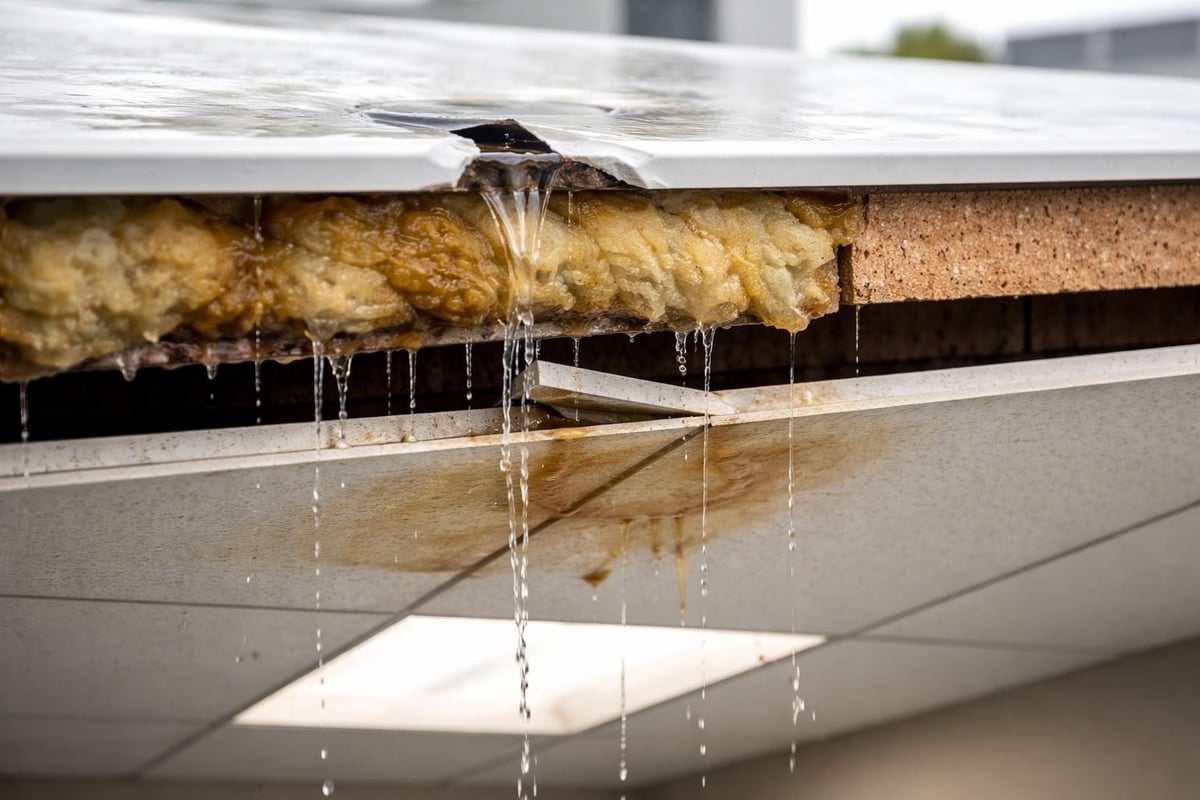
The visible water damage inside a commercial building rarely aligns with the actual roof penetration point. Water travels along roof decking, insulation layers, and structural members before manifesting as ceiling stains or drips.
Professional leak detection employs multiple methodologies:
Infrared thermography identifies moisture-saturated insulation through temperature differentials
Electronic leak detection uses low-voltage currents to trace membrane breaches in conductive systems
Nuclear moisture surveys measure hydrogen atoms concentrated in wet materials
Visual flood testing confirms suspected leak locations through controlled water application
Detection Method
Best Application
Accuracy Level
Cost Factor
Infrared
Large commercial areas
High
Medium
Electronic
Single-ply membranes
Very High
High
Nuclear
All roof types
High
Very High
Flood testing
Suspected areas
Medium
Low
These specialized techniques prevent the common mistake of applying patch repairs without identifying the true source, which many contractors overlook during rushed repair projects.
Emergency Response Protocols
When commercial facilities experience active leaks, immediate response protocols minimize interior damage and business disruption. Facility managers must balance emergency containment with proper repair procedures.
Initial containment steps protect critical assets and maintain operations during storm events or sudden failures. Position water collection systems beneath active drips, relocate sensitive equipment, and document damage for insurance purposes. Deploy temporary roof tarping only when conditions allow safe access.
Weather conditions dictate repair timing. Never attempt permanent roof leak repair flat roof procedures during precipitation, extreme temperatures, or high winds. Membrane adhesives require specific temperature ranges for proper curing, typically between 40°F and 100°F depending on material specifications.
Temporary Versus Permanent Solutions
Commercial roofing demands clear distinction between stopgap measures and lasting repairs. Temporary solutions serve specific purposes but create long-term problems when treated as permanent fixes.
Acceptable temporary measures include:
Professional-grade roof tape applied to clean, dry surfaces
Elastomeric coatings over small punctures (under 2 inches)
Emergency tarping secured with proper ballasting systems
Temporary drainage enhancement to redirect ponding water
Permanent repair methods require proper surface preparation, compatible materials, and adequate curing time. Rushing permanent repairs during emergency situations typically results in premature failure and escalating costs.
Professional Repair Methodologies
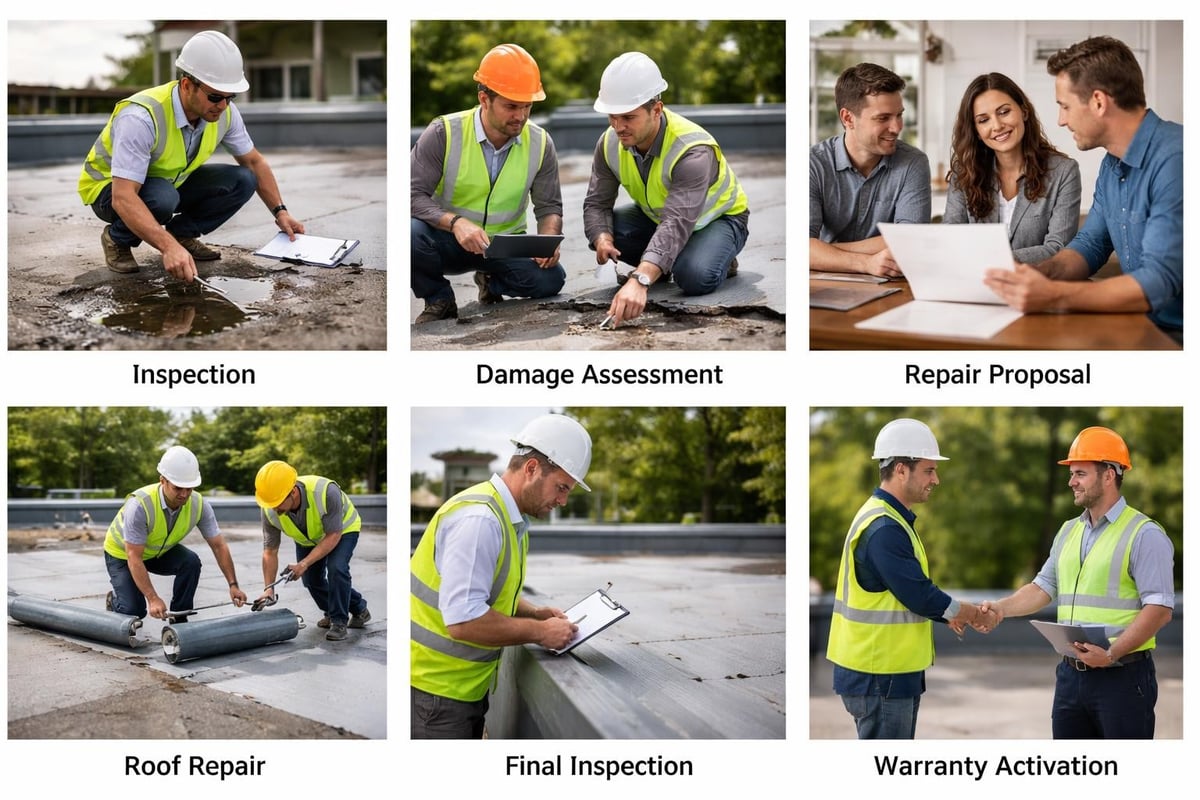
Commercial roof leak repair flat roof projects demand systematic approaches that address both immediate symptoms and underlying causes. Professional contractors follow established protocols ensuring warranty compliance and long-term performance.
Surface preparation constitutes the foundation of successful repairs. Remove all contaminants, including dirt, oil, biological growth, and loose membrane material. Power washing may seem thorough but often drives moisture deeper into substrates. Mechanical cleaning with wire brushes or grinders provides superior results for small repair areas.
The repair scope determines appropriate techniques. Small punctures (under 6 inches) receive patch repairs using compatible membrane material with minimum 6-inch overlap on all sides. Larger damaged areas may require complete section replacement, cut back to stable membrane and properly tied into existing systems.
Advanced Repair Techniques
Modern commercial roofing incorporates sophisticated materials and installation methods that outperform traditional approaches. Understanding these options helps facility managers make informed decisions about repair investments.
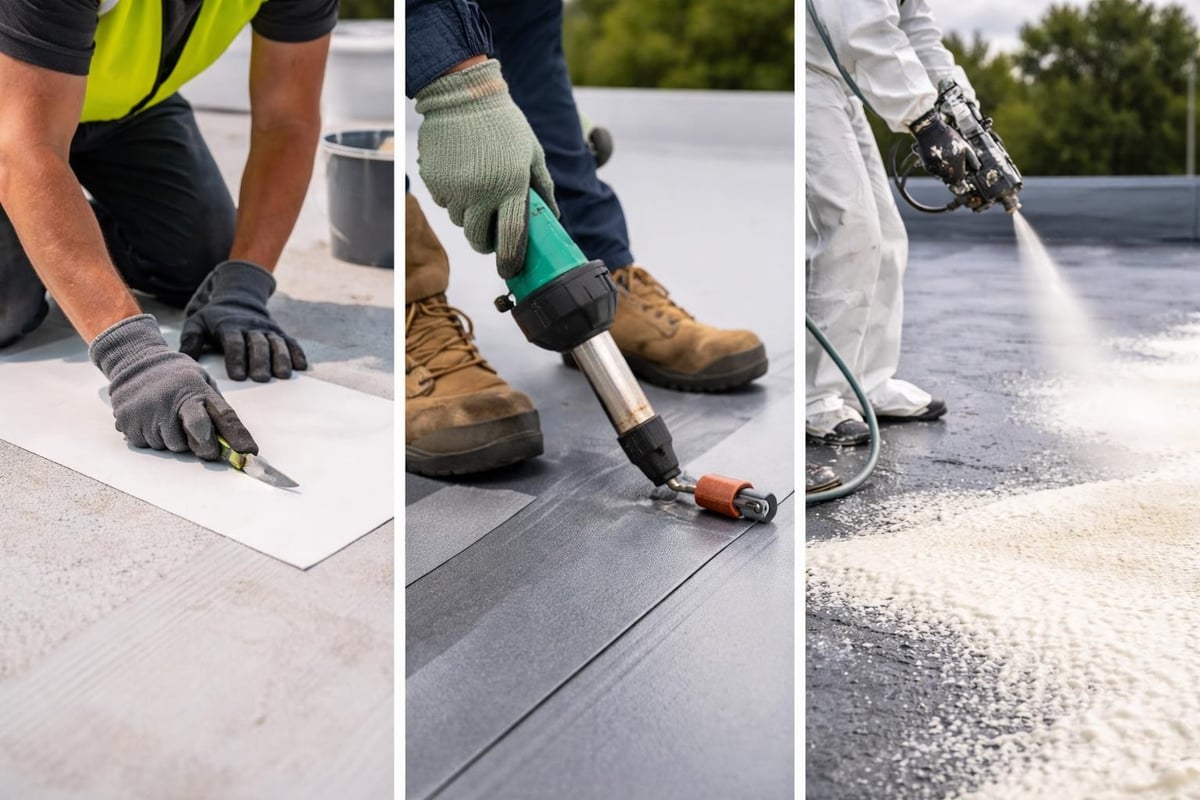
Hot-air welding creates molecularly bonded seams in thermoplastic membranes like TPO and PVC. This technique produces stronger connections than adhesive-based methods, particularly critical in high-wind zones or areas subject to thermal movement. Proper welding requires certified technicians using calibrated equipment.
Spray polyurethane foam provides unique solutions for certain roof leak repair flat roof scenarios. This material simultaneously addresses insulation deficiencies and membrane failures, creating seamless waterproofing with superior R-values. However, foam application demands expert technique and strict environmental controls.
Repair Method
Application
Lifespan
Weather Sensitivity
Patch & seal
Localized damage
5-10 years
High
Section replacement
Moderate damage
15-20 years
Medium
Hot-air welding
TPO/PVC seams
20+ years
Medium
Spray foam
Multiple issues
20-25 years
Very High
Understanding proper repair techniques prevents the wasteful cycle of repeated temporary fixes that characterize poorly managed commercial roofs.
Preventing Future Leak Development
Proactive maintenance programs deliver significantly better ROI than reactive repair strategies. Commercial facilities that implement structured inspection and maintenance protocols experience 40-60% fewer emergency repair incidents and extend roof lifespans by 30-50%.
Quarterly inspections identify developing problems before they escalate into costly failures. Trained technicians examine critical areas including penetrations, transitions, drainage components, and membrane seams. Documentation through photographs and detailed reports creates baseline data for tracking deterioration rates.
Seasonal maintenance addresses specific threats to flat roof integrity:
Spring: Clear debris from drains and scuppers, inspect for winter damage, verify membrane adhesion
Summer: Check for UV degradation, blister formation, and thermal movement effects
Fall: Remove organic debris, ensure drainage capacity before winter precipitation
Winter: Monitor snow loads, address ice dam formation, check for moisture infiltration
Drainage System Optimization
Adequate drainage represents the single most important factor in flat roof longevity. Even minor drainage improvements significantly reduce leak potential and extend membrane life.
Primary drainage systems require backup capacity meeting local building codes. Install secondary drainage (scuppers or overflow drains) at elevations preventing water accumulation beyond design depths. Regular cleaning prevents debris blockages that create ponding conditions.
Tapered insulation systems eliminate low spots where water collects. Retrofit projects can incorporate crickets and saddles directing water toward drains without complete roof replacement. This investment prevents common flat roof complications that lead to premature system failure.
Material Selection Considerations
Roof leak repair flat roof projects succeed or fail based on material compatibility and quality. Commercial applications demand products specifically formulated for flat roof conditions and compatible with existing membrane types.
Membrane compatibility critically impacts repair longevity. EPDM repairs require EPDM patches and compatible primers. TPO and PVC are not interchangeable despite similar appearance. Modified bitumen systems need torch-applied or cold-adhesive products matched to original installation methods.
Quality differentials in repair materials justify premium pricing. Commercial-grade products contain higher polymer concentrations, superior UV stabilizers, and reinforcement layers absent in residential-grade alternatives. The cost difference between professional and consumer products (typically 30-50%) becomes insignificant when compared to labor expenses and business disruption costs.
Coating Systems as Preventive Solutions
Roof coatings provide both repair and prevention capabilities when applied correctly to suitable substrates. These systems restore weatherproofing, improve energy efficiency, and extend service life for aging flat roofs.
Acrylic coatings offer excellent UV resistance and reflectivity but require completely dry substrates. Silicone coatings resist ponding water and apply in humid conditions, making them ideal for chronically wet roofs. Polyurethane coatings provide superior durability and impact resistance for high-traffic areas.
Application thickness determines coating performance. Most manufacturers specify minimum dry film thickness between 20-40 mils, requiring multiple passes with proper cure time between coats. Insufficient thickness leads to premature failure and wasted investment.
Professional Contractor Selection
Choosing qualified roofing contractors separates successful roof leak repair flat roof projects from costly disappointments. Commercial facilities require specialists with proven experience, proper licensing, and manufacturer certifications.
Verification steps protect facility managers from unqualified contractors:
Confirm active licensing and adequate insurance coverage (minimum $2 million general liability)
Review manufacturer certifications for specific membrane systems
Request references from similar commercial projects completed within 24 months
Verify safety programs meeting OSHA standards for commercial roofing
Examine warranty offerings and financial stability to honor long-term commitments
Competitive bidding processes should emphasize qualification over price alone. The lowest bid frequently indicates shortcuts in materials, inadequate labor allocation, or hidden exclusions. Detailed specifications ensure all bidders price identical scopes, enabling meaningful comparisons.
Contract and Warranty Provisions
Commercial roofing contracts must clearly define scope, responsibilities, and performance standards. Ambiguous agreements create disputes and leave facility managers without recourse when problems arise.
Essential contract elements include:
Detailed material specifications with approved product lists
Project schedule with milestone dates and completion deadlines
Payment terms tied to verified completion stages
Warranty coverage distinguishing material versus workmanship guarantees
Dispute resolution procedures and remedies for non-performance
Manufacturer warranties typically require certified contractor installation using approved materials and methods. Understanding common repair mistakes helps facility managers recognize when contractors deviate from proper procedures.
Long-Term Asset Management
Commercial flat roofs represent significant capital investments requiring strategic management beyond individual repairs. Facility managers who adopt comprehensive asset management approaches optimize replacement timing and budget allocation.
Roof condition assessments quantify remaining service life and guide capital planning decisions. Professional assessments evaluate membrane condition, substrate integrity, insulation performance, and drainage adequacy. Standardized rating systems (typically 1-10 scales) enable objective comparisons across multiple facilities.
Budget planning should allocate 2-4% of replacement cost annually for maintenance and repairs. This funding level sustains roofs through their design lifespan while avoiding emergency repair premiums. Deferred maintenance accelerates deterioration exponentially, quickly exceeding prevention costs.
Technology Integration
Modern building management systems integrate roof monitoring capabilities that detect problems before visible symptoms appear. Moisture sensors embedded in roof assemblies provide real-time leak alerts, enabling immediate response.
Drone inspection technology reduces costs and improves safety for large commercial facilities. High-resolution imaging identifies membrane defects, drainage issues, and developing problems without extensive roof access. Thermal imaging attachments enhance moisture detection capabilities beyond ground-based thermography.
Digital asset management platforms consolidate inspection reports, repair histories, and warranty documentation. Cloud-based systems provide accessibility for distributed facility portfolios and streamline contractor management processes.
Industry-Specific Considerations
Different commercial sectors face unique roofing challenges requiring tailored approaches to roof leak repair flat roof projects. Healthcare, retail, and government facilities each present distinct requirements and constraints.
Healthcare facilities demand minimal operational disruption and stringent infection control protocols. Roofing work above occupied areas requires negative air pressure systems, sealed containment barriers, and after-hours scheduling. Regulatory compliance adds complexity and cost to standard repair procedures.
Retail operations prioritize business continuity during peak seasons. Schedule repairs during low-traffic periods and phase work to maintain customer access. Warranty requirements often exceed standard terms to protect against revenue losses from water-damaged inventory.
Government buildings navigate procurement regulations, prevailing wage requirements, and extended approval processes. Understanding these constraints during planning prevents schedule delays and budget overruns.
Sector
Primary Concern
Typical Constraint
Recommended Approach
Healthcare
Infection control
Occupied spaces
Containment protocols
Retail
Business continuity
Peak seasons
Phased scheduling
Government
Compliance
Procurement rules
Extended timelines
Industrial
Asset protection
Process sensitivity
Coordinated shutdowns
Effective roof leak repair flat roof programs combine immediate response capabilities with long-term preventive strategies. Commercial facility managers who implement structured maintenance protocols, select qualified contractors, and invest in quality materials protect their buildings while optimizing lifecycle costs. GM Roofing Services brings specialized expertise in commercial flat roofing systems across healthcare, retail, and government sectors, delivering comprehensive solutions from emergency repairs through complete roof replacements backed by industry-leading warranties and maintenance programs.
Learn why preventative electrical maintenance is critical for commercial buildings. Discover best practices, inspection schedules, and cost-saving benefits.