Winter Roof Damage: Why Deferred Maintenance is the Real Culprit
I've watched this pattern repeat for years. The first major snowstorm hits, temperatures drop below freezing, and my phone starts ringing.Building owners who ignored their roofs all summer and fall...
I’ve watched this pattern repeat for years. The first major snowstorm hits, temperatures drop below freezing, and my phone starts ringing with owners realizing they ignored essential winter roof maintenance.
Building owners who ignored their roofs all summer and fall suddenly need emergency repairs. They blame the storm. They blame the cold. They blame everything except the actual problem.
Their roof was already failing. Winter just made it obvious.
The storm didn’t create the damage. It revealed what fair weather was hiding. Every deferred repair, every “I’ll get to it later” decision, every ignored inspection becomes an emergency the moment temperatures drop and precipitation arrives.
Let me show you exactly what happens when winter hits a roof that wasn’t ready.
The Freeze-Thaw Cycle: How Water Becomes a Wrecking Ball
Water expands by 9% when it freezes. That’s not trivia. That’s the mechanism destroying your roof.
Here’s what happens in slow motion:
Water finds a tiny crack in your roofing material. Maybe it’s a lifted shingle edge. Maybe it’s a small gap in flashing. Maybe it’s a membrane seam that separated slightly last spring.
Temperature drops. Water freezes. That 9% expansion creates internal stress that forces the crack to widen.
Temperature rises. Ice melts. Water penetrates deeper into the newly enlarged fissure.
Temperature drops again. The cycle repeats.
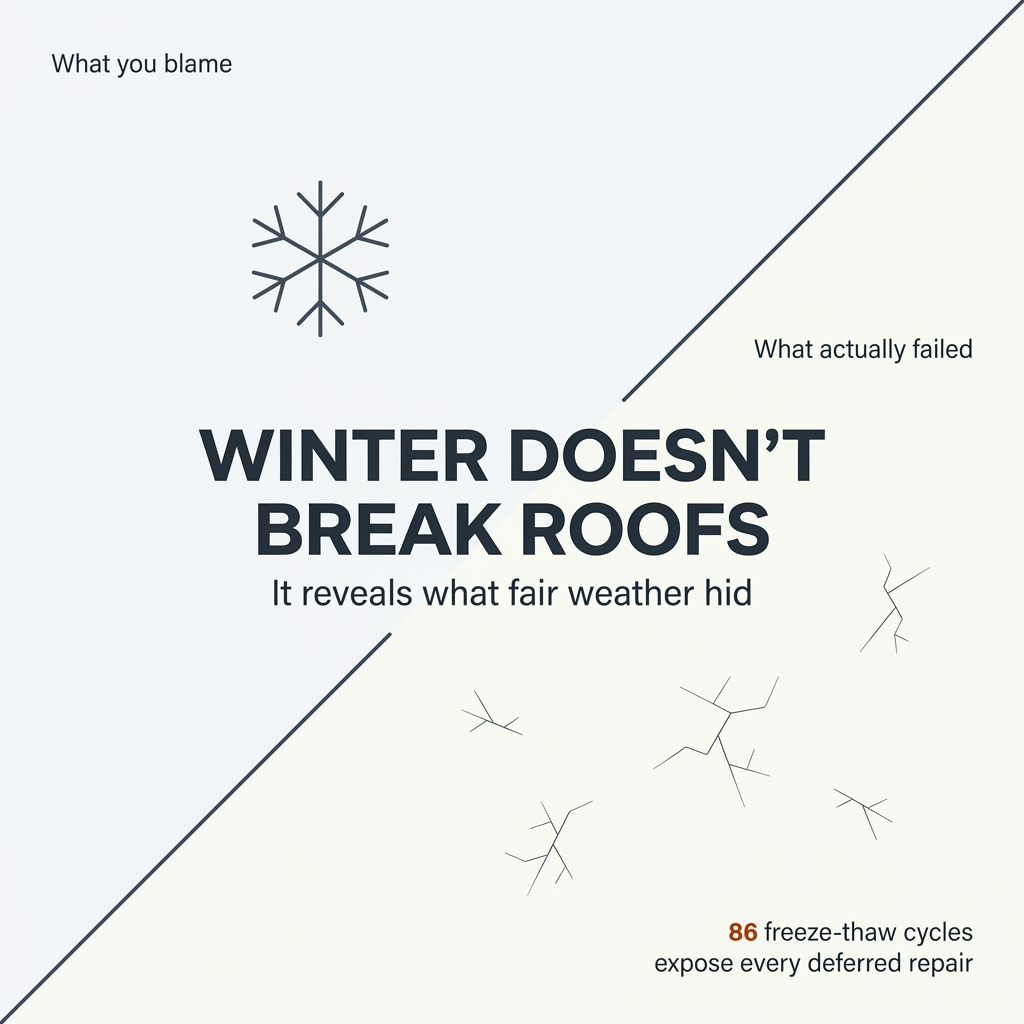
Minnesota experiences an average of 86 freeze-thaw cycles between October and April. That means your roof faces repeated melting and refreezing dozens of times each winter, even without major storms.
Each cycle makes the damage worse. What started as a hairline crack in September becomes a gaping hole by February.
The storm didn’t create that hole. It just made it big enough for you to notice water dripping into your building.
Why Old Roofs Fail First
An older roof membrane at the end of its life cycle is far more susceptible to major effects from thermal shock than a newer commercial roof, which is extremely elastic.
Aged roofs lack the flexibility to perform under extreme conditions and drastic temperature changes. They can’t expand and contract with the freeze-thaw cycle. They crack instead.
This makes freeze-thaw damage progressive. It increases in severity if you don’t correct it with proper winter roof maintenance.
You can’t stop winter from coming. But you can fix the vulnerabilities before the cycle starts.
Ice Dams: The Expensive Consequence of Poor Preparation
Ice dams form when heat escapes through your roof, melts snow at the peak, and sends water running down to the cold eaves where it refreezes.
That ice builds up. It blocks drainage. It forces water under shingles. It creates leaks in places your roof was never designed to handle water.
Professional ice dam removal costs homeowners an average of $1,200, with most paying between $650 and $2,000.
That’s just removal. That’s not fixing the damage.
Water damage repair ranges from $1,000 to $4,000. Mold remediation costs between $500 and $6,000. Replacing damaged asphalt roof shingles can cost as much as $10,000, with more complex roofs reaching upwards of $25,000.
Emergency or after-hours services command 25-50% premium pricing over scheduled services.
You know what costs less? Proper insulation and ventilation installed before winter. Fixing the heat loss problem that creates ice dams in the first place.
The Pattern I See Every Year
October and November are prime time for winter roof maintenance. Weather is manageable. Contractors are available. Materials aren’t frozen solid.
Wait until January, and you’ll pay premium prices for emergency service—if you can get it at all.
The building owners calling me during storms are facing the consequences of ignored maintenance. What began as a loose shingle or small area of lifted flashing in fall could have cost a fraction of what interior restoration and structural repairs cost in spring.
Snow Load: The Weight Your Roof Wasn’t Ready to Carry
Wet snow can weigh 20 pounds or more per square foot. One inch of ice equals one foot of fresh snow.
Do the math: A combination of 2 feet of old snow and 2 feet of new snow could weigh as much as 60 pounds per square foot. That’s beyond the typical snow load capacity of most roofs.
Most snow load failures are caused by drifted snow, not uniform coverage.
Wind pushes snow into valleys, against walls, around HVAC units. It creates concentrated weight in areas where your roof structure is already compromised.
The roof that collapses under snow load wasn’t destroyed by the storm. It was already weakened by years of deferred maintenance, water infiltration, and structural deterioration.
What Winter Actually Reveals
Extreme shifts in temperature, along with snow, ice, and wind, don’t create new problems. They aggravate existing roofing issues.
Temperature swings can freeze, thaw, and refreeze water on the roof multiple times. Water finds its way within the roof membrane and expands as it freezes. This creates bigger openings in the membrane, allowing even more water in during the next thaw.
The cycle repeats over and over again until the damage becomes apparent.
Winter reveals what fair weather hides.
That loose flashing you noticed last spring but never fixed? Winter finds it.
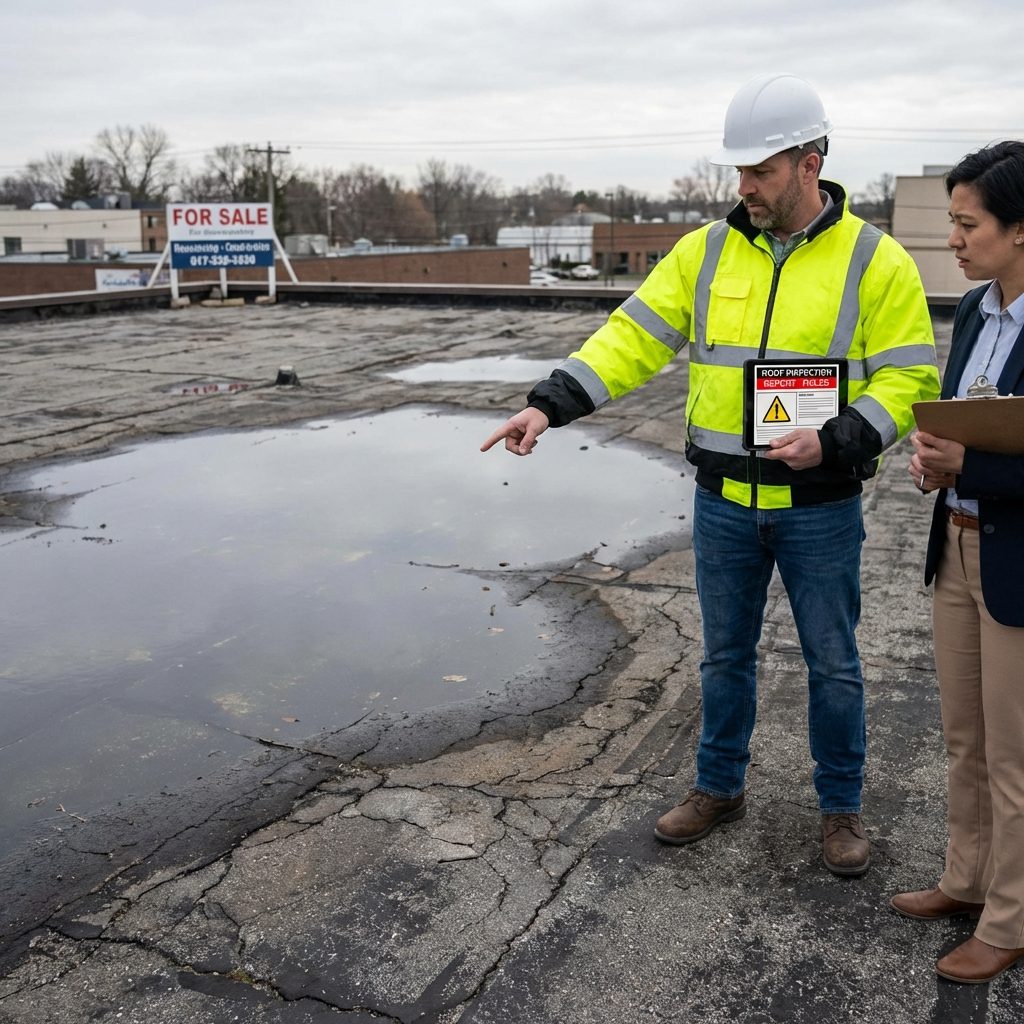
That small ponding area on your flat roof that you figured would dry out eventually? Winter freezes it, expands it, and turns it into a leak.
That ventilation issue you’ve been meaning to address? Winter converts it into an ice dam that costs thousands to remediate.
The Insurance Reality
Emergency roof repair situations are typically covered by insurance when caused by sudden or unexpected events—not deferred maintenance.
Your insurance company knows the difference between storm damage and neglect. They can tell when a roof failed because of a specific weather event versus when it failed because you ignored problems for years.
The claim you file after winter storm damage gets scrutinized. If the adjuster finds evidence of pre-existing conditions, deferred winter roof maintenance, or ignored repairs, you’re paying out of pocket.
The Real Cost of Waiting
I understand the temptation to defer roof maintenance. Budgets are tight. Other priorities seem more urgent. The roof looks fine from the ground.
But here’s what waiting actually costs:
You pay more for emergency repairs. Premium pricing during storms. Limited contractor availability. Rushed work in terrible conditions.
You pay for interior damage. Water damage, mold remediation, ruined inventory, business interruption, displaced tenants.
You pay with stress and disruption. Emergency calls at 2am. Scrambling for tarps and buckets. Explaining to tenants why water is dripping through their ceiling.
What Preparation Actually Looks Like
I’m not selling you something. I’m telling you what works.
1. Schedule fall inspections before temperatures drop. Find the problems while you can still fix them affordably.
2. Address small issues immediately. That loose shingle costs $50 to fix in October. It costs $5,000 to fix in January after it causes a leak.
3. Clean your gutters and downspouts. Water needs somewhere to go. Blocked drainage creates ice dams and standing water.
4. Check your insulation and ventilation. Heat loss through your roof creates ice dams. Fix the heat loss, prevent the ice dams.
5. Document everything. Photos, inspection reports, maintenance records. When you file an insurance claim, proof of proper maintenance matters.
None of this is complicated. None of it requires specialized knowledge. It just requires doing it before winter arrives.
Schedule Your Pre-Winter Inspection
Next winter will be the same as this winter. Storms will come. Temperatures will drop. Precipitation will fall. Your roof will either be ready or it won’t.
The question is whether you’ll find that damage during a scheduled inspection in October or during an emergency call in January.
Discover expert solutions for leak sealer for roof in 2026 Learn about types application steps innovations costs and maintenance for long lasting protection
Discover expert advice on metal roof leak sealer options for 2026. Learn to prevent costly leaks, choose top products, and apply solutions for lasting protection.