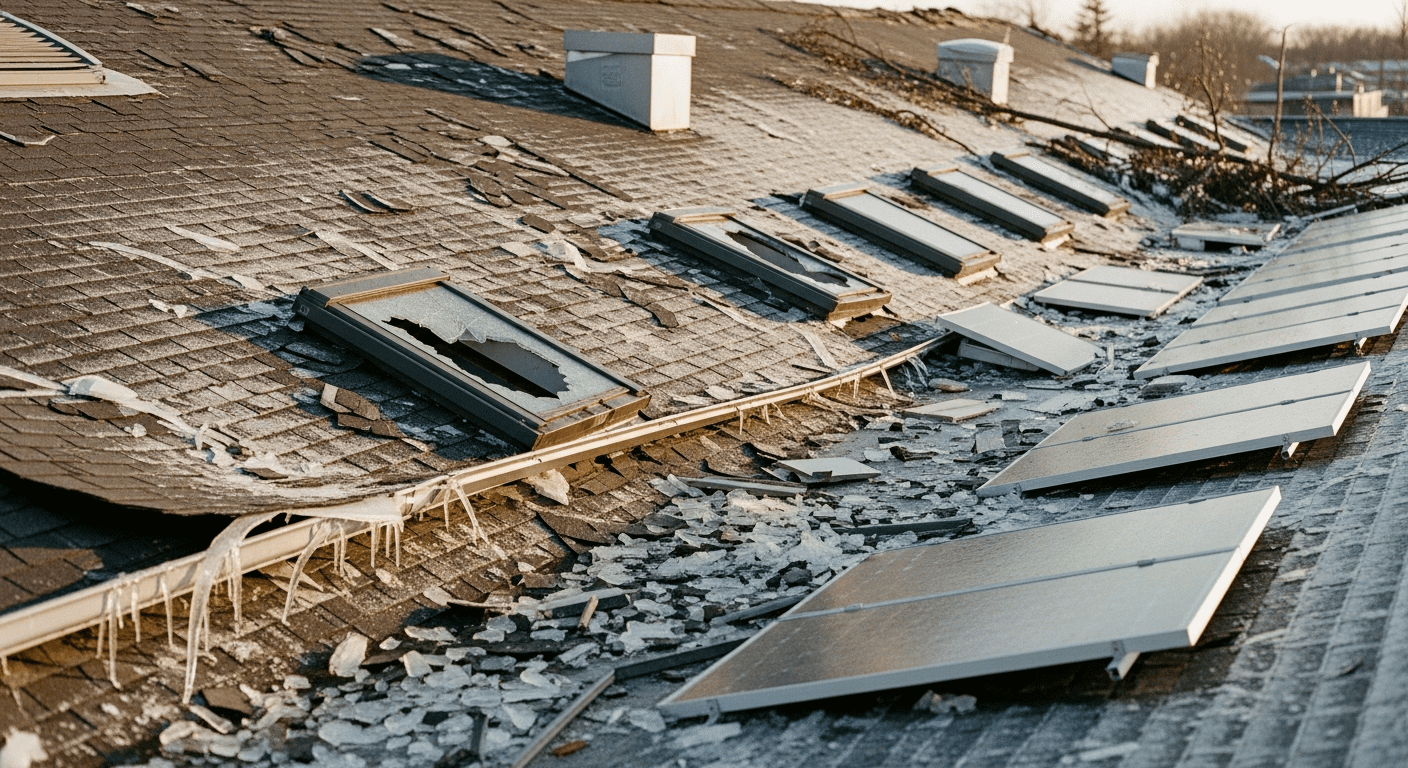
After North Texas Ice Storms, Your Roof May Be Leaking And You Won’t See It…Yet
After North Texas Ice Storms, Your Roof May Be Leaking And You Won’t See It…Yet
When North Texas gets hit with snow, ice, or driving rain, small roof defects turn into big, expensive problems fast. A tiny opening around a vent, seam, or flashing can quietly soak insulation, stain ceilings, damage inventory, and invite mold long before you see water on the floor. For instance, a small crack in flashing can lead to significant water damage over time, compromising not just the roof but the entire structure beneath it. The worst part is that most of this damage is preventable with timely inspection and targeted repairs. Homeowners often overlook minor issues, thinking they will resolve on their own, but this can lead to a costly repair bill down the line. Understanding the signs of a leaking roof and acting quickly can save you a lot of stress and expense.
The smartest move after extreme weather is a focused roof inspection. Quarterly visual checks plus at least one professional inspection each year can catch failing flashings, separated seams, clogged drains, and ponding water before they turn into interior damage and insurance headaches. Regular inspections not only protect your investment but can also extend the lifespan of your roof significantly. Documenting what you find with photos and dates builds a powerful record if you ever need to justify repairs or file a claim. For example, having a documented history of maintenance can be critical when making a case to your insurance company regarding storm damage.
Our team pays special attention to the usual trouble spots: flashings, roof penetrations, skylights, HVAC curbs, and drains.
These are where most leaks start. If left unchecked, these issues can escalate quickly, leading to costly repairs and even structural damage. When repairs are needed, you should see clear photos, understand the root cause, and know exactly how the fix will prevent the issue from coming back—not just a quick patch that hides a deeper failure in the system. It’s vital to address the underlying problems to ensure the longevity of your roof and avoid recurring leaks that can disrupt your home life or business operations.
If you already see signs of moisture, stains, or active dripping, time matters. Acting quickly lets us contain water, protect high‑value areas, and prioritize emergency repairs before structural elements or tenant spaces are compromised. Delaying repairs can result in greater damage, requiring more extensive restoration efforts. After the work is completed, a documented follow‑up inspection confirms that the repair is holding and the roof is performing as it should. This step is crucial as it reassures you that your roof is now secure and functioning properly, giving you peace of mind.
If this week’s weather has you even slightly concerned about leaks or hidden damage, schedule a no‑nonsense roof inspection with G and M Roofing and Electrical Services today.
Regular inspections can prevent small problems from escalating, saving you money and hassle in the long run. Email info@gmroofingservices.com now with your property address and a brief description of what you’re seeing (or what you want checked), and our team will follow up quickly to get you on the calendar.
Don’t wait for signs to worsen; ensuring your roof is healthy is key to avoiding stressful situations. Remember, if you suspect that your Roof May Be Leaking, act now!
Frequently Asked Questions
How can my roof be leaking after ice storms but I don’t see water inside yet?
Small defects (cracked flashing, separated seams, tiny openings around vents or penetrations) can let water soak insulation and roof layers for some time before interior signs appear.
What interior signs should I watch for?
Look for ceiling stains, discolored or sagging drywall, damp insulation, mold growth, or active dripping — any of these warrant immediate attention.
What exterior roof trouble spots should I check after ice, snow, or heavy rain?
Inspect flashings, roof penetrations (vents, skylights), HVAC curbs, seams, drains, and areas of ponding water — those are where most leaks start.
How soon should I get a professional inspection after severe weather?
As soon as you’re concerned — prompt inspections after extreme weather help contain water and protect high-value areas. Regular annual professional inspections plus quarterly visual checks are also advised.
What does a professional inspection typically focus on?
A trained team will pay special attention to flashings, penetrations, skylights, HVAC curbs, seams, drains, and signs of ponding or separation.
What happens if I delay repairs?
Delaying can let small issues escalate into costly interior damage, structural problems, mold, and insurance complications.
Should I document damage, and how?
Yes — take dated photos and notes of what you find. Documentation strengthens repair justification and insurance claims.
Do contractors offer emergency repairs and follow-up inspections?
Yes — prioritize emergency repairs when active leaks are present and perform a documented follow-up inspection to confirm the repair is holding.
How can I schedule an inspection or get a free estimate from G & M Roofing?
Discover expert solutions for leak sealer for roof in 2026 Learn about types application steps innovations costs and maintenance for long lasting protection
Discover expert advice on metal roof leak sealer options for 2026. Learn to prevent costly leaks, choose top products, and apply solutions for lasting protection.