Flat Roofing Design Guide: Modern Solutions for 2026
Explore the latest flat roofing design trends for 2026, including advanced materials, sustainability, smart tech and step by step guidance for future ready projects.
Flat roofing design is entering a new era, reshaping both commercial and residential skylines as we approach 2026. Innovative materials and smarter strategies are driving this transformation, making flat roofs more durable, energy-efficient, and visually appealing than ever before.
In this guide, we explore the essential trends, advanced materials, sustainable solutions, and cutting-edge technologies defining flat roofing design for the future. Discover how thoughtful choices today can deliver long-lasting performance and style for tomorrow’s buildings.
Ready to elevate your approach? Dive in and learn how you can harness these modern solutions for your next project.
Understanding Flat Roofing: Fundamentals and Evolution
Flat roofing design has played a pivotal role in shaping the look and function of both commercial and residential buildings. Over time, its evolution has mirrored technological progress and changing architectural trends. Today, architects and property owners turn to flat roofing design for its adaptability, efficiency, and modern appeal.
Historical Overview and Popularity
Flat roofing design first emerged in industrial and commercial settings, where its straightforward construction and cost-effectiveness offered clear advantages. The approach gained traction in the early 20th century, especially as modernist influences called for clean lines and functional spaces.
By the mid-1900s, residential flat roofs began to appear in urban environments, influenced by architects like Le Corbusier. Key milestones include the introduction of reinforced concrete decks, the development of bituminous membranes, and the rise of single-ply systems. Today, more than 60% of commercial buildings in urban areas feature flat roofing design, reflecting its widespread acceptance.
Core Flat Roof Types and Their Applications
Several core systems define modern flat roofing design:
System
Typical Use
Lifespan (yrs)
Maintenance Needs
Built-Up Roofing (BUR)
Retail, warehouses
20-30
Moderate
Modified Bitumen
Healthcare, schools
20-25
Moderate
Single-Ply (TPO, PVC, EPDM)
Offices, multi-family
20-30
Low
Liquid-Applied Membranes
Complex shapes, retrofits
15-25
Low
Each system suits different needs, from cost considerations to ease of installation. For a deeper dive into the full range of solutions and their design applications, see this Flat Roofing Services Overview.
Advantages and Challenges
Flat roofing design offers several unique benefits:
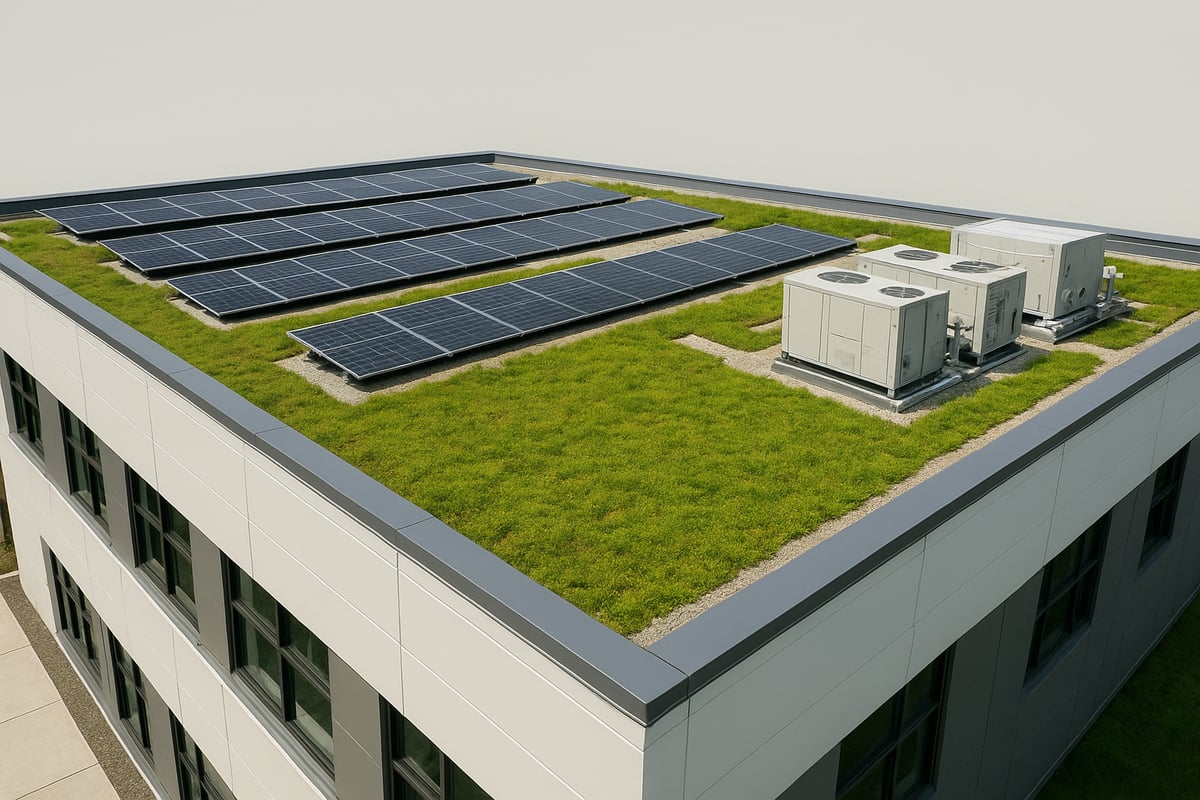
Maximizes usable space for HVAC, solar panels, and rooftop gardens.
Provides easier access for inspections and maintenance.
Streamlines installation and integrates well with modern architecture.
However, there are notable challenges:
Ponding water can lead to leaks if not properly drained.
Thermal movement can stress membranes.
Regular inspection is critical to address minor issues before they escalate.
Key Design Considerations
Effective flat roofing design requires attention to several factors:
Climate adaptation: Select materials suitable for regional weather and temperature extremes.
Structural load: Ensure the roof can support equipment, vegetation, or snow.
Drainage planning: Design adequate slopes and drainage points to prevent standing water.
Slope recommendations: Even minimal slopes (usually 1/4 inch per foot) are essential to guide water to drains.
By combining historical insights, technology, and practical considerations, flat roofing design continues to enable forward-thinking, resilient structures.
Innovative Flat Roofing Materials for 2026
The landscape of flat roofing design is evolving rapidly as new materials set higher standards for durability, sustainability, and energy efficiency. Selecting the right materials is crucial to achieving a future-ready flat roofing design that meets both performance and aesthetic goals.
High-Performance Membranes
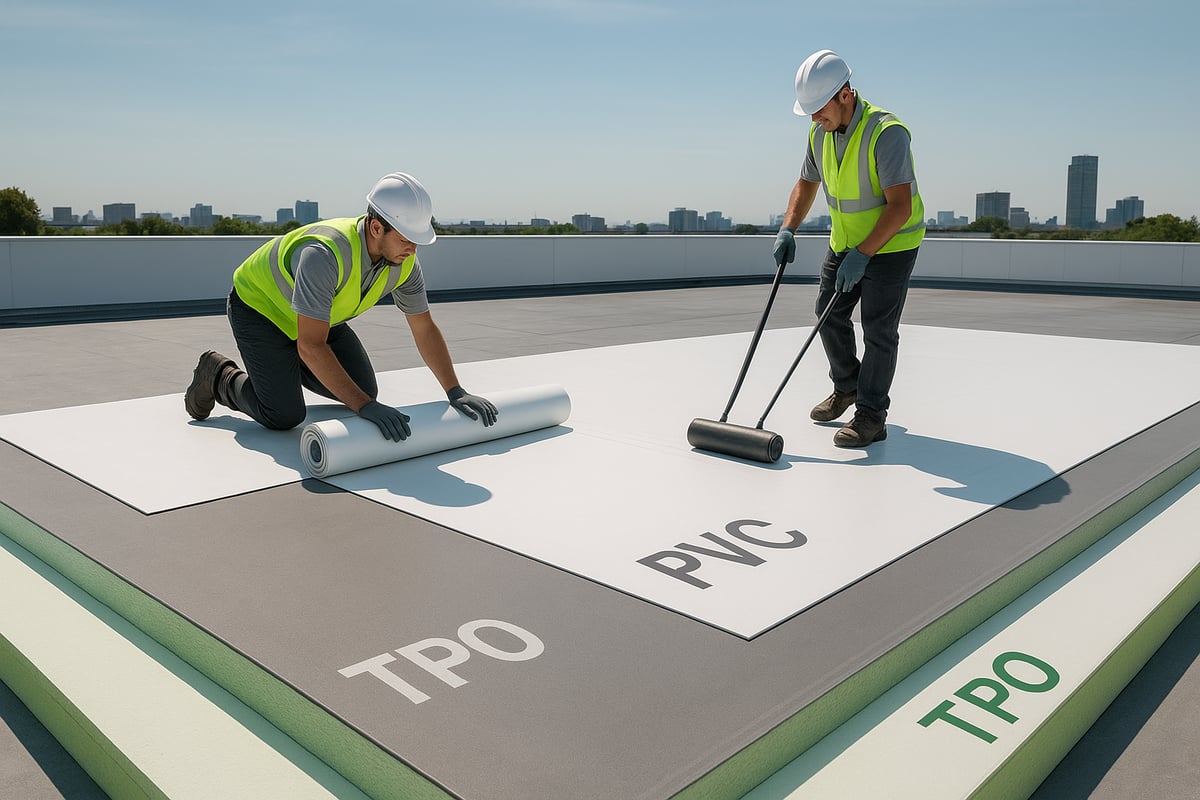
Recent years have seen significant advancements in membrane technology for flat roofing design. TPO (thermoplastic polyolefin) and PVC (polyvinyl chloride) membranes are now engineered for superior UV resistance, flexibility, and energy efficiency. EPDM (ethylene propylene diene monomer) has also evolved, offering enhanced durability and better heat resistance, making it a top choice for resilient flat roofing design.
Modified bitumen systems, especially those featuring self-healing polymers, are gaining traction for their robust performance and longevity. You can learn more about these systems and their benefits for flat roofing design in Modified Bitumen Roofing Details.
Membrane Type
Lifespan (years)
UV Resistance
Flexibility
Energy Efficiency
TPO
20-30
High
High
Excellent
PVC
20-30
Very High
High
Excellent
EPDM
25-35
Moderate
Excellent
Good
Modified Bitumen
20-25
High
Moderate
Good
Sustainable and Eco-Friendly Options
Sustainability is now front and center in flat roofing design. Manufacturers are introducing recycled and bio-based membranes, reducing the environmental footprint of each installation. Cool roofs, which use reflective coatings, are especially effective in mitigating the urban heat island effect. According to the EPA, cool roofs can lower surface temperatures by up to 50°F.
These solutions not only improve energy efficiency but also align with green building certifications. Using sustainable materials in flat roofing design supports long-term operational savings and environmental stewardship.
Hybrid and Multi-Layer Systems
For maximum protection, hybrid and multi-layer systems are becoming a standard in flat roofing design. By combining different membranes, insulation, and vapor barriers, these systems deliver enhanced waterproofing and thermal performance.
Key benefits include:
Reduced risk of leaks and moisture intrusion
Improved insulation for better energy efficiency
Greater adaptability to complex roof geometries
Hybrid systems are ideal for projects demanding longevity and adaptability in flat roofing design.
Fire and Weather Resistance
Meeting the latest fire codes is essential for any flat roofing design in 2026. Fire-rated materials are now widely available and required for many commercial applications. Roofing products are tested rigorously to ensure compliance with evolving safety standards.
For regions prone to severe weather, impact-resistant membranes are a must. These materials withstand hail and wind, reducing the risk of costly repairs and ensuring that flat roofing design remains resilient under stress.
Case Examples
Several high-profile projects completed in 2025 and 2026 highlight the performance of innovative materials in flat roofing design. For instance, a major healthcare facility in Dallas utilized a hybrid TPO and insulation system, resulting in a 20 percent reduction in annual energy costs.
Performance data from recent installations consistently show that advanced membranes and sustainable materials extend roof lifespan and lower maintenance needs. These successes reinforce the importance of material innovation in future-focused flat roofing design.
Sustainable and Energy-Efficient Flat Roof Design
The demand for sustainable and energy-efficient flat roofing design is shaping the future of modern buildings. As environmental awareness grows, architects and property owners are turning to new solutions that offer both performance and ecological benefits. This section explores the pivotal strategies and technologies transforming flat roofing design for 2026.
Green Roofs and Living Systems
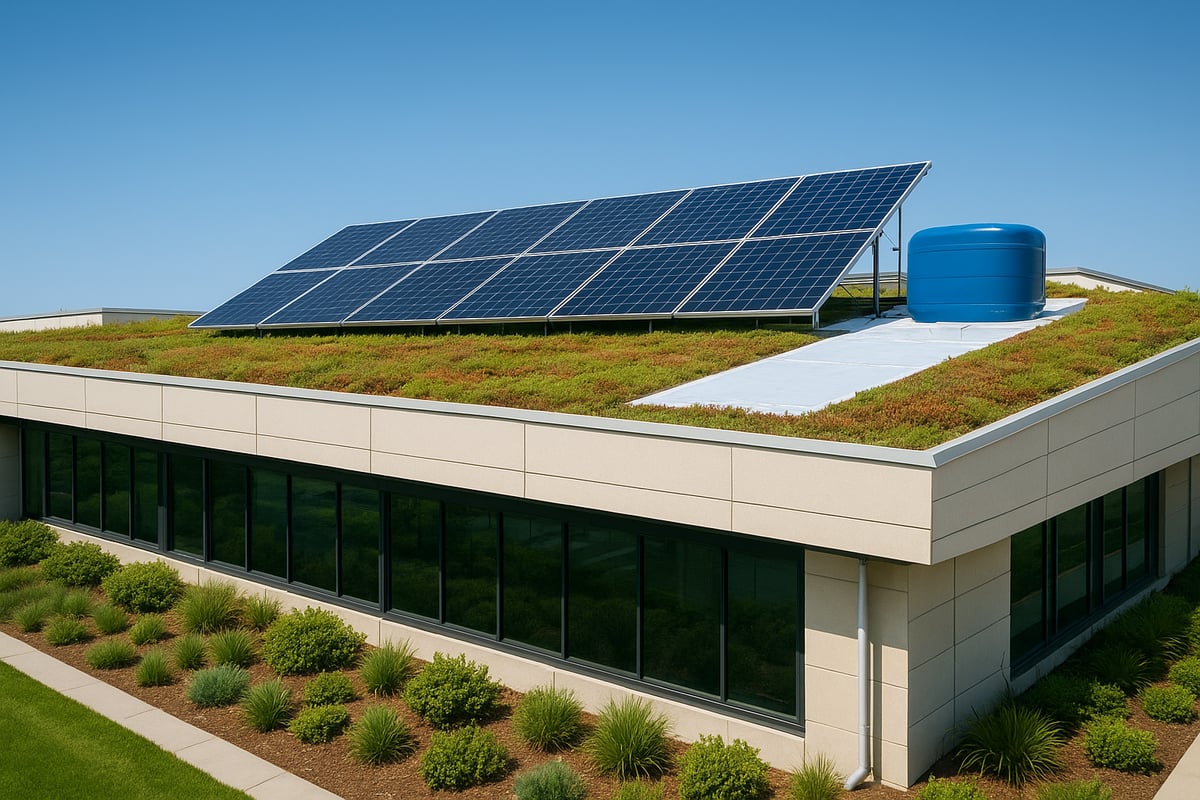
Green roofs are a cornerstone of sustainable flat roofing design. There are two main types: extensive systems, which are lightweight and low-maintenance, and intensive systems, which support deeper soil and larger plants. Both types provide valuable benefits.
A green roof can manage stormwater runoff, support local biodiversity, and help reduce the urban heat island effect. For example, Chicago’s City Hall green roof has demonstrated a 7 percent reduction in building energy use. By integrating living systems into flat roofing design, building owners can improve insulation and extend the roof’s lifespan.
Solar Integration and Renewable Energy
Flat roofing design offers an ideal platform for solar panel arrays. The unobstructed surface allows for optimal placement and orientation of photovoltaic systems. When considering solar integration, it is important to select the right mounting system. Ballasted systems sit directly on the roof, while attached systems are fixed for greater wind resistance.
Investing in solar-ready flat roofing design can yield strong returns. Government incentives and tax credits are available, and many property owners see payback periods shorten as energy prices rise. Proper planning ensures the roof can support the additional load and wiring requirements.
Insulation and Thermal Performance
High-R value insulation is critical in flat roofing design to minimize heat transfer and improve energy efficiency. Advanced materials, such as polyisocyanurate and extruded polystyrene, deliver excellent thermal resistance while keeping roof profiles slim.
Thermal bridging and condensation are common concerns, especially in climates with temperature swings. Addressing these issues in flat roofing design prevents energy loss and moisture problems. Studies show that proper insulation can reduce HVAC costs by 15 to 20 percent, making it a key factor in sustainable building performance.
Reflective and Cool Roof Technologies
Reflective and cool roof technologies are transforming flat roofing design by limiting solar heat gain. White and light-colored membranes reflect more sunlight, keeping roof surfaces cooler and reducing cooling loads inside the building.
Reflectivity ratings are an important consideration, as higher ratings mean greater energy savings. According to the EPA, cool roofs can lower surface temperatures by up to 50°F. For a closer look at the latest innovations in sustainable roofing, see 2026 Roofing Trends Homeowners Can’t Ignore.
Water Management and Reuse
Effective water management is essential in flat roofing design. Blue roofs are engineered to capture and store rainwater, which can be reused for irrigation or building systems. Integrated drainage solutions, such as internal drains and scuppers, help prevent ponding and structural damage.
Innovative storage systems allow for gradual water release, reducing pressure on city infrastructure during storms. By prioritizing water management in flat roofing design, property owners contribute to sustainability and long-term resilience.
Advanced Waterproofing and Drainage Solutions
Effective waterproofing and drainage are critical factors in any flat roofing design. Without robust solutions, even the most advanced materials can fall short over time. As we approach 2026, new technologies are reshaping how professionals prevent leaks, manage water flow, and extend roof lifespan.
Modern Waterproofing Technologies
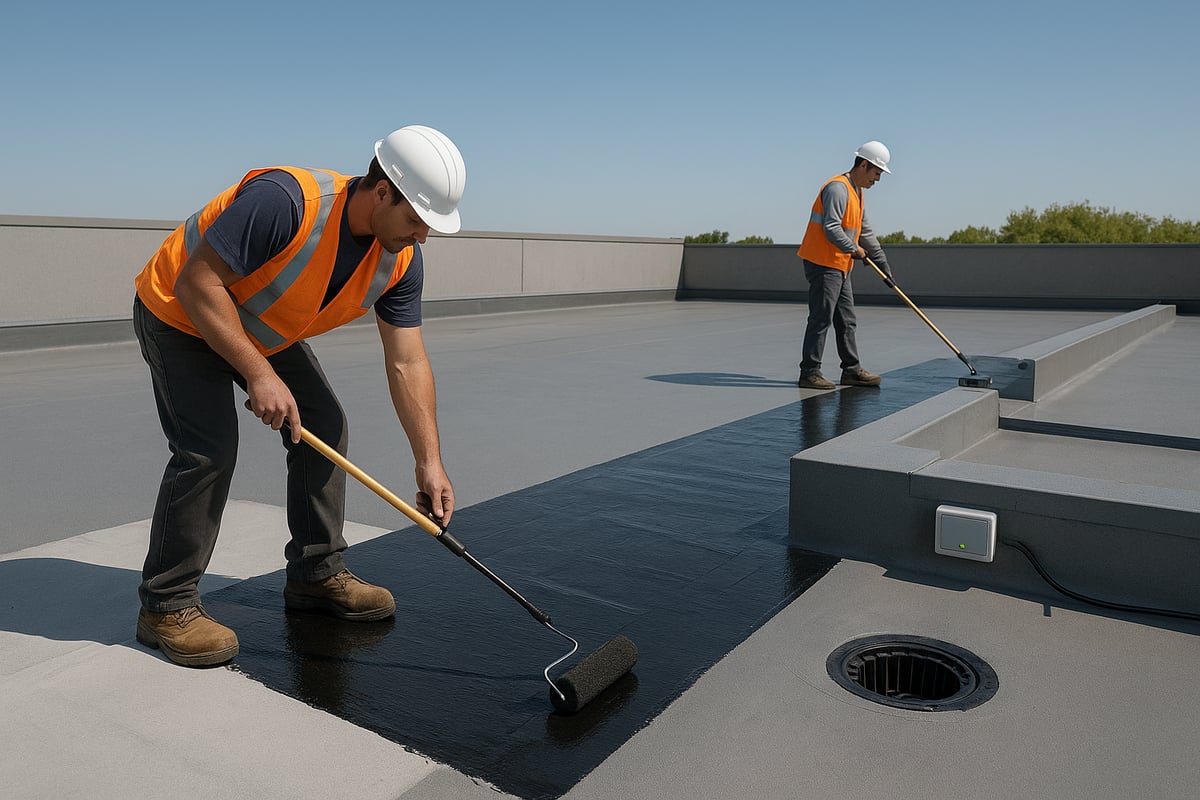
Modern flat roofing design leverages advanced waterproofing systems to reduce risks and minimize failures. Liquid-applied membranes are increasingly popular due to their seamless application and rapid curing times. These membranes form a continuous barrier that adapts to roof contours, lowering the chance of weak points.
Self-adhered and cold-applied systems are gaining traction for their safety advantages and speed of installation. Unlike traditional hot asphalt, these solutions do not require open flames, making them safer for crews and occupants. Comparative studies show that modern membranes often outperform traditional methods, offering greater durability and improved resistance to weather extremes.
Choosing the right waterproofing technology is essential for a future-ready flat roofing design. Consider the specific building requirements and local climate when selecting materials.
Drainage Design Innovations
Proper drainage is at the core of every successful flat roofing design. New innovations focus on internal and external drain systems, each with distinct advantages. Internal drains, placed within the building envelope, reduce freeze risk and provide a streamlined look. External solutions like scuppers or overflow drains offer redundancy in heavy storms.
Key drainage components include:
Internal drains for concealed water removal
Scuppers for edge drainage and overflow protection
Overflow drains as secondary backups
Slope design is equally crucial. For 2026, standards recommend a minimum slope of 1/4 inch per foot to ensure positive drainage and prevent ponding. Integrating these features during the design phase is vital to maintain long-term roof performance.
Leak Detection and Prevention
Technological advancements are transforming leak detection in flat roofing design. Electronic leak detection systems utilize low-voltage electrical currents to pinpoint breaches with high precision. This proactive approach allows for immediate repairs before small issues escalate.
Smart sensors are also revolutionizing moisture monitoring. These devices track real-time data, alerting building managers to the presence of water or unusual humidity levels. Early detection not only prevents costly repairs, but also extends the life of the entire system.
By adopting these technologies, property owners can safeguard their investments and ensure that their flat roofing design meets the demands of modern buildings.
Maintenance Strategies
The longevity of any flat roofing design depends on a well-structured maintenance plan. Scheduled inspections are essential for identifying early signs of membrane wear, drainage blockages, or developing leaks. Proactive repair protocols, such as prompt patching and debris removal, reduce the risk of emergency failures.
Industry data shows that regular maintenance can extend a flat roof’s lifespan by up to 30 percent. For detailed guidance, review the Flat Roof Maintenance Best Practices to implement proven strategies.
A comprehensive maintenance schedule, combined with modern monitoring tools, ensures your flat roofing design remains resilient and cost-effective for years to come.
Smart Flat Roof Technologies and Digital Design Tools
The rapid evolution of smart flat roof technologies is redefining flat roofing design for 2026. Digital tools and intelligent systems are now essential for creating resilient, efficient, and future-ready roof assemblies. These innovations support architects, engineers, and building owners in optimizing performance and simplifying maintenance.
Building Information Modeling (BIM) for Flat Roofs
Building Information Modeling (BIM) is transforming flat roofing design by enabling precise digital representations of roof assemblies. BIM allows teams to visualize structural layers, drainage systems, and penetrations in 3D before construction begins.
With BIM, stakeholders can identify potential clashes, optimize insulation placement, and coordinate roof equipment layouts. This collaborative approach reduces errors and ensures every aspect of flat roofing design meets project requirements. Lifecycle management features also simplify ongoing maintenance and upgrades.
Smart Roofing Systems
Smart roofing systems are elevating the standards for flat roofing design. These systems incorporate embedded sensors that continuously monitor conditions such as moisture, temperature, and structural loads. Real-time data enables proactive maintenance, reducing the risk of costly leaks or failures.
Automated alerts notify facility managers about anomalies, allowing for swift intervention. Predictive maintenance algorithms can forecast issues before they escalate, helping to extend the lifespan of the roof. Integrating these technologies ensures a more reliable and efficient flat roofing design.
Drone Inspections and Remote Monitoring
Drones are revolutionizing how professionals inspect and maintain flat roofs. Equipped with high-resolution cameras and thermal imaging, drones provide comprehensive aerial views and detailed condition assessments.
Property managers can use drones to conduct annual surveys, identify damage, and monitor ongoing performance without direct roof access. Remote monitoring platforms store inspection data, track repairs, and support documentation for warranty compliance. This approach streamlines flat roofing design management and reduces safety risks for personnel.
Integration with Building Automation Systems (BAS)
Modern flat roofing design increasingly leverages integration with Building Automation Systems (BAS). By connecting roof sensors to centralized controls, teams gain access to real-time analytics on energy usage, surface temperatures, and water intrusion.
This integration enables automated responses, such as activating drainage pumps during storms or adjusting HVAC loads based on roof conditions. BAS integration supports energy optimization, improves occupant comfort, and enhances the overall value of flat roofing design.
Future Tech: AI and Predictive Analytics
Artificial intelligence and predictive analytics are shaping the future of flat roofing design. AI-driven tools analyze historical and real-time data to recommend optimal materials, layouts, and maintenance schedules. Predictive modeling helps anticipate weather impacts and structural stresses, empowering teams to make data-driven decisions.
For a comprehensive look at emerging smart technologies and future trends, see Top Roofing Industry Trends to Watch in 2026. By embracing these advancements, building owners and designers can deliver high-performance, cost-effective flat roofing design solutions ready for tomorrow’s challenges.
Flat Roofing Design Process: Step-by-Step Guide for 2026 Projects
Designing a future-ready flat roofing design involves a structured process that ensures long-term performance, compliance, and value. By following a systematic approach, project teams can address every critical aspect, from initial planning to ongoing maintenance.
Step 1: Needs Assessment and Feasibility Study
The first phase of flat roofing design is a comprehensive needs assessment. This step evaluates the building’s intended use, anticipated loads, and the unique demands of the local climate.
Engage all stakeholders, including owners, architects, and engineers, early in the process. Assess structural requirements, occupancy type, and any special use cases such as rooftop gardens or solar installations.
A feasibility study also reviews local codes and zoning restrictions. This ensures the proposed flat roofing design aligns with both regulatory and operational needs.
Step 2: Material and System Selection
Selecting the right materials is crucial for a high-performing flat roofing design. Compare membrane types, insulation options, and waterproofing technologies based on durability, cost, and sustainability goals.
Material Type
Lifespan (years)
Key Benefits
Typical Application
TPO/PVC
20-30
Energy efficient, UV stable
Commercial, healthcare
EPDM
25-35
Flexible, heat resistant
Office, multi-family
Modified Bitumen
20-25
Self-healing, robust
Retail, industrial
Recent advancements, especially in EPDM Roofing Innovations, offer improved durability and installation efficiency. Always weigh budget constraints against life-cycle value and environmental impact.
Step 3: Design and Engineering
Next, translate project requirements into detailed flat roofing design documents. Plan for appropriate slope, effective drainage, and integration with building systems such as HVAC and solar.
Utilize BIM modeling and digital simulation tools to visualize assemblies and detect potential conflicts. This proactive design approach streamlines coordination between disciplines and optimizes performance.
Address structural load calculations and select compatible insulation and membrane systems. Proper engineering ensures the flat roofing design withstands both environmental and operational stresses.
Step 4: Permitting and Compliance
Navigating the permitting process is essential for any flat roofing design. Ensure all documentation meets 2026 building codes, fire safety standards, and energy efficiency regulations.
Prepare submittals that detail materials, assemblies, drainage plans, and fire ratings. Early coordination with local authorities helps prevent delays and ensures the design meets all legal requirements.
Maintain thorough records and obtain written approvals before starting installation. Staying compliant protects project timelines and long-term roof performance.
Step 5: Installation Best Practices
Installation is where design becomes reality. Sequence trades to avoid conflicts and ensure each component of the flat roofing design is installed correctly.
Key best practices include:
Staging materials to minimize damage and exposure
Using moisture testing before membrane application
Coordinating flashing and edge details for watertightness
Quality assurance protocols, such as on-site testing and inspections, verify workmanship. These steps are vital for a durable, leak-resistant flat roofing design.
Step 6: Post-Installation Inspection and Commissioning
After installation, conduct thorough inspections and system commissioning. Perform leak testing, review drainage functionality, and validate all waterproofing details.
Provide building owners with documentation, warranties, and training on maintenance protocols. Proper handover ensures the flat roofing design delivers on its performance promises.
Commissioning also includes setting up monitoring systems, when applicable, for early detection of issues.
Step 7: Maintenance Planning and Lifecycle Management
A proactive maintenance plan extends the service life of any flat roofing design. Schedule regular inspections to identify and address minor issues before they escalate.
Leverage smart monitoring technologies and digital maintenance logs for efficient management. Industry data shows that proactive care can reduce emergency repair costs by 40%.
Stay informed about emerging solutions, such as predictive analytics and automation, which are shaping the future of maintenance. For more on these advancements, explore Roofing Industry Trends 2026 for insights on AI-driven maintenance planning.
By following these seven steps, project teams can deliver robust, efficient, and future-ready flat roofing design solutions that stand the test of time.
Learn why preventative electrical maintenance is critical for commercial buildings. Discover best practices, inspection schedules, and cost-saving benefits.